This section provides a guide on how to modify “REASON” options available when sending an STR notification on the Compliance Planet, with step-by-step instructions and pictures. These options are available when answering “Why do you think this transaction is suspicious?” when sending an STR notification.
Here, the operations are;
Editing notification reason,
Deleting reason
Adding a new reason
NOTE: Only person(s) profiled as deputy supreme admin can carry out these operations
To perform any of the operations;
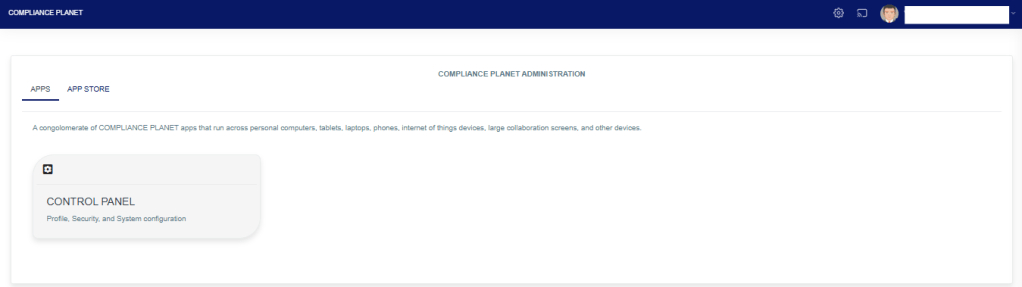
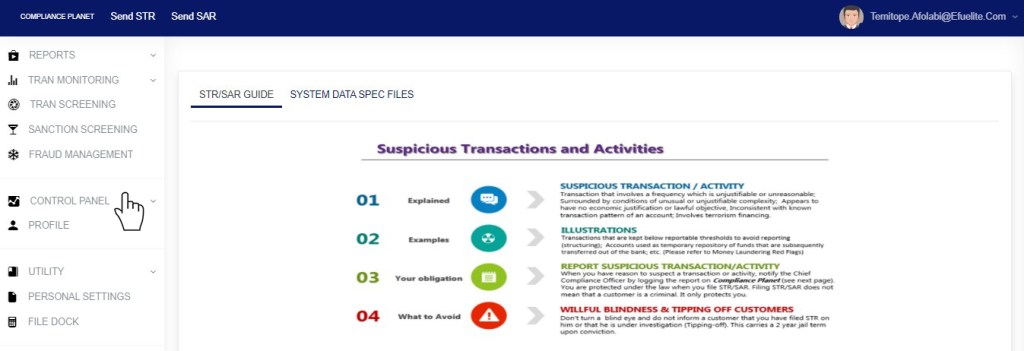
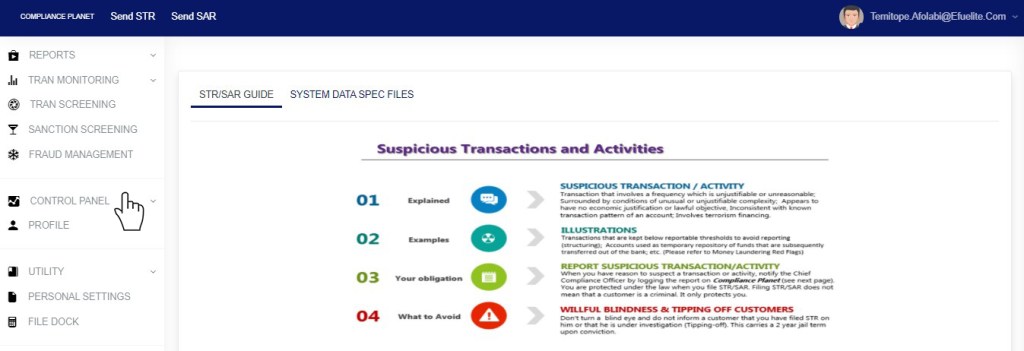
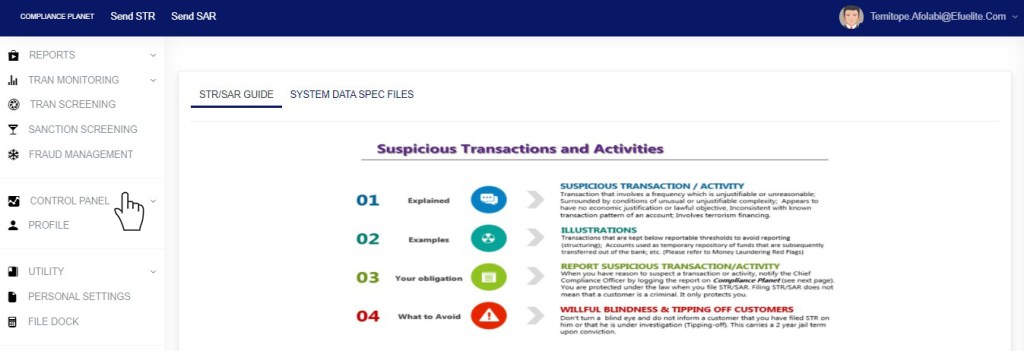
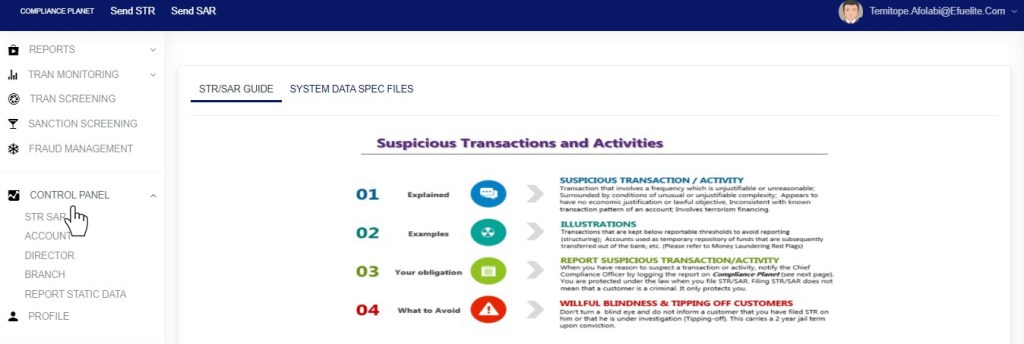
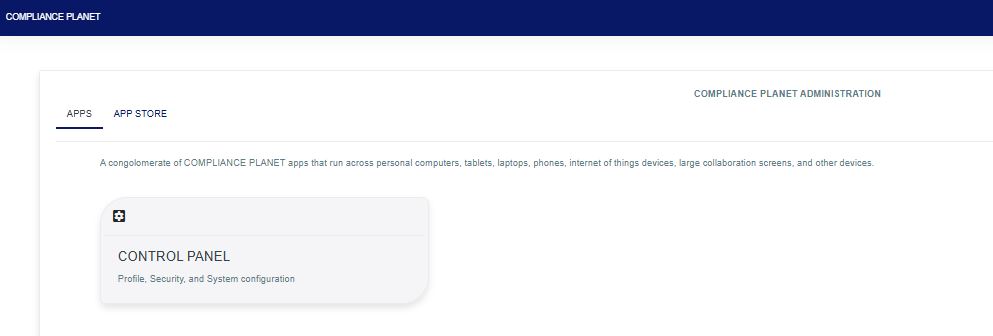
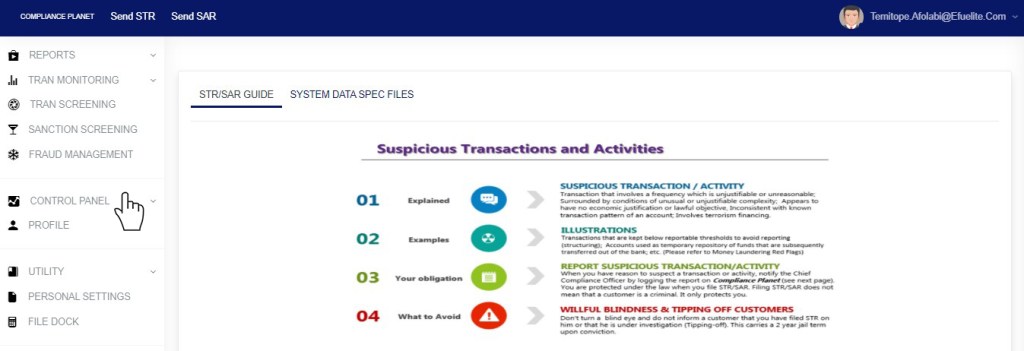
STEP 1: From the app dashboard, click ‘Control panel’ as in Fig. 21.1a.
Fig 21.1a
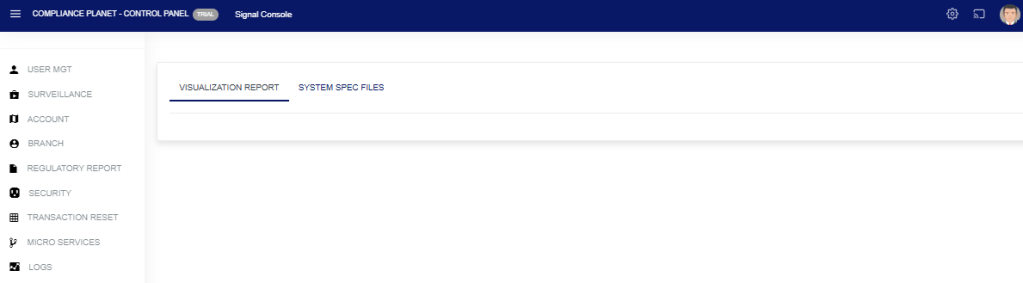
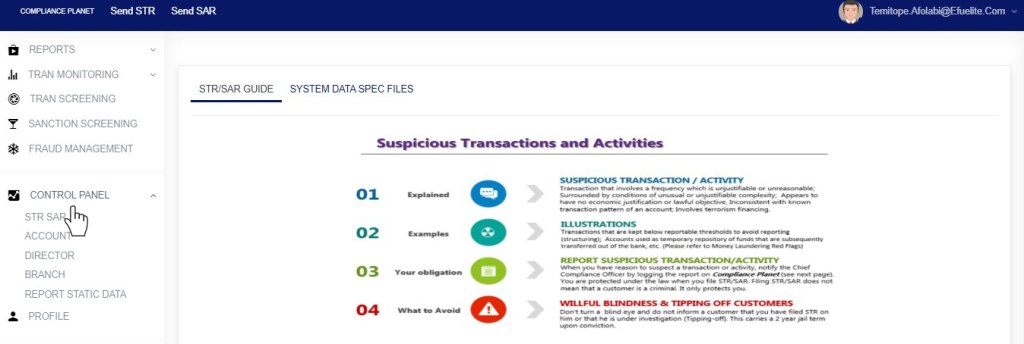
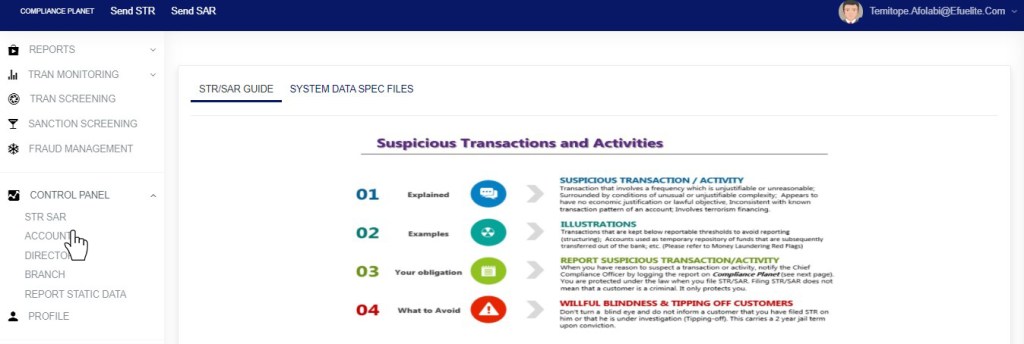
This will display a drop-down as shown below.
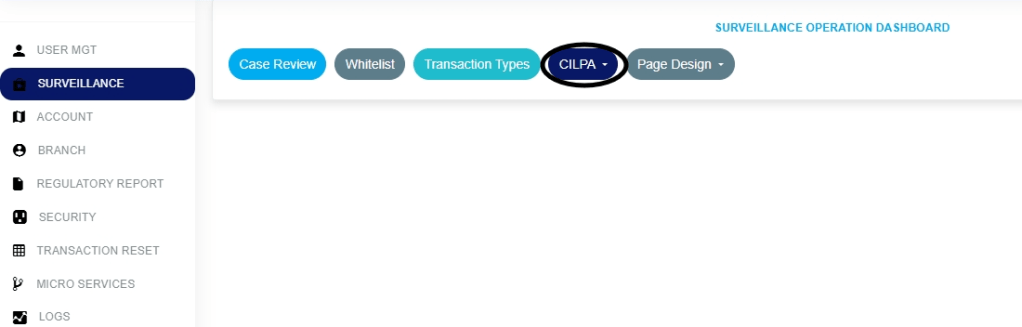
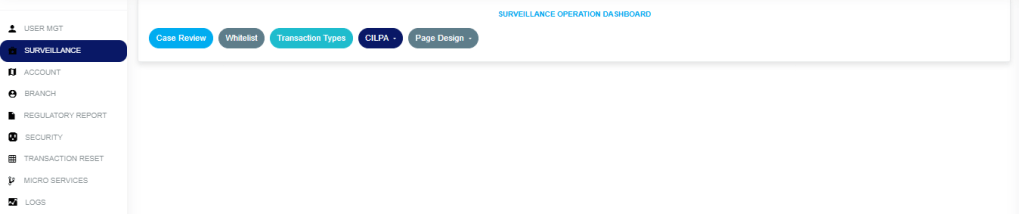
STEP 2: Select “SURVEILLANCE” on the drop-down list and click on “CILPA”. See an example in Fig. 21.1b below.
Fig 21.1b
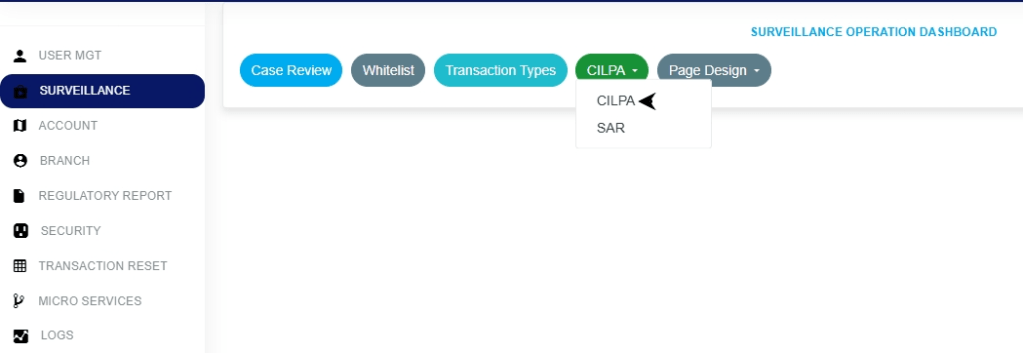
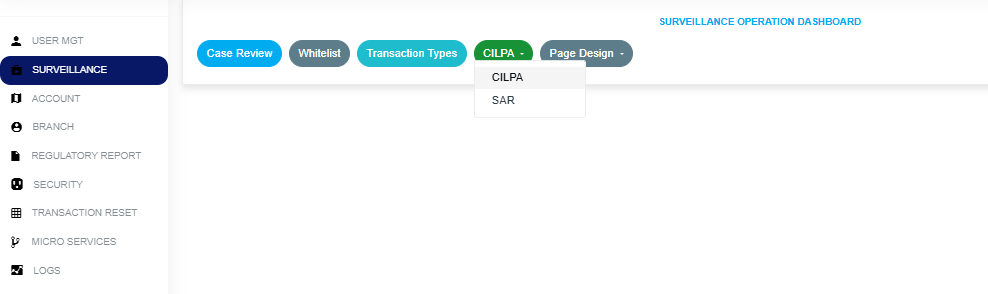
STEP 3: In the “CILPA” drop-down option, select the “CILPA” as in Fig. 21.1c below.
Fig. 21.1c
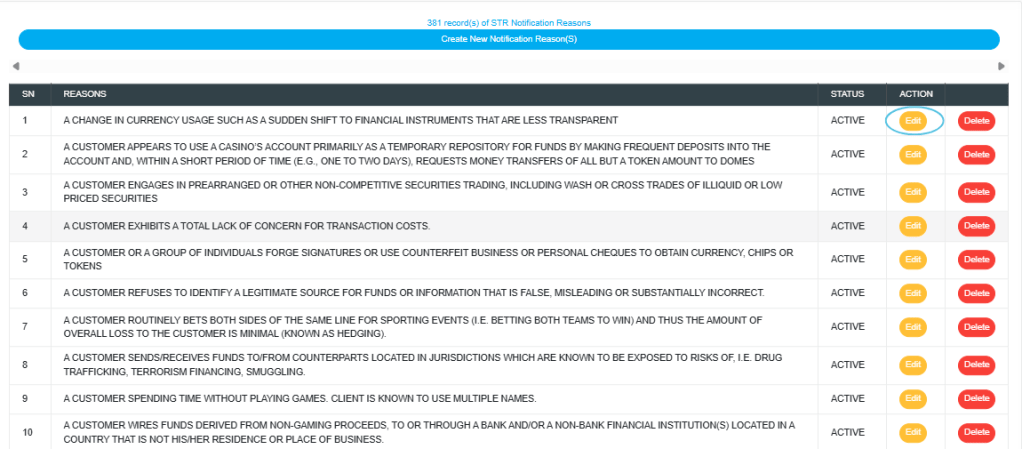
This displays a page showing a list of all ‘STR Notification reason’ options that have been created and areavailable on the software. See Fig. 21.1d for an example.
Fig. 21.1d
How to edit an STR notification reason
This refers to changing the description or status of the STR notification reason. Here is how to do this.
STEP 1: Click on the ‘EDIT’ button in the action column. See Fig. 21.1e for an example.
Fig 21.1e
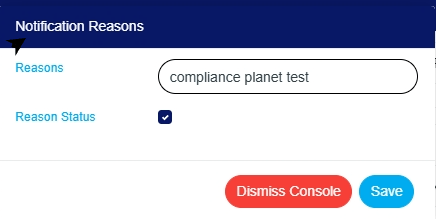
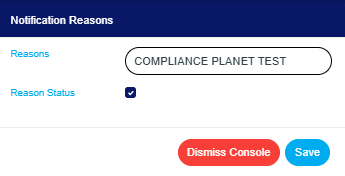
Clicking the ‘edit’ button will display a console titled ‘Notifications Reasons’ as shown in Fig. 21.1f below.
Fig. 21.1f
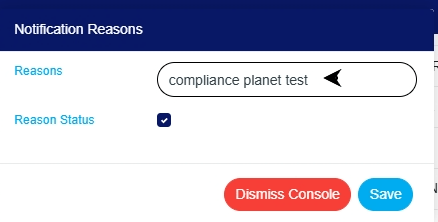
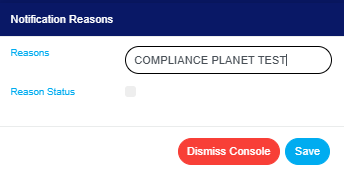
STEP 2: Click on the ‘reason text’box to change the Notification reason description. See an example in Fig. 21.1g below.
Fig 21.1g
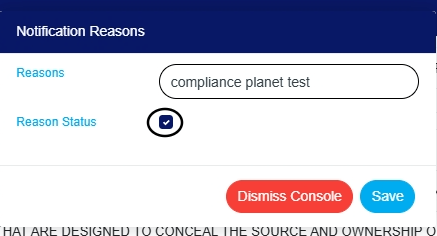
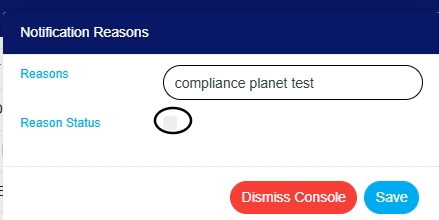
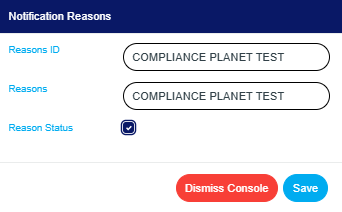
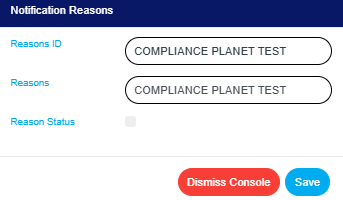
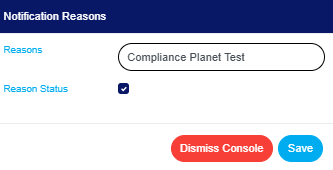
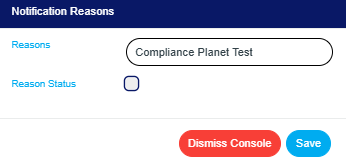
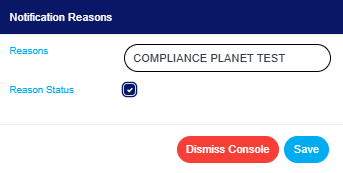
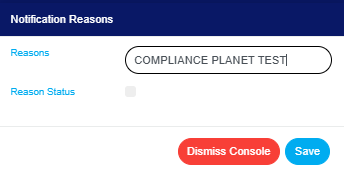
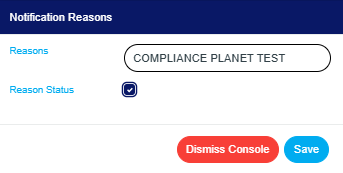
STEP 3: Click on the ‘reason status’ checkbox to make that notification reason active or inactive. This is illustrated in Fig. 21.1h and Fig. 21.1i below.
Fig 21.1h
Fig 21.1i
Fig 21.1h shows that the notification reason is set ACTIVE, while Fig 21.1i shows that the notification reason is set INACTIVE.
An active notification reason will form part of the available options when sending a new STR notification (See section 6.2.1 for sending an STR notification). At the same time, an inactive notification reason will no longer be part of the available options when sending a new STR notification.
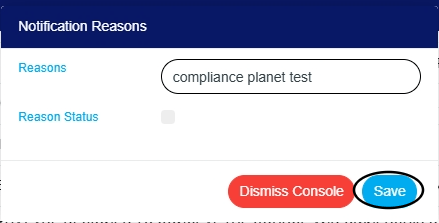
STEP 4: Click on the ‘save’ button to save the edit or click ‘dismiss console’ to cancel the operation. See Fig. 21.1j for an example.
Fig. 21.1j
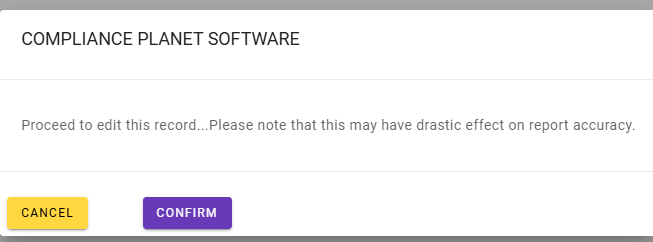
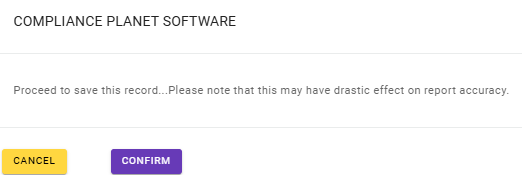
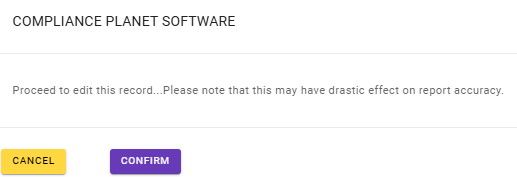
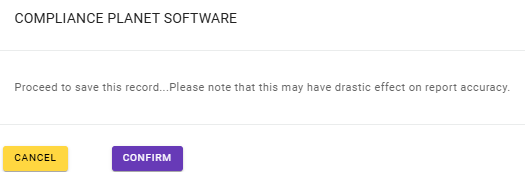
This displays a confirmation console as in Fig. 21.1k below
Fig. 21.1k
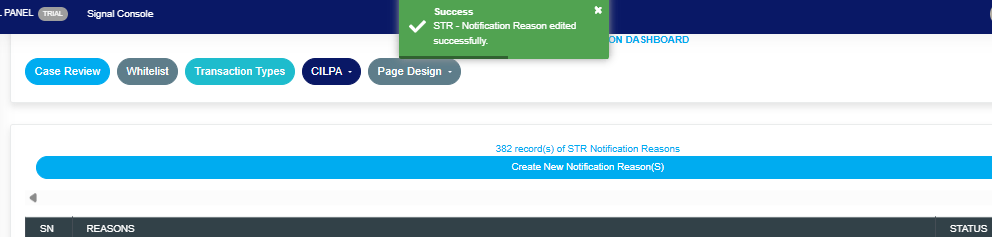
A notification, as in Fig. 21.1l (A), will be displayed at the top of the page. Also, see Fig. 21.1l for an example of the updated description and status.
Fig. 21.1l
How to Delete an STR notification reason
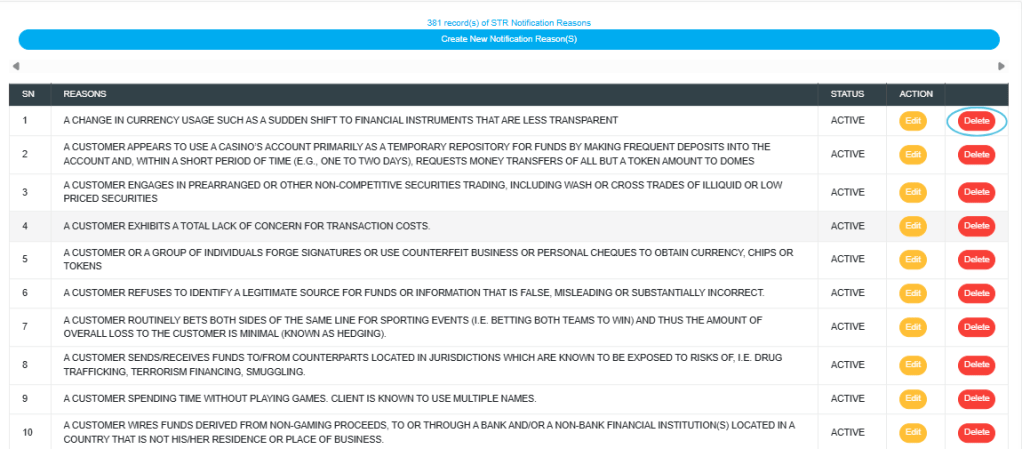
This operation removes the STR notification reason from the list of available reasons. A deleted STR notification reason will no longer be part of the available options when sending a new STR notification on the compliance planet (See section 6.2.1 for sending an STR notification).
STEP 1: Click on the ‘delete’ button of the STR notification reason, as in Fig.21.1m.
Fig.21.1m
This displays a confirmation console to confirm your request to delete the STR reason.
STEP 2: Click on ‘confirm’ as in Fig. 21.1n to proceed or ‘cancel’ to dismiss the console.
(Fig. 21.1n)
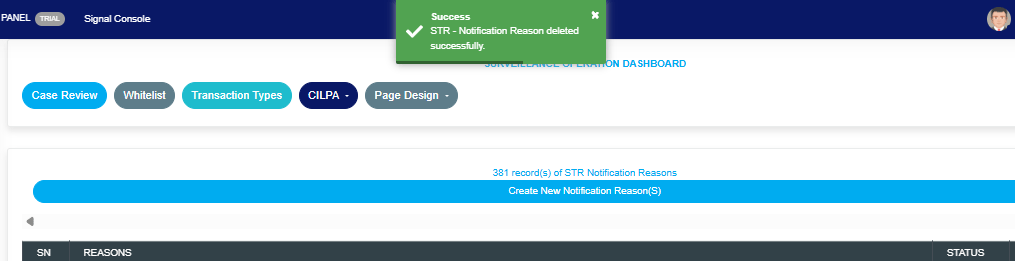
A notification will be displayed at the top of the page as in Fig. 21 .2a.
(Fig. 21 .2a.)
How to add a new STR notification reason
This refers to creating a new STR notification reason. This notification reason will be added to the list of available ‘reason’ options when sending a new STR notification on the Compliance Planet software (See section 6.2.1 for sending an STR notification).
STEP 1: Click on ‘CREATE NEW NOTIFICATION REASON(s)’ as shown in Fig. 21.2b below.
(Fig. 21 .2b.)
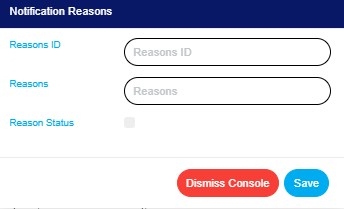
A ‘Notification reason’ console, as in Fig. 21.2c, will be displayed.
(Fig. 21.2c)
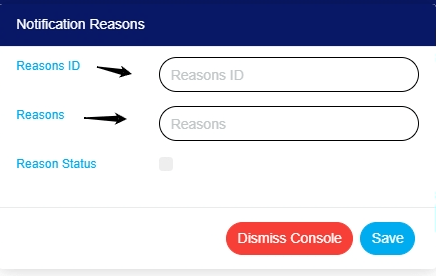
STEP 2: Fill the ‘Reasons ID’ and ‘Reasons’ text box as in Fig. 21.2d below
Fig. 21.2d
STEP 3: Click on the ‘reason status’ checkbox to make that notification reason active or inactive. This is illustrated in Fig. 21.2e and Fig. 21.2f below.
Fig. 21.2e
Fig. 21.2f
Fig. 21.2e shows that the notification reason is set ACTIVE, while Fig. 21.2f shows that the notification reason is set INACTIVE.
An active notification reason will form part of the available options when sending a new STR notification on the Compliance Planet software(See section 6.2.1 for sending an STR notification). In contrast, an inactive notification reason will no longer be available when sending a STR notification on the Compliance Planet software.
STEP 3: Click on ‘save’ to save the edit or click ‘dismiss console’ to cancel the operation. See Fig. 21.2g for an example.
Fig. 21.2g
This displays a confirmation console as in Fig. 21.2h below.
Fig. 21.2h
A notification, as in Fig. 21.2i, will be displayed at the top of the page when the operation is successful.
This section provides a guide on how to modify controls available when sending an STR notification on the Compliance Planet software, with step-by-step instructions and pictures.
These controls include; Customer Account name, Customers’ account number, Transaction amount, transaction type, Date of transaction, Person conducting transaction, line of business, Reason for filing STR, General information, Extra details etc.
This section provides the opportunity to edit what the person(s) involved in the process of sending an STR notification will see. The modification available includes
Activating or deactivating a control
Setting the requirement of the control i.e. if it’s compulsory or not
Tool tip description i.e. the extra guide or note to be displayed when the mouse cursor is on a particular control.
Tool tip activation i.e. activating or deactivating the tool tip option.
Visibility i.e. setting those that can see any of these commands.
NOTE: Only person(s) profiled as deputy supreme admin can carry out these operations.
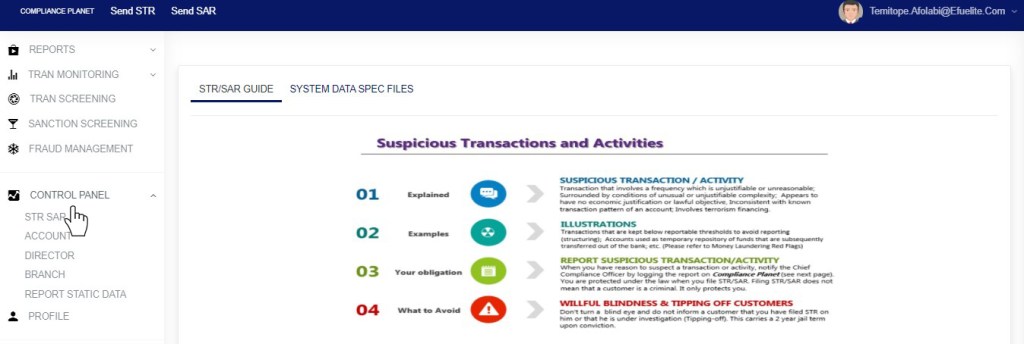
STEP 1: From the left-hand side menu, Click ‘Control panel’ as in fig. 22.1a.
Fig 22.1a
This will display a drop down as in Fig 22.1b below.
STEP 2: Click ‘STR SAR’ on the drop-down list. See an example in Fig 22.1b below.
Fig 22.1b
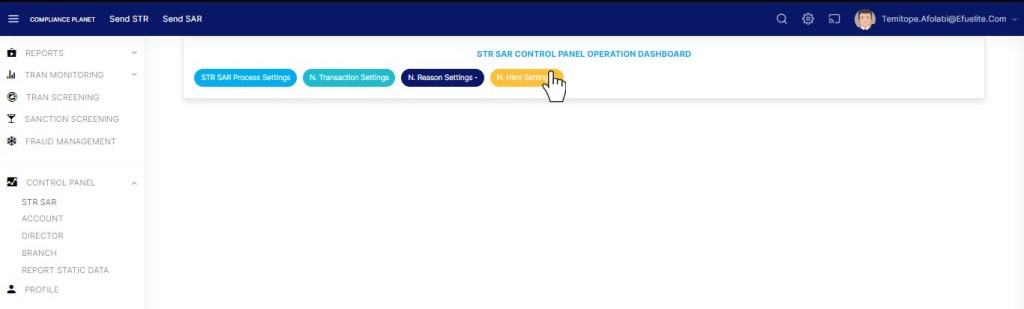
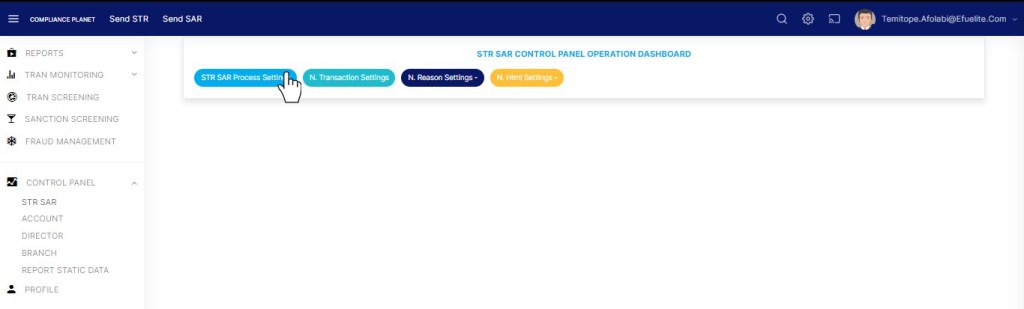
This will display STR SAR CONTROL PANEL OPERATION dashboard as in fig 22.1c below.
STEP 3: Click “N. HTML Settings” as in fig 22.1c below
(fig. 22.1c)
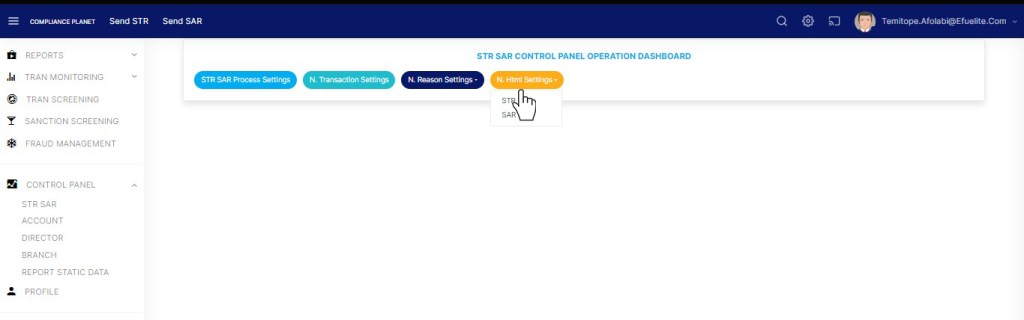
This displays a drop-down as in fig 22.1d below
STEP 4: Click “STR” on the drop-down list as in 22.1d below
Fig 22.1d
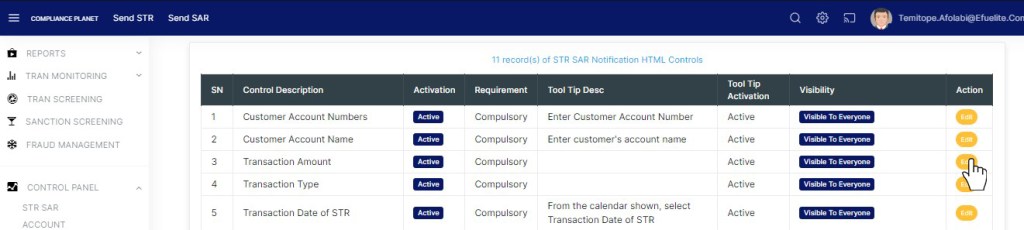
This displays a page showing a list of all STR notification controls and their status, requirement, tool tip description, tool tip activation status and visibility. See fig. 22.1e below for an example.
(fig 22.1e)
STEP 3: Click on the edit button on the action row. See this in fig. 22.1f below
(fig 22.1f)
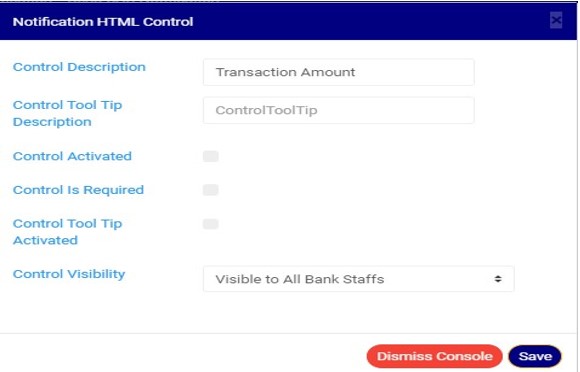
Clicking on the edit button displays a ‘Notification HTML Control’ console See fig. 22.1g below for an example.
(fig 22.1g)
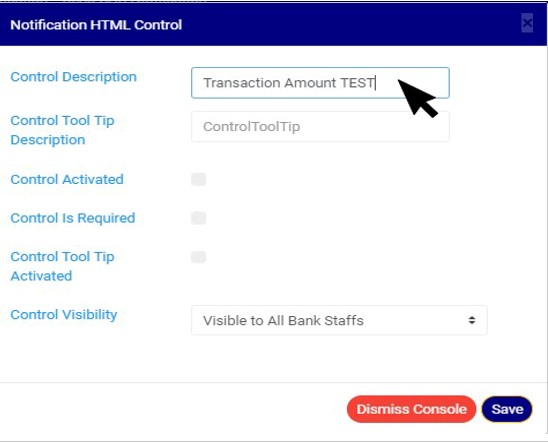
STEP 4: Click on control description text box to edit the description for that control. See an example in fig. 22.1h below
(Fig 22.1h)
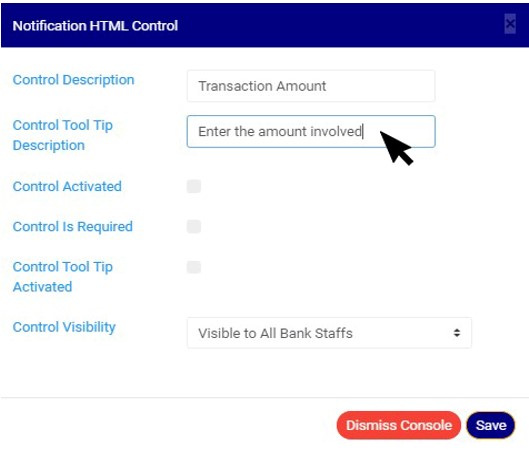
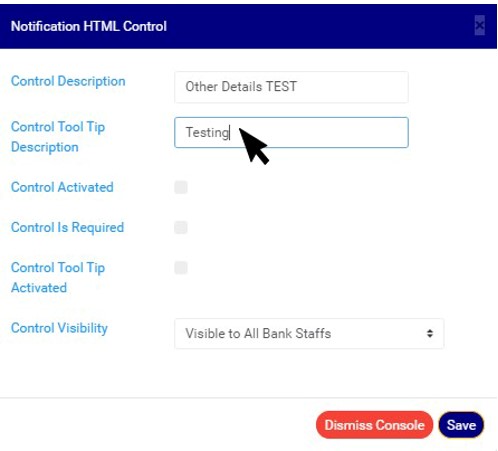
STEP 5: Click on control tool tip text box to add or edit tool tip description (i.e the extra guide or note to be displayed when the mouse cursor is on a particular control).See an example in fig. 22.1i below
(Fig 22.1i)
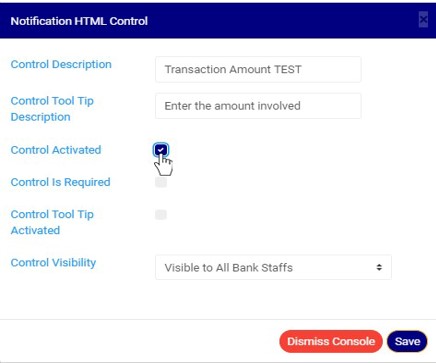
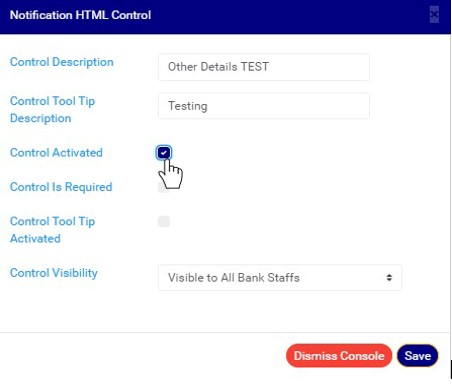
STEP 6: Click on‘CONTROL ACTIVATION’ checkbox as in fig. 22.1j below to activate the control, note that unchecking this checkbox will deactivate the control and make it unavailable when sending an STR notification.
(Fig 22.1j)
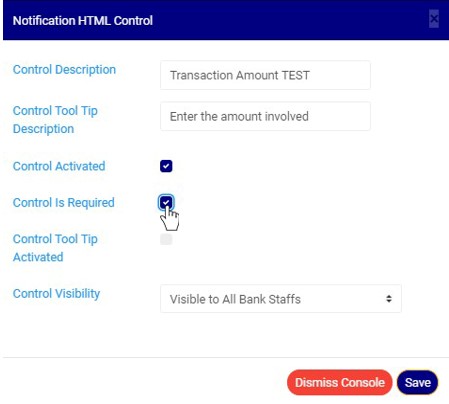
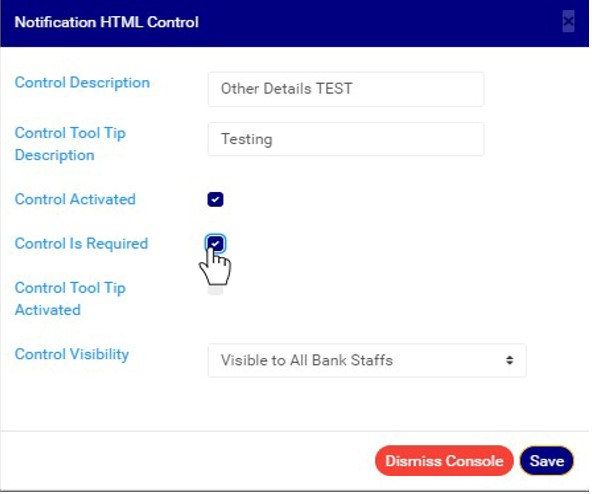
STEP 7: Click on‘CONTROL IS REQUIRED’ checkbox as in fig. 22.1k below to set the control as compulsory, note that checking this option means that the person sending the STR notification will not be able to send a notification if that field is not filled.
(Fig 22.1k)
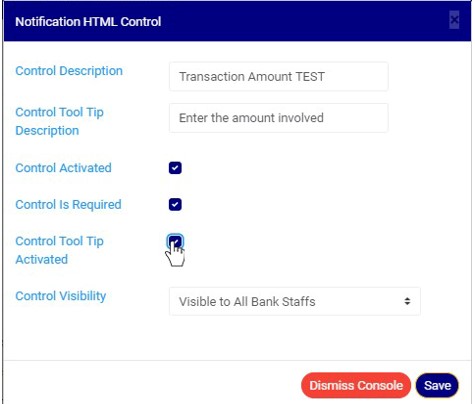
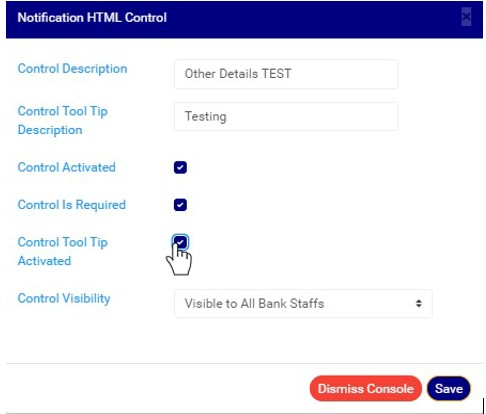
STEP 8: Click on ‘CONTROL TOOLTIP ACTIVATED’ checkbox as in fig. 22.1l below to activate the tooltip option for that particular control, note that unchecking this checkbox will deactivate the tool tip for that control and make it unavailable in the STR notification console.
(Fig 22.1l)
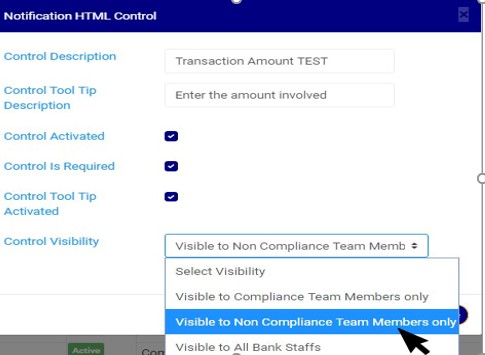
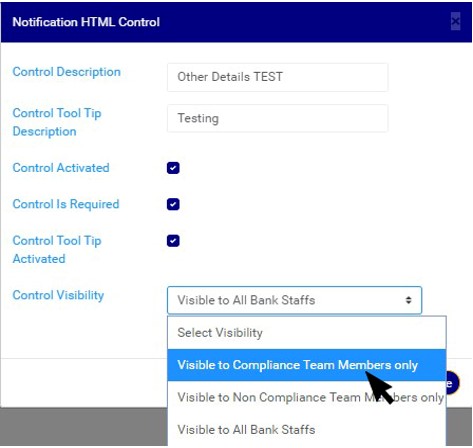
STEP 9: Click on ‘CONTROL VISIBILITY’ to select those that can see the field i.e. you can make the field visible to compliance team members only, non-compliance team members only, or all bank staffs. See an example in fig. 22.1m below
(Fig 22.1m)
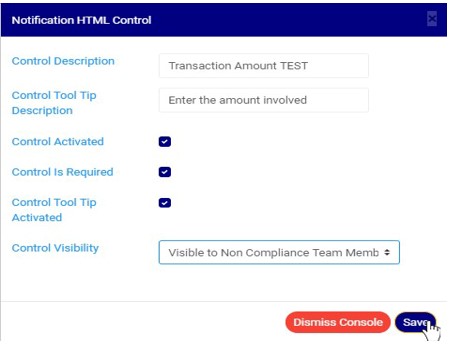
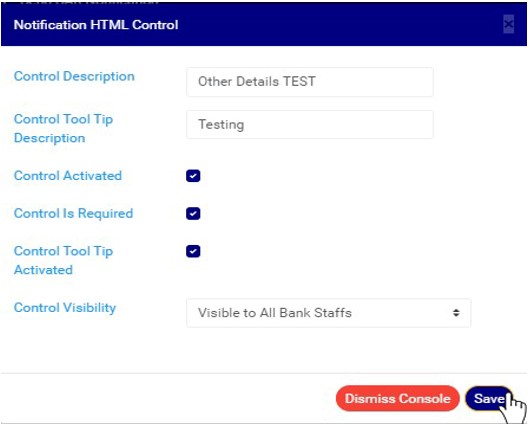
STEP 10: Click on ‘SAVE’ button as in in fig. 22.1n below to save the changes.
(Fig 22.1n)
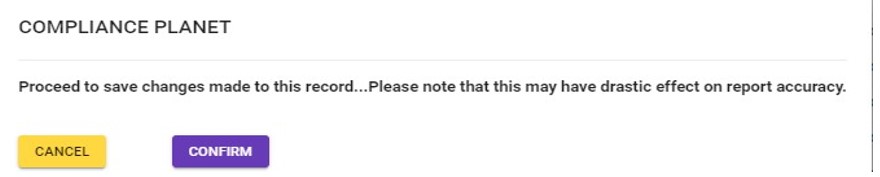
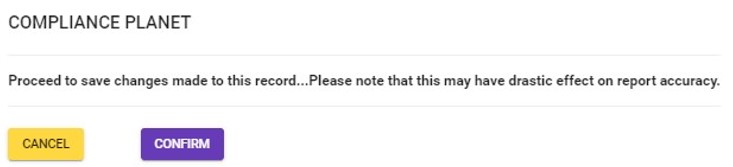
Clicking on the save button will display a console as in Fig 22.1o below. Click on ‘CONFIRM’ to save the changes or cancel to discontinue action.
(Fig 22.1o)
When the changes are saved, a notification will be displayed at the top of the page as in fig. 22.1p below.
This section provides a guide on how to modify “REASON” options available when sending an SAR notification (see section 6.2.2) on the Compliance Planet, with step-by-step instructions and pictures. These options are available when filling in “Reason for filing SAR” when sending an SAR notification.
Here, the operations are;
Editing notification reason,
Deleting reason
Adding a new reason
NOTE: Only person(s) profiled as deputy supreme admin can carry out these operations.
To perform any of the operations;
STEP 1: From the app dashboard, click ‘Control panel’ as in Fig. 23.1a.
Fig 23.1a
This will display a drop-down as shown below.
STEP 2: Select ‘SURVEILLANCE’ on the drop-down list and click on “CILPA“. See an example in Fig. 23.1b below.
Fig 23.1b
STEP 3: In the CILPA drop-down option, select the “SAR” as in Fig. 23.1c below.
Fig. 23.1c
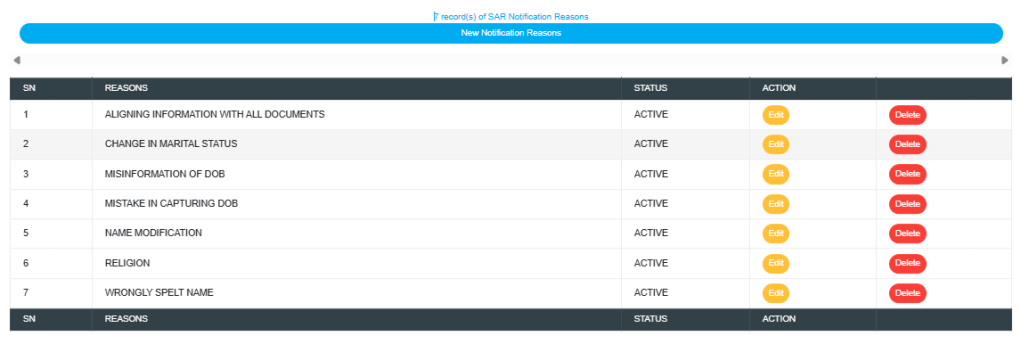
This will display a page showing a list of all reasons that have been created and are available on the Compliance Planet. See Fig. 23.1d for an example.
(Fig. 23.1d)
How to edit the SAR notification reason
This refers to changing the description or status of the SAR notification reason. Here is how to do this.
STEP 1: Click on the ‘EDIT’ button in the action column. See Fig. 23.2a for an example.
Fig 23.2a
Clicking the EDIT button will display a console titled ‘Notifications Reasons’ as shown in Fig. 23.2b below.
Fig 23.2b
STEP 2: Click on the reasons text box to change the Notification reason description. See an example in Fig. 23.2c below.
Fig 23.2c
STEP 3: Click on the reason status checkbox to make that notification reason active or inactive. This is illustrated in Fig. 23.2d and Fig. 23.2e below.
Fig. 23.2d
Fig 23.2e
Fig. 23 .2d shows that the notification reason is set ACTIVE, while Fig. 23.2e shows that the notification reason is set INACTIVE.
An active notification reason will form part of the available options when sending a new SAR notification (See section 6.2.1 for sending an SAR notification). In contrast, an inactive notification reason will no longer be part of the available options when sending a new STR notification.
STEP 4: Click on the ‘SAVE’ button to save the edit or click ‘DISMISS CONSOLE’ to close the console. See Fig. 23.2f for an example.
Fig. 23.2f
This displays a confirmation console as in Fig.23.2g below
Fig 23.2g
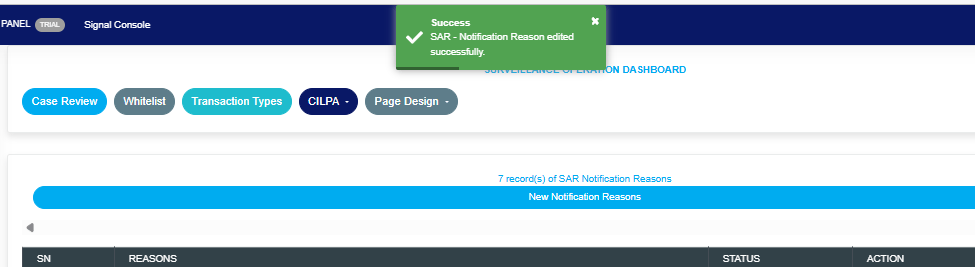
A notification, as in Fig. 23.2h, will be displayed at the top of the page when the operation is successful.
Fig 23.2h
How to delete an SAR notification reason
A deleted SAR notification reason will no longer be part of the available options when sending a SAR notification on the software(See section 6.2.2 for sending an SAR notification).
Here is how to do this.
STEP 1: Click on the ‘DELETE’ button of the SAR notification reason as in Fig. 23.3a.
Fig23.3a
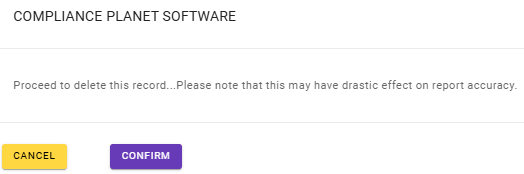
This displays a confirmation console to confirm your request to delete the SAR reason.
STEP 2: Click on ‘CONFIRM’ as in Fig. 23.3b to proceed or ‘CANCEL’ to discontinue.
Fig. 23.3b
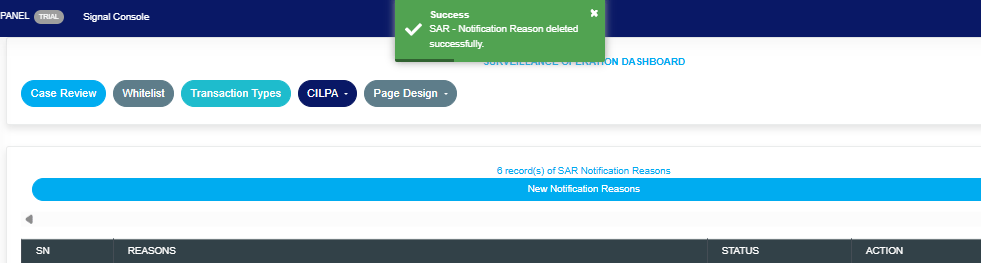
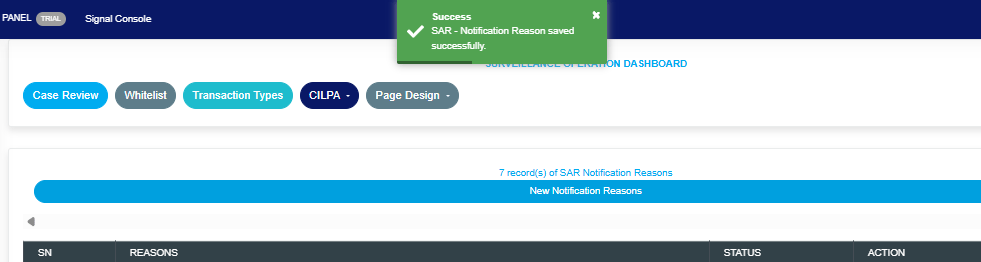
A notification will be displayed at the top of the page when the delete operation is complete, as in Fig. 24.3c below.
Fig. 23.3c
How to add a new SAR notification reason
This refers to creating a new SAR notification reason. This notification reason will form part of the available options when sending a new SAR notification on the compliance planet (See section 6.0 for sending an SAR notification).
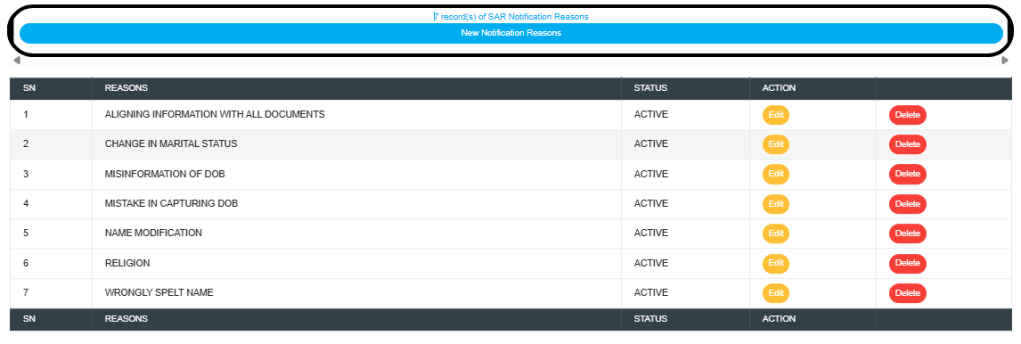
STEP 1: Click on ‘NEW NOTIFICATION REASON’ as shown in Fig. 23.3d below
Fig. 23.3d
A console as in Fig. 23.3e will be displayed.
Fig. 23.3e
STEP 2: Fill the reasons text box as in Fig. 23.3f below
(Fig. 23.3f)
STEP 3: Click on the ‘reason status’ checkbox to make that notification reason active or inactive. This is illustrated in Fig. 23.3h and Fig. 23.3h below.
Fig. 23.3h
Fig. 23.3h
Fig. 23.3g shows that the notification reason is set ACTIVE, while Fig. 23.3h shows that the notification reason is set INACTIVE.
An active notification reason will form part of the available options when sending a SAR notification on the software. In contrast, an inactive notification reason will no longer be part of the available options when sending a new SAR notification on the Compliance Planet.
STEP 3: Click on ‘SAVE’ to save the edit or click ‘DISMISS CONSOLE’ to close the console. See Fig. 23.4a for an example
Fig. 23.4a
This displays a confirmation console as in Fig. 23.4b below.
Fig. 23.4b
A notification, as in Fig. 23.4c (A), will be displayed at the top of the page when the operation is successful. Also, see Fig. 23.4c for an example of the updated description and status
This section provides a guide on how to modify controls available when sending an SAR notification on the Compliance Planet, with step-by-step instructions and pictures (see section 6.2.2 for sending an STR report).
These controls include; Branch Name and Sol Id, Account Number, Customer’s Former Name, Customer’s Former DOB, Other Details, Customer’s New Name, Reason for filing SAR, Customer’s New Dob etc.
This section provides the opportunity to edit what the person(s) involved in the process of sending an SAR notification will see. The modification available includes
Activating or deactivating a control
Setting the requirement of the control i.e. if it’s compulsory or not
Tool tip description i.e. the extra guide or note to be displayed when the mouse cursor is on a particular control.
Tool tip activation i.e. activating or deactivating the tool tip option.
Visibility i.e. setting those that can see any of these commands.
NOTE: Only person(s) profiled as deputy supreme admin can carry out these operations
STEP 1: From the left-hand side menu, Click ‘Control panel’ as in fig. 24.1a.
Fig 24.1a
This will display a drop down as in Fig 24.1b below.
STEP 2: Click ‘STR SAR’ on the drop-down list. See an example in Fig 24.1b below.
Fig 24.1b
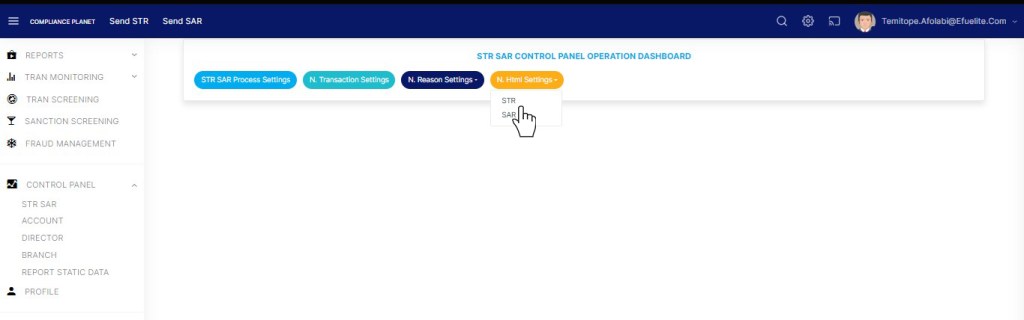
This will display STR SAR CONTROL PANEL OPERATION dashboard as in fig 24.1c below.
STEP 3: Click “N. HTML Settings” as in fig 24.1c below
(fig. 24.1c)
This displays a drop-down as in fig 24.1d below
STEP 4: Click “SAR” on the drop-down list as in 24.1d below
Fig 22.1d
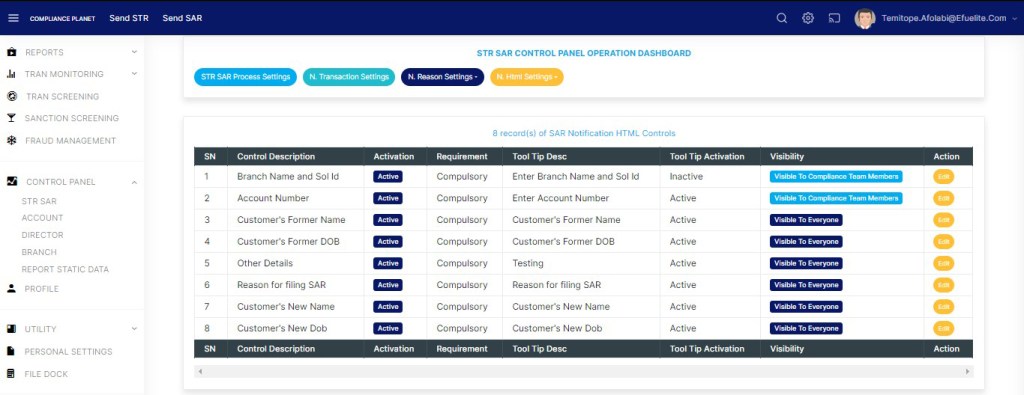
Clicking on ‘SAR’ will display a page showing a list of all SAR notification controls and their status, requirement, tooltip description, tooltip activation and visibility. See fig. 24.1e below for an example.
(fig 24.1e)
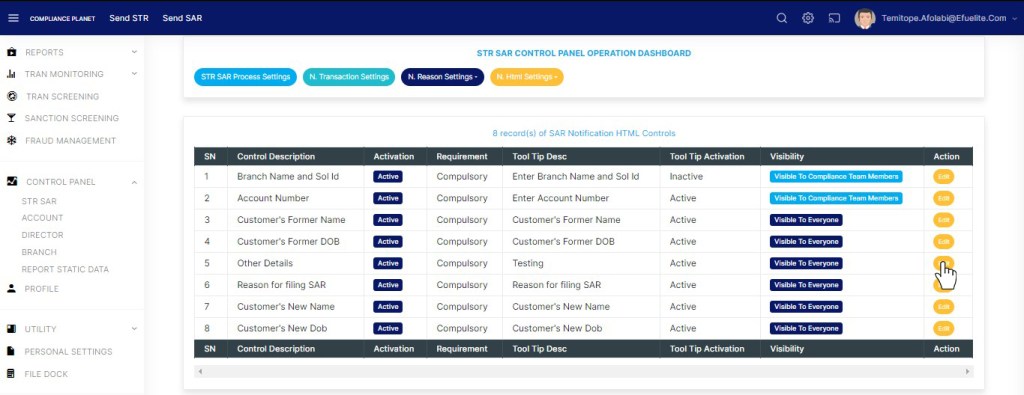
STEP 3: Click onthe ‘edit’ button on the action row as in fig. 24.1f below
(Fig 24.1f)
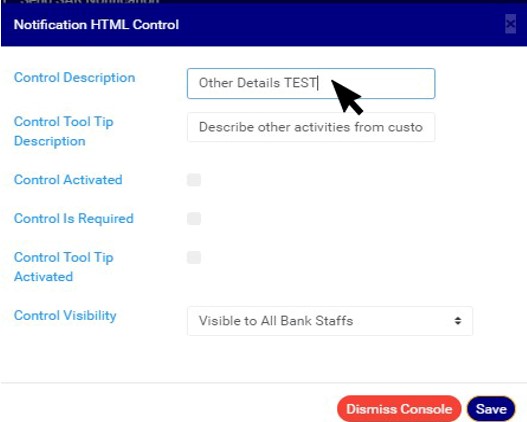
Clicking on the edit button will display a ‘Notification HTML Control’ console See fig. 24.1g below for an example.
(fig 24.1g)
STEP 4: Click on ‘control description’ text box to edit the description for that particular control. See an example in fig. 24.1h below
(Fig 24.1h)
STEP 5: Click on ‘control tool tip description’ text box to add or edit tool tip description for that particular control. See an example in fig. 24.1i below
(Fig 24.1i)
STEP 6: Click on ‘CONTROL ACTIVATED’ checkbox as in fig. 24.1j below to activate the control, note that unchecking this checkbox will deactivate the control and make it unavailable in the SAR notification console.
(Fig 24.1j)
STEP 7: Click ‘CONTROL IS REQUIRED’ checkbox as in fig. 24.1k below to set the control as compulsory, note that checking this option means that the person sending the SAR notification will not be able to send a notification if that field is not filled.
(Fig 24.1k)
STEP 8: Click on ‘CONTROL TOOLTIP ACTIVATED’ checkbox as in fig. 24.1l below to activate the tooltip option for that particular control, note that unchecking this checkbox will deactivate the tool tip feature for that control and make it unavailable in the SAR notification.
(Fig 24.1l)
STEP 9: Click on ‘CONTROL VISIBILITY’ to select those that can see the control i.e. you can make the field visible to compliance team members only, non-compliance team members only, or all bank staffs. See an example in fig. 24.1m below
(Fig 24.1m)
STEP 10: Click on ‘SAVE’ button as in in fig. 24.1n below to save the changes.
(Fig 24.1n)
Clicking on the save button will display a console as in Fig 24.1o below. Click on ‘CONFIRM’ to save the changes or cancel to discontinue action.
(Fig 24.1o)
When the changes are saved, a notification will be displayed at the top of the page as in fig. 24.1p below.
This section provides a guide on settings pertaining to STR and SAR notifications on the Compliance Planet, with step-by-step instructions and pictures.
Under this Control panel feature, the software provides options to;
Modify the route an STR or SAR notification will go through
Allow file attachments to be uploaded with the STR or SAR notification
Validate account number when Sending an STR or SAR notifications
NOTE: Only person(s) profiled as deputy supreme admin will be able to carry out these operations
To perform any of the operations on STR SAR NOTIFICATION SETTINGS;
STEP 1: From the left-hand side menu, Click ‘Control panel’ as in fig. 25.1a.
Fig 25.1a
This will display a drop down as in Fig 25.1b below.
STEP 2: Click ‘STR SAR’ on the drop-down list. See an example in Fig 25.1b below.
Fig 25.1b
This will display STR SAR CONTROL PANEL OPERATION dashboard as in fig 25.1c below.
STEP 3: Click “STR SAR Process Settings” as in fig 25.1c below
(fig. 25.1c)
Clicking on SAR NOTIFICATION SETTINGS will display a page showing a list of all STR SAR notification settings. See fig. 25.1d for an example.
(fig. 25.1d)
STEP 4: Select the any of the STR SAR notification settings checkbox to activate that particular setting. See an example in fig 25.1e below
(fig. 25.1e)
As seen in fig 25.1d and 25.1e above the STR SAR notification settings allows the user to configure the STR SAR notification process flow for both manually filed notifications and notifications automatically filled from transaction monitoring alerts.
Note that the automated filling is only STR notifications.
Selecting the STR SAR notification settings checkbox will activate that setting while deselecting the checkbox means you want to deactivate the setting.
Manual Notification Process Settings
Manual STR Filling – Bypass Revision Desk: This means that all STR notifications sent will by-pass or will not go through the revision desk. This option may be used when the financial institution does not have a revision desk in the compliance department.
Manual STR Filling –Bypass Supervision Desk: This means that all STR notifications sent will by-pass or will not go through the supervision desk. This option may be used when the financial institution does not have a supervision desk in the compliance department.
Manual SAR Filling – Bypass Revision Desk: This means that all SAR notifications sent will by-pass or will not go through the revision desk. This option may be used when the financial institution does not have a revision desk in the compliance department.
Manual SAR Filling – Bypass Supervision Desk: This means that all SAR notifications sent will by-pass or will not go through the supervision desk. This option may be used when the financial institution does not have a supervision desk in the compliance department.
Automated (Transaction Monitoring) Notification Process Settings
Automated (Tran Monitoring) STR filling –Bypass Revision Desk: This option is for transactions that are automatically pushed from transaction monitoring alerts. Selecting this option means the STR notification sent will not go through the revision desk.
Automated (Tran Monitoring) STR filling –Bypass Supervision Desk: This option is for transactions that are automatically pushed from transaction monitoring alerts. Selecting this option means the STR notification sent will not go through the supervision desk.
Other STR SAR Notification Pro Settings
STR file Upload: Selecting this enables the option to upload documents (attachments) to accompany the STR notification.
SAR file upload: Selecting this enables the option to upload documents (attachments) to accompany the SAR notification
STR Validate Notification account number: Selecting this option means that when sending an STR notification, the planet will validate the inputted AC number if it exists on the financial institutions’ database.
SAR Validate Notification account number: Selecting this option means that when sending an SAR notification, the planet will validate the inputted AC number if it exists on the financial institutions’ database.
STEP 5: Click on ‘SAVE CHANGES’ button to save the changes. See an example in fig 25.1f below.
(fig. 25.1f)
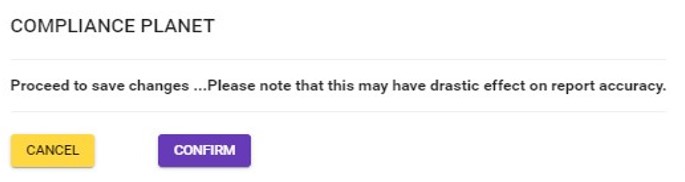
Clicking on the save changes button will display a confirmation console as in Fig 25.1g below. Click on ‘CONFIRM’ to save the changes or cancel to discontinue action.
(Fig 25.1g)
When the changes are saved, a notification will be displayed at the top of the page as in fig. 25.1h below.
This section provides a guide on how to perform operations pertaining to the report person data on the Compliance Planet, with step-by-step instructions and pictures.
WHO IS A REPORT PERSON?
The report person refers to an authorized representative of the reporting institution. The personal and official details of the person make up the ‘Report person data’. The Compliance planet attaches the report person data to all reports processed and generated and it is static for all reports.
NOTE: Only person(s) profiled as deputy supreme admin will be able to carry out these operations
How to View Report Person Data
To view Report Person data;
STEP 1: From the app dashboard, click “CONTROL PANEL” as in Fig 26.1a below.
Fig 26.1a
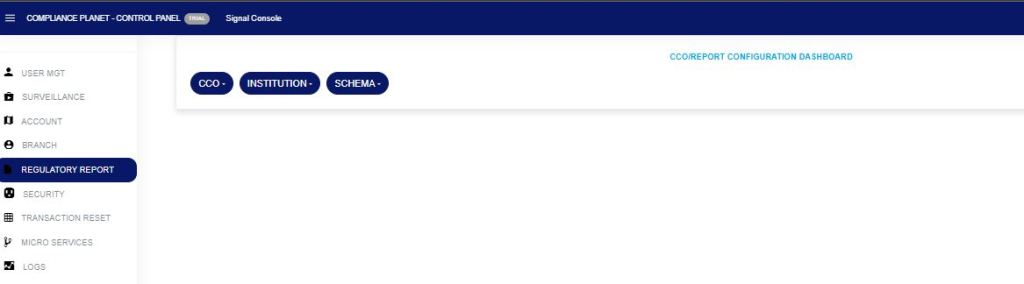
STEP 2: From the left-hand side menu, click “REGULATORY REPORT” as in Fig 26.1b below
Fig 26.1b
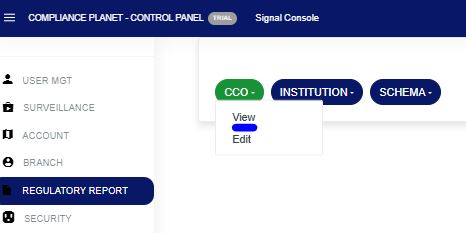
STEP 3: From the menu, click “CCO” and select “View” as in Fig 26.1c below.
Fig 26.1c
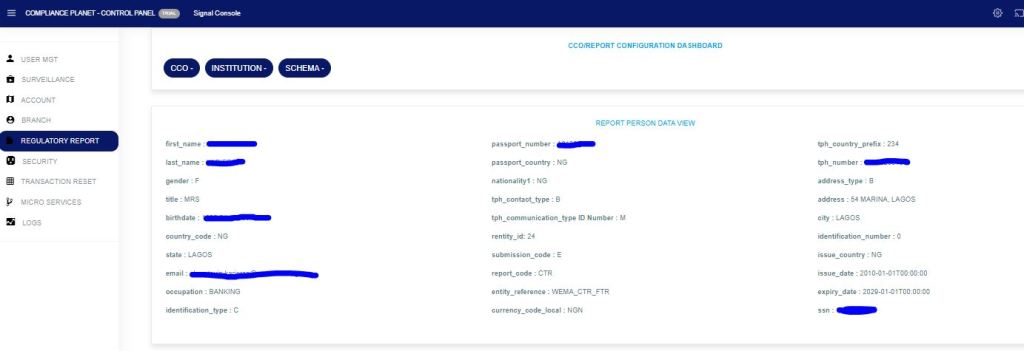
This displays a REPORT PERSON DATA VIEW as in Fig. 26.1d below.
Fig. 26.1d
How to Edit Report Person Data
To make changes to the report person data;
STEP 1: Click “edit” on the report person data drop-down as in Fig 26.2a below
Fig. 26.2a
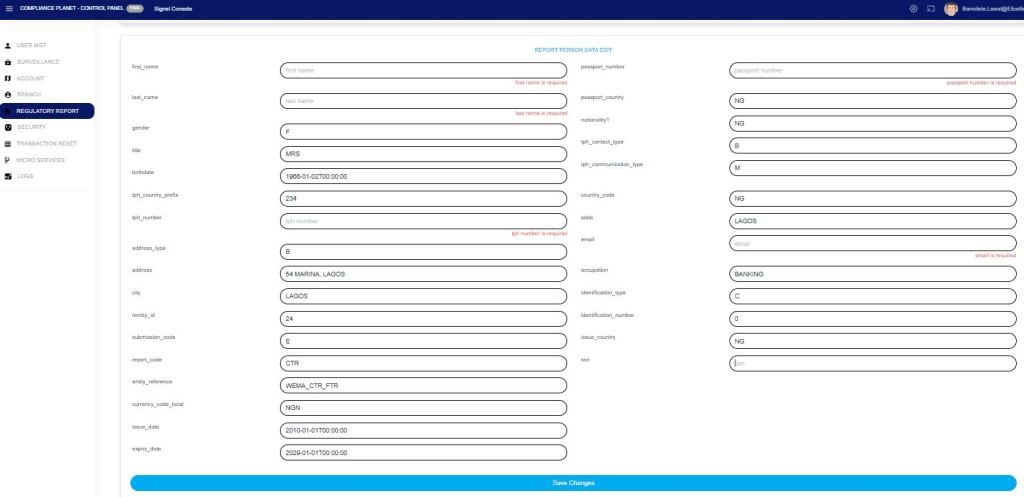
This displays a page as in Fig. 26.2b below.
Fig. 26.2b
Fill in the new details or change the details on the console.
STEP 2: Click on ‘Save Changes’ as shown in Fig. 26.2c.
Fig. 26.2c
This displays a confirmation console as in Fig. 26.2d to confirm the request.
Fig. 26.2d
STEP 3: Click on ‘CONFIRM’ as in fig. 26.2e to proceed or ‘CANCEL’ to discontinue the operation. A notification will be displayed at the top of the page when the operation is complete.
This section provides a guide on how to perform operations as regards institution asset data on the Compliance Planet, with step-by-step instructions and pictures. Institution asset data includes the name of the institution, the institution code, address, year of establishment, and contact person details.
NOTE: Only the Supreme Administrator can carry out these operations
Institution Asset Data View
To view institution asset data;
STEP 1: From the app dashboard, click “CONTROL PANEL” as in Fig 27.1a below.
Fig 27.1a
STEP 2: From the left-hand side menu, click “REGULATORY REPORT” as in Fig 27.1b below
Fig 27.1b
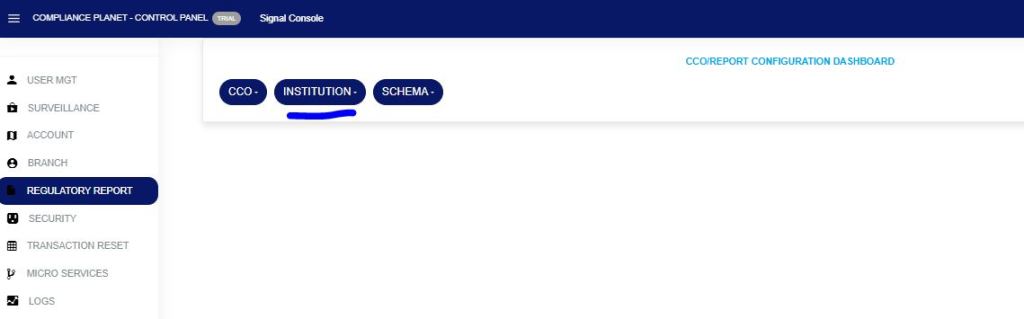
STEP 3: From the menu, click “Institution” as in Fig 27.1c below
Fig 27.1c
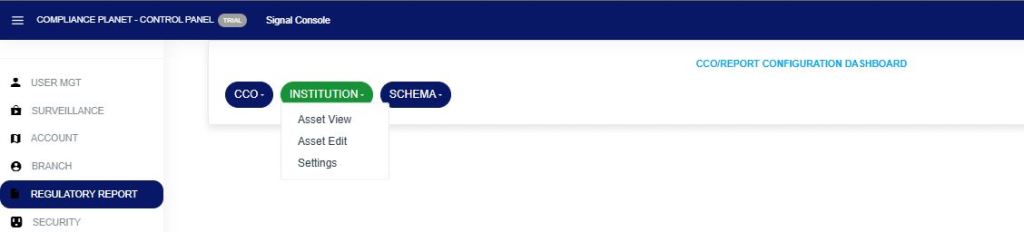
This displays a drop-down as in fig 27.1d below
STEP 4: Click “Asset view” on the report institution data drop-down as in fig 27.1d below
Fig 27.1d
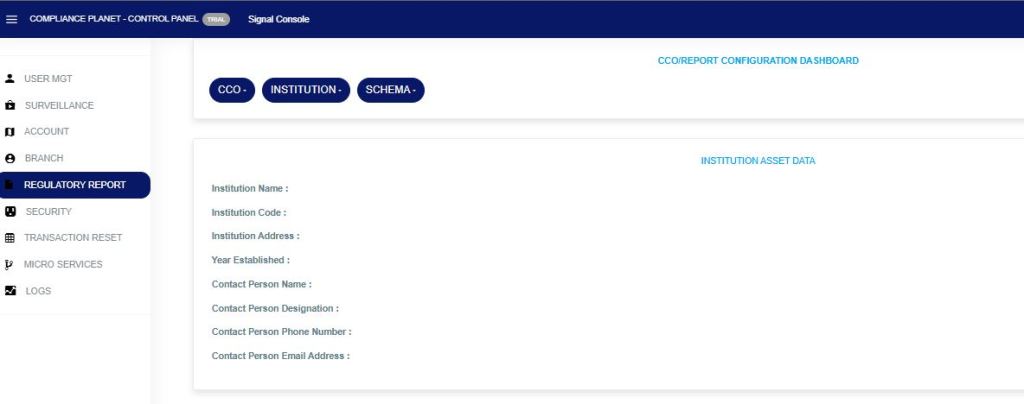
The Institution data will be displayed on the page as in Fig 27.1e below
Fig 27.1e
How to Edit Institution Asset Data
NOTE: Only the Supreme Administrator can carry out these operations
To make changes to the institution asset data,
STEP 1: Click “Asset Edit” on the institution drop-down as in Fig 27.2a below
Fig 27.2a
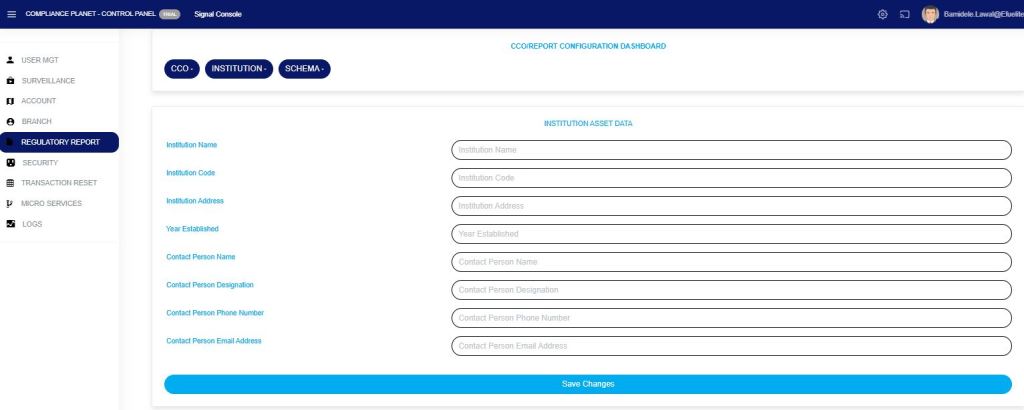
The Institution data will be displayed on the page as in fig 27.2b below
Fig 27.2b
Fill in new data or change the details on the console.
STEP 2: Click on ‘Save Changes’ as shown in Fig. 27.2c to save the changes or click on ‘Dismiss console’ to discard changes or new details entered on the console.
Fig 27.2c
This displays a confirmation console as in Fig. 27.2d to confirm your request.
Fig. 27.2d
STEP 3: Click on ‘CONFIRM’ to proceed or ‘CANCEL’ to discontinue. A notification as in Fig. 27.2e below will be displayed at the top of the page when the operation is complete.
This section provides a guide on how to perform operations pertaining to letter of Credit Bill for Collection (LCBC), with step-by-step instructions and pictures. See section 2.1.14 for notes on LCBC
Note: Only person(s) assigned right to ‘view LCBC transactions’ will be able to carry out this operation(s)
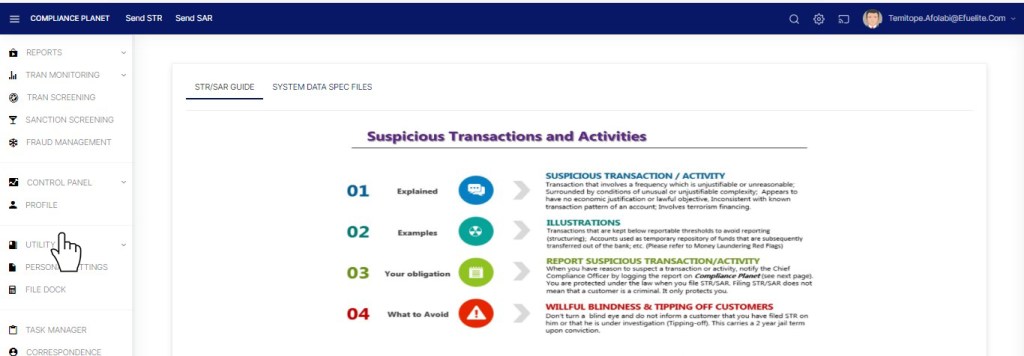
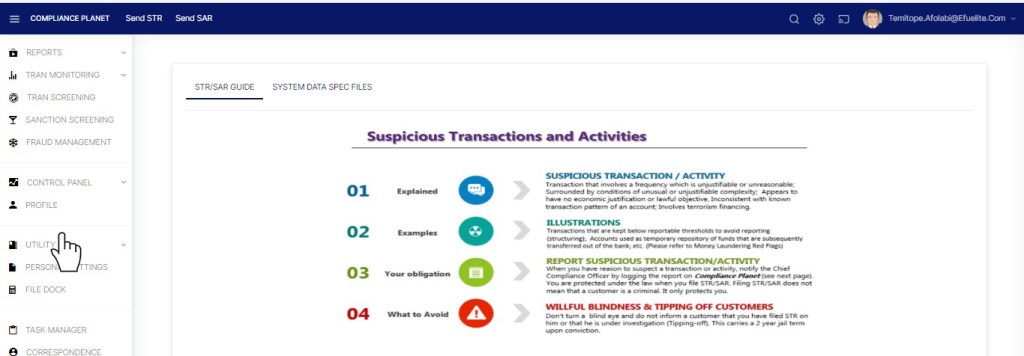
STEP 1: From the left-hand side menu, click ‘UTILITY’ as in fig. 32.0a below
(fig. 32.0a)
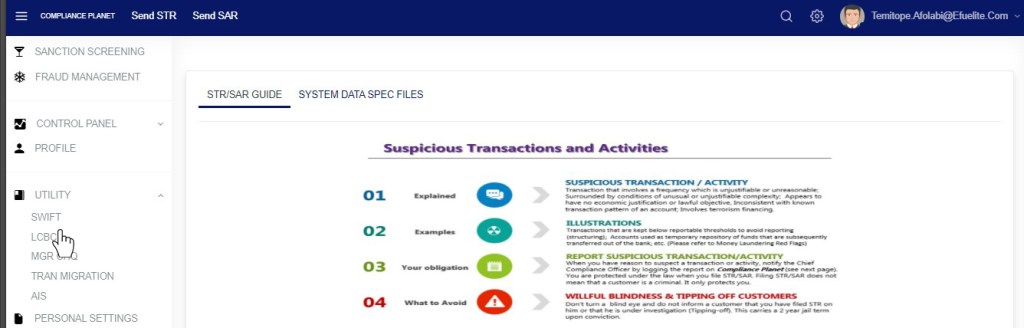
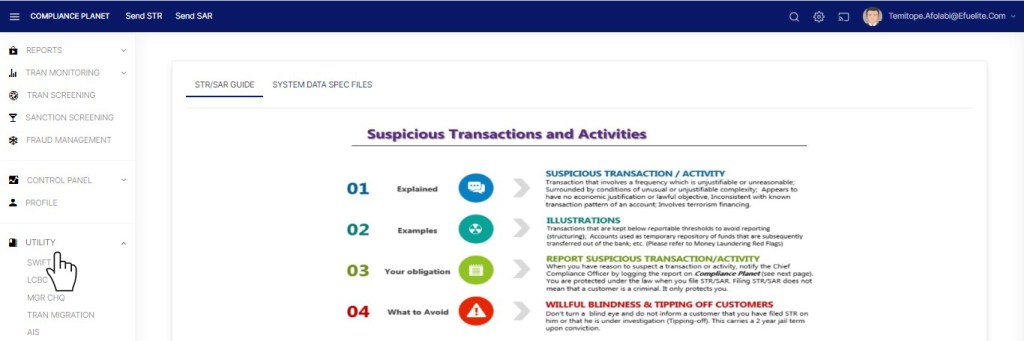
This displays a drop-down list as in fig.32.0b.
STEP 2: On the drop-down list, click “LCBC” as shown in fig 32.0b below
(fig. 32.0b)
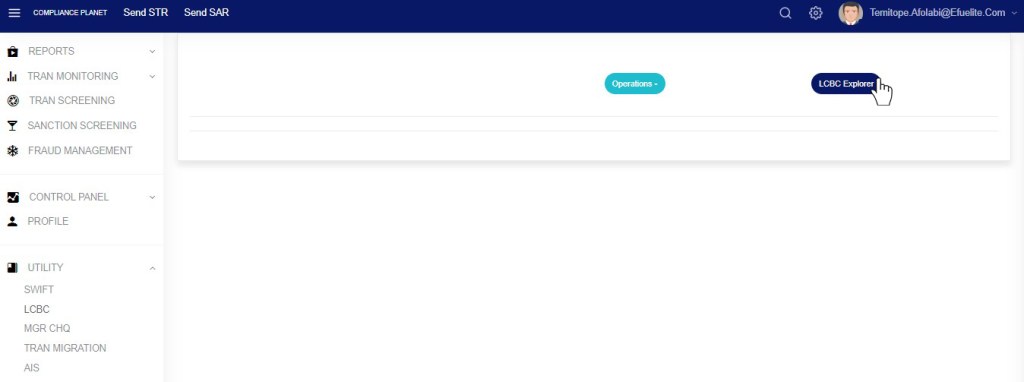
This will display a LCBC operations page as in fig. 32.0c below
Note: Only person(s) assigned right to ‘view LCBC transactions’ will be able to carry out this operation(s)
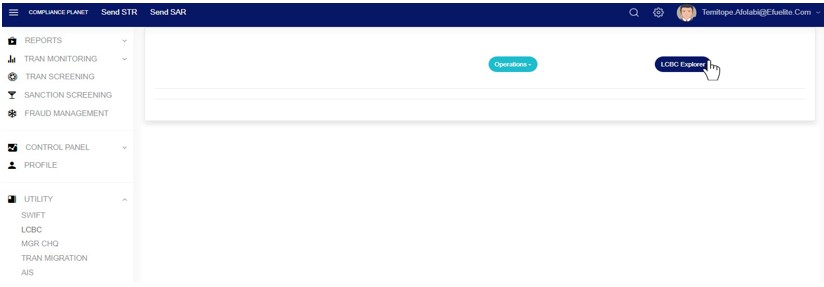
STEP1: Click on ‘LCBCExplorer’ button on the LCBC Operation page. See Fig 32.2a for an example
(Fig. 32.2a)
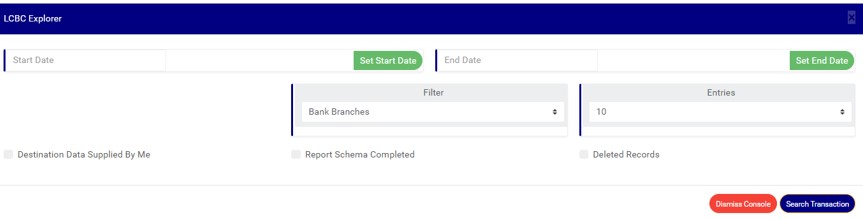
Clicking on the ‘LCBC Explorer’ button will display a ‘LCBC Explorer’ console as in Fig 32.2b below
(Fig. 32.2b)
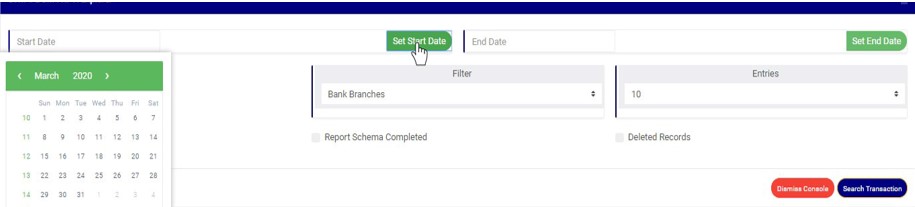
STEP 2: Click on SET START DATE and SET END DATE to specify the date range to be covered. See an example in Fig 32.2c below
(fig. 32.2c)
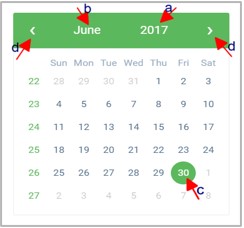
Take a look at the arrows labelled a to d in fig. 32.2d to study the calendar.
Click on the given year to change it to your year of choice.
Click on the given month to change it to your month of choice.
Then, click on the date of the month.
You can also click on the angle brackets on the calendar [ ‘<’ or ‘>’ ] to go backward or forward.
(fig. 32.2d)
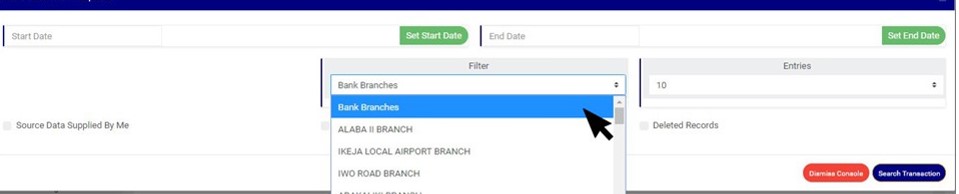
STEP 3: Click on the ‘filter’ box to select a bank branch. (See the example in fig. 32.2e). If you want to see the transactions for all branches, select bank branches. It is the first option on the filter list.
(Fig. 32.2e)
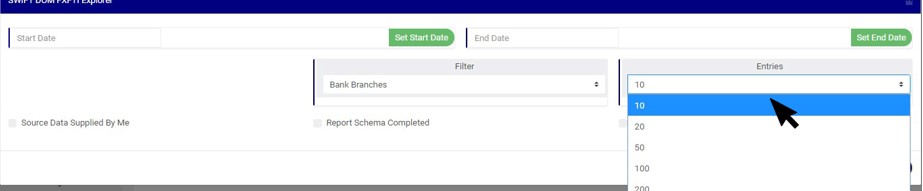
STEP 4: Click ‘entries’ box to change the number of transactions you want to see per page. (See the drop-box in fig. 32.2f. below).
(Fig. 32.2f)
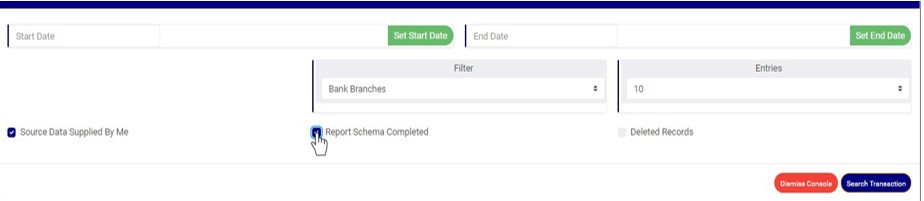
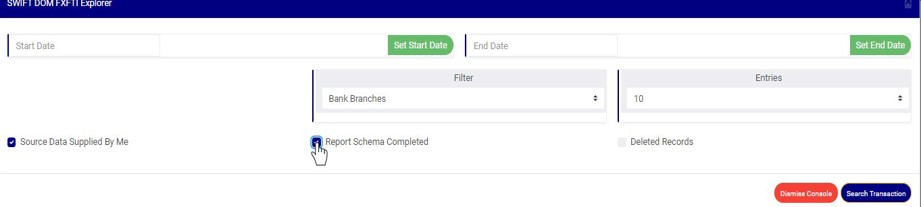
STEP 5: Tick the any of the checkbox as shown in fig 32.2g to further specify the transactions you want to view
Select ‘Source Data Supplied by Me’ to see list of LCBC transactions whose source data was supplied by you
Select ‘Report Schema Completed’ to see list of LCBC transactions whose report data is complete
Select ‘Deleted Records’ to see list of LCBC transactions that have been deleted.
(Fig. 32.2g)
NOTE: Leave all checkboxes unchecked to see list of all LCBC transactions
STEP 6: Click ‘Search Transaction’ as shown in fig 32.2h
(Fig. 32.2h)
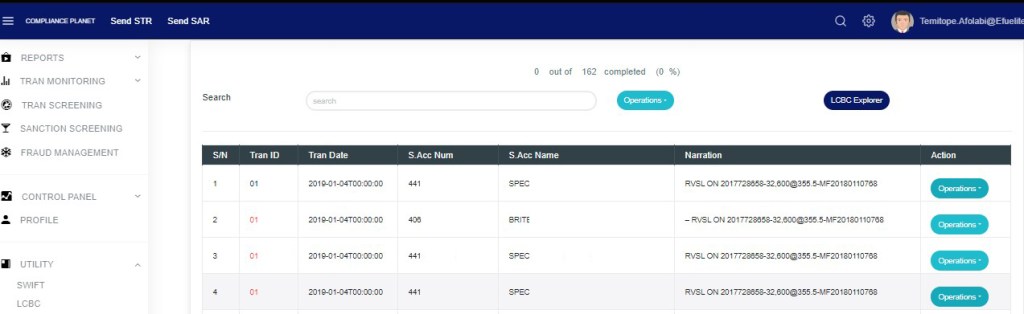
This will display a page as in Fig 32.2i below
(Fig. 32.2i)
Transactions with transaction ID coloured blue signify that the schema for the transaction is complete.
Transactions with transaction ID coloured red signify that the schema for the transaction is incomplete.
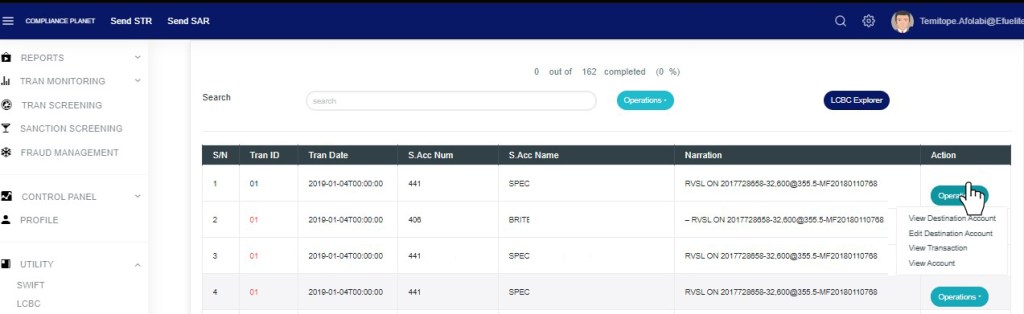
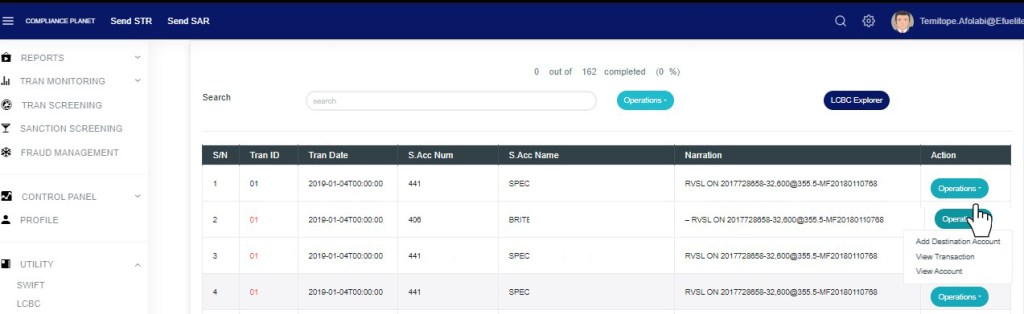
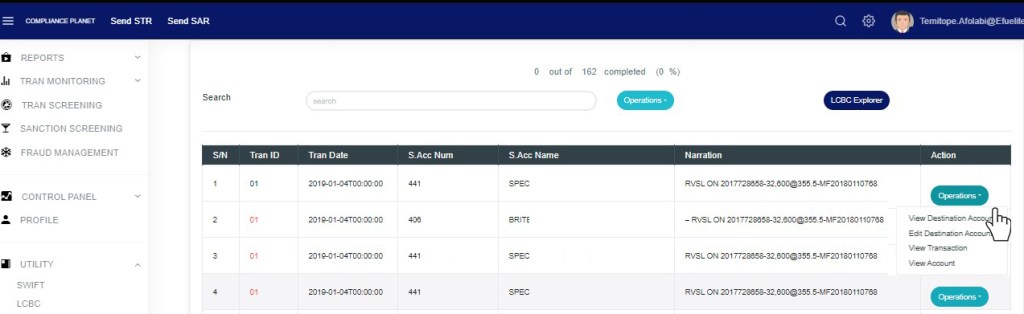
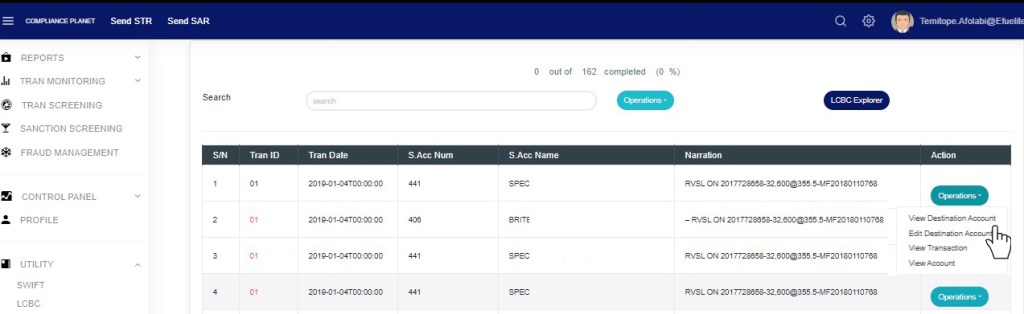
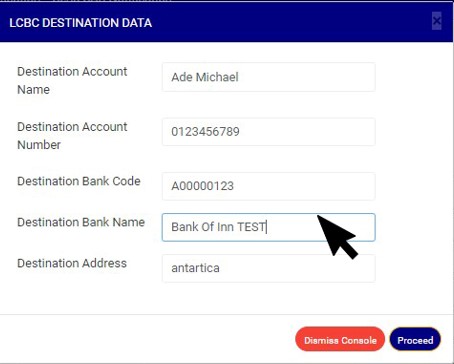
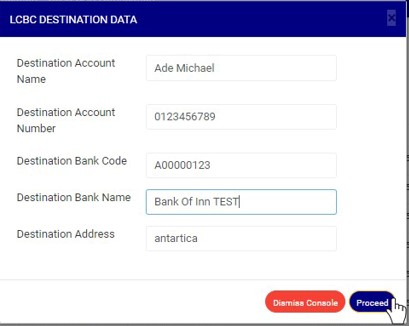
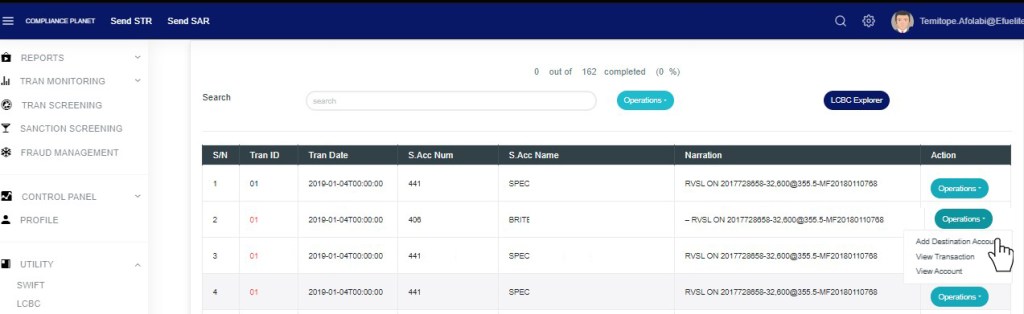
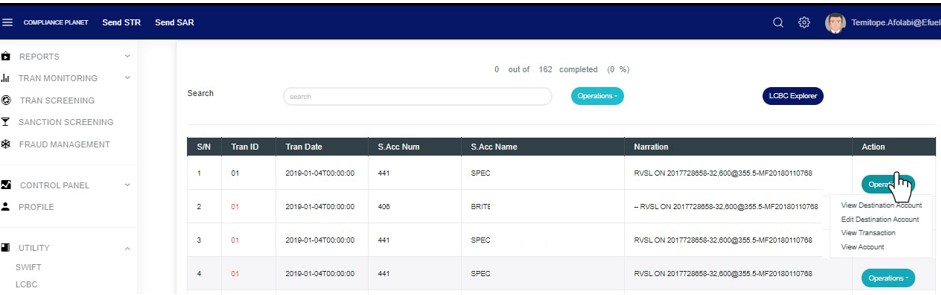
Click on ‘Operations.’ button on the Action column, this will display a drop down with option to ‘view Destination Account’ and ‘Edit Destination Account”. However, if there isn’t destination account detail attached to the transaction the option available will be “Add Destination Account”. See an example in fig 32.2j and 32.2k below.
This option is available if Destination account has been added to the LCBC transaction.
Note: You need to be assigned right to ‘view LCBC transactions’ and ‘Screen Edit LCBC transactions’ to be able to delete attached destination account data.
On the Operations Dropdown, click on ‘VIEW DESTINATION ACCOUNT’ to see the destination account details for this transaction. See this in fig 32.2l
(Fig. 32.2l)
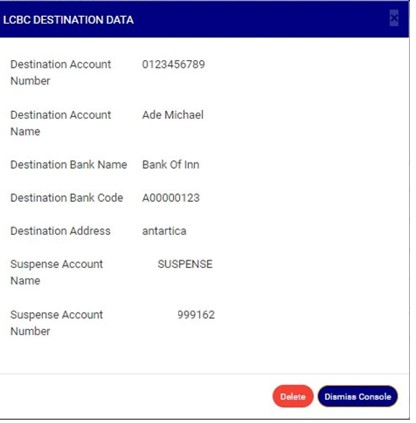
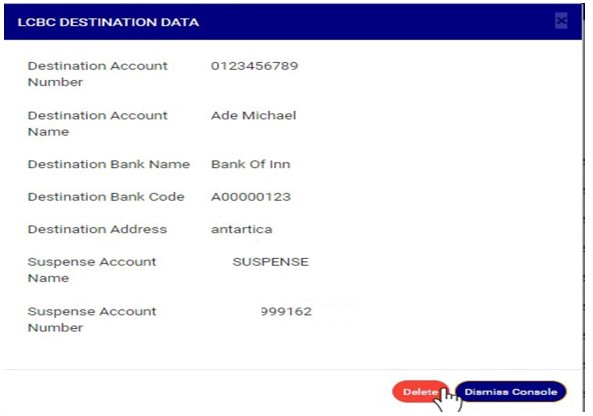
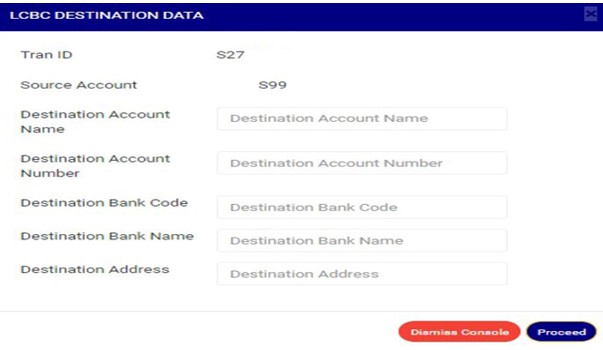
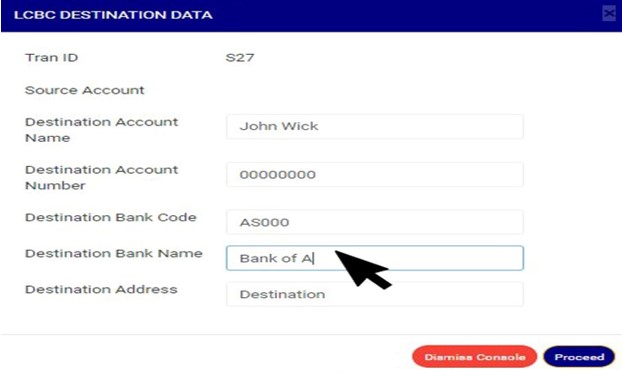
This will display a ‘LCBC DESTINATION DATA’ console as in in fig 32.2m below.
(Fig. 32.2m)
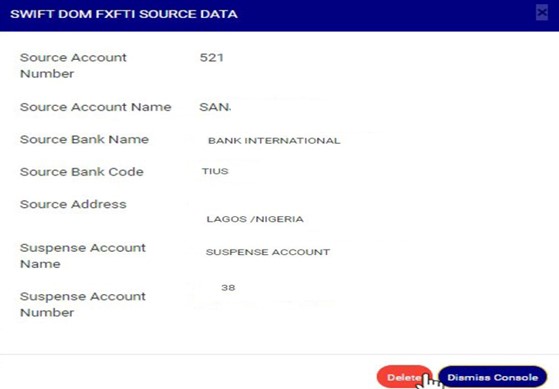
Click on ‘Dismiss console’ to close the console or click ‘Delete’ to delete the destination account data. See fig 32.2n
(Fig. 32.2n)
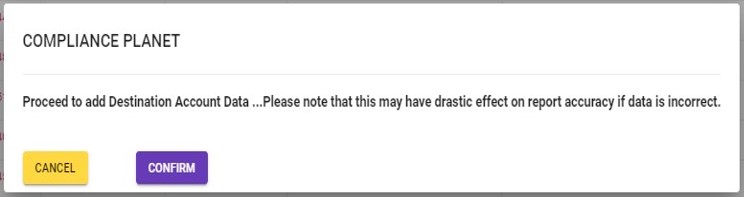
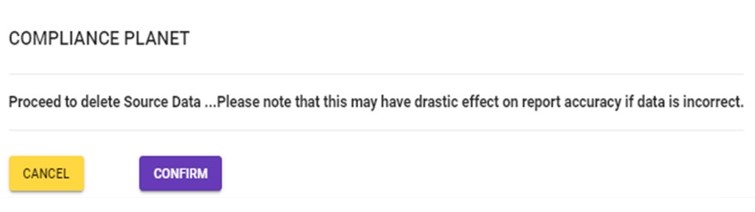
Clicking delete will display a confirmation console as in Fig 32.2o below. Click ‘confirm’ to continue or ‘cancel’ to dismiss the operation.
(Fig. 32.2o)
A notification will be displayed at the top of the page when delete is successful. See Fig 32.2p below
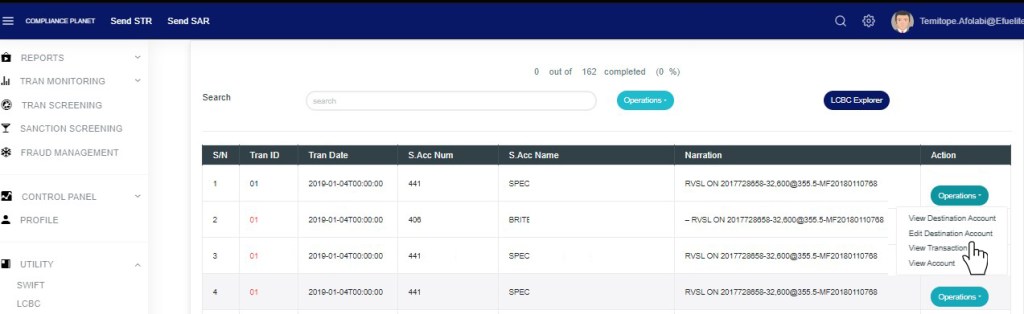
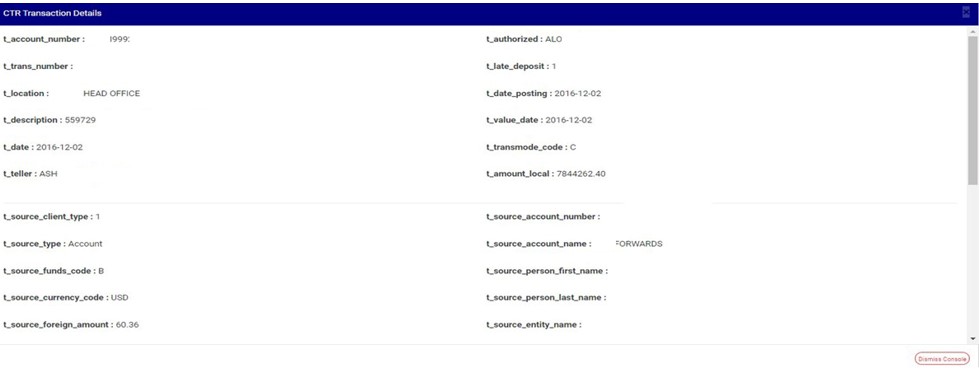
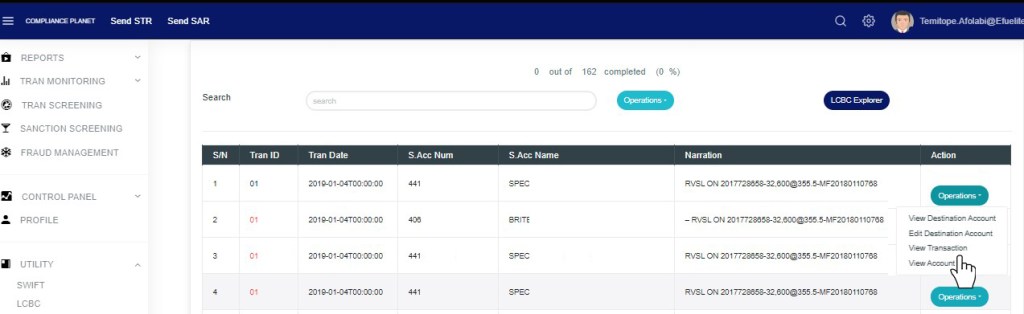
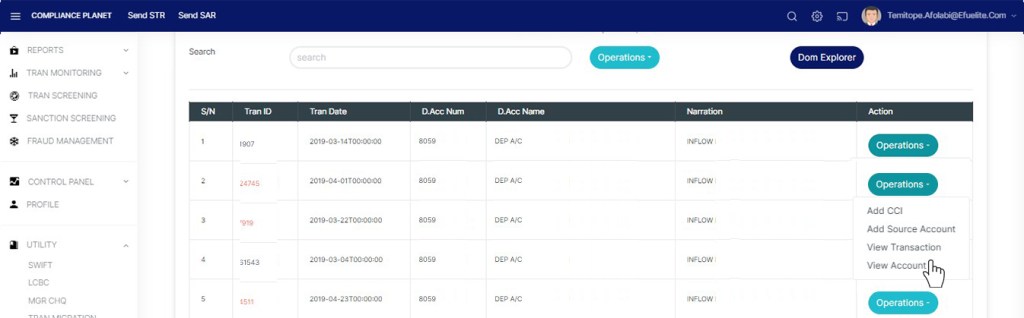
click on ‘Operations’ button on the Action column, this will display a drop down with option to ‘VIEW Transaction’ and ’View Account’. See an example in fig 32.2ad
On the LCBC explorer page you can make a bulk download of Letter of Credit Bill for Collection (LCBC) transaction records either for viewing or editing purpose. The process is explained below.
Note that the records downloaded for editing purpose can be edited and uploaded on the software to update the records. However,
This feature downloads the LCBC Transaction records as an excel file.
Note: You need to be assigned right to ‘view LCBC transactions’ and ‘Download LCBC transactions’ to be able to carry out this operation
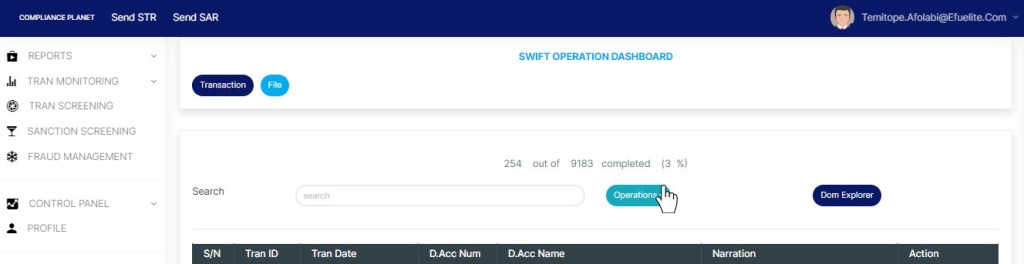
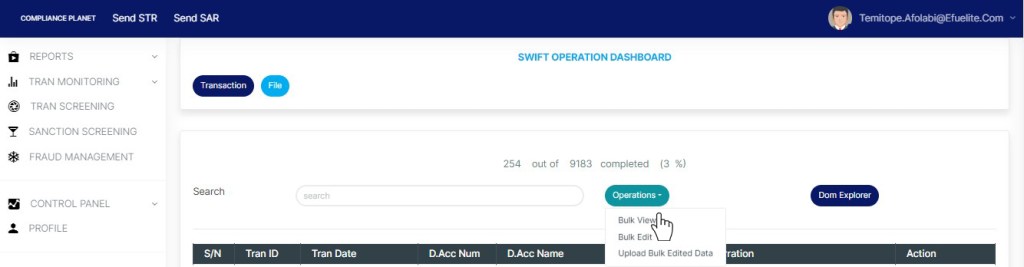
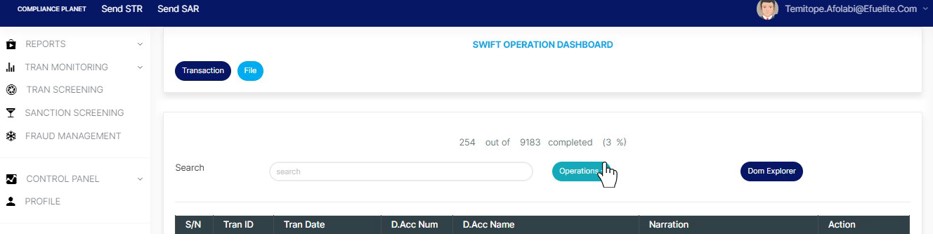
STEP 1: Click the ‘Operations’ button on the LCBC Explorer page. The button is a blue button at the top of the page and it is different from the operations button on the action column which houses features for individual record. See Fig 32.3a for an example
(fig. 32.3a)
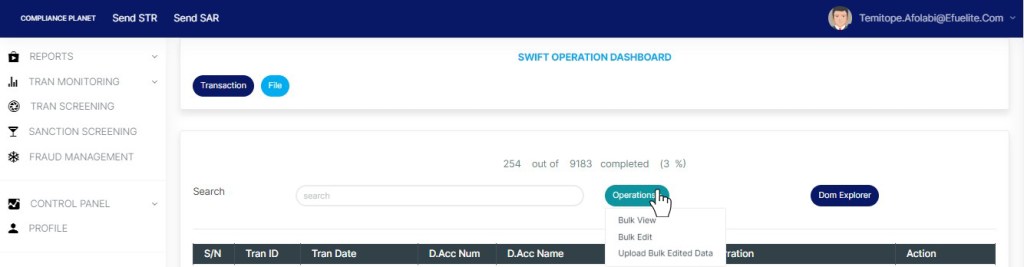
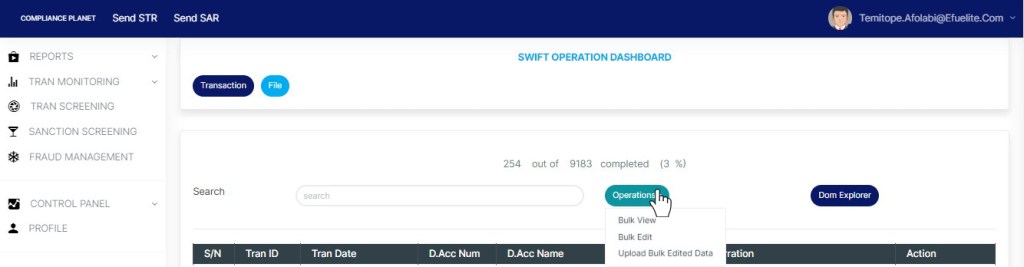
This will display a dropdown as in fig. 32.3b below
(fig. 32.3b)
STEP 2: Click ‘bulk view’ as shown in fig 32.3c below
(fig. 32.3c)
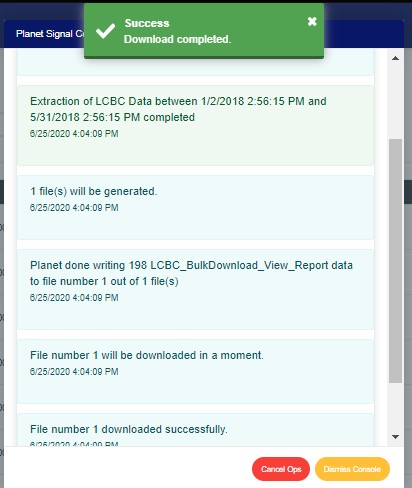
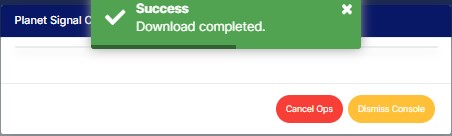
The signal console shows on going processes. An example of a signal console is fig 32.3d. You can terminate unfinished processes by clicking ‘CANCEL OPS’.
To minimize signal console, click on DISMISS CONSOLE.
(fig 32.3d)
An excel file with details of the LCBC transaction will be downloaded when the process is complete.
This operation will download an excel file with details of the LCBC transactions. The excel file downloaded is different from the one downloaded when you download for bulk view as this can be edited and uploaded on the software to bulk edit the transaction data.
Note: You need to be assigned right to ‘view LCBC transactions’ and ‘Download LCBC transactions’ to be able to carry out this operation
STEP 1: Click on the Operations button on the LCBC Explorer page. See Fig 32.3f for an example
(fig. 32.3f)
Clicking the download button will display a dropdown as in fig. 32.3g below
(fig. 32.3g)
STEP 2: Click on the bulk Edit as shown in fig 32.3h below
(fig. 32.3h)
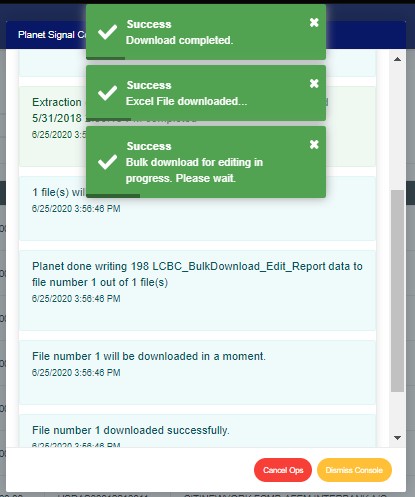
The signal console shows on going processes. An example of a signal console is fig 32.3i. You can terminate unfinished processes by clicking ‘CANCEL OPS’.
To minimize signal console, click on DISMISS CONSOLE.
(fig 32.3i )
An excel file with details of the LCBC transaction will be downloaded when the process is complete. The details on the downloaded excel file can be edited and uploaded on the software to update multiple LCBC transaction details at once. However, the ‘Compliance tran Id’ for each record on the excel file must not be tampered with for the upload to be successful.
On the LCBC Operations page you can make bulk upload of Edited LCBC Transaction records. The process is explained below
Note: You need to be assigned right to ‘view LCBC transactions’ and ‘Edit bulk LCBC transactions’ to be able to carry out this operation
STEP 1: Click ‘Upload bulk edited data’ on the dropdown as shown in fig 32.3j below
(Fig. 32.3j)
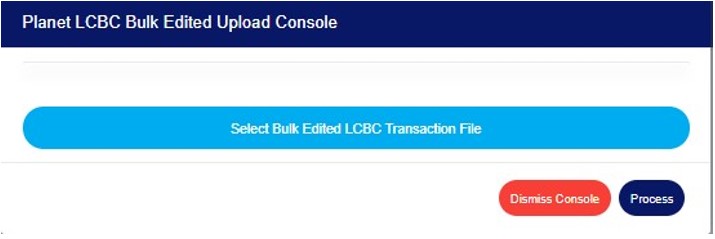
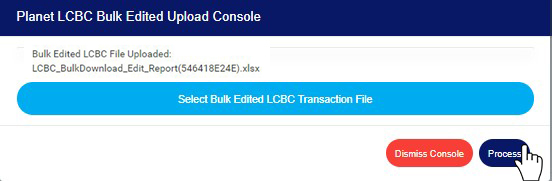
This will display a ‘Planet LCBC Bulk Edited Upload Console’ as in Fig32.1k below.
(fig. 32.3k)
STEP 3: Click on ‘Select Bulk Edited LCBC Transaction file’ to choose the edited transaction file you want to upload from your computer. See this in Fig 32.3l below
(fig. 32.3l)
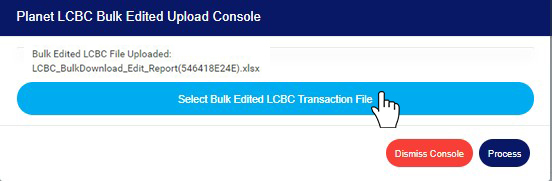
After successful upload of file, the file name will be displayed on the console. See fig. 32.1e to see an example.
(Fig. 32.3m)
STEP 4: Click on ‘process’ button to proceed with the upload. See fig. 32.3n below to see the green button at the bottom-right corner of the console.
(Fig. 32.3n)
This will display a confirmation console as in fig. 32.3o below. Click ‘Confirm’ to proceed with the upload or ‘Cancel’ to close the console.
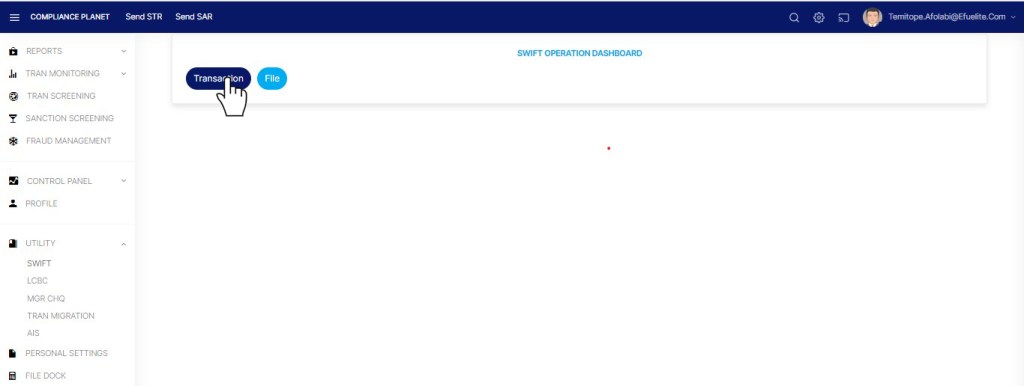
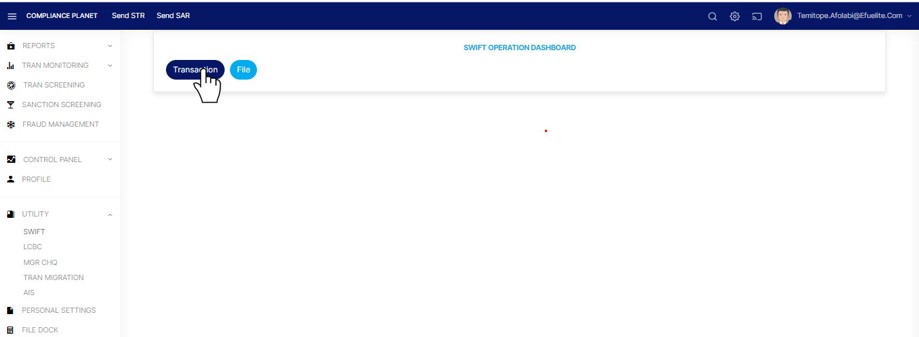
STEP1: Click “Transaction” On the SWIFT OPERATIONS DASHBOARD as shown in fig 31.2a below
(fig. 31.2a)
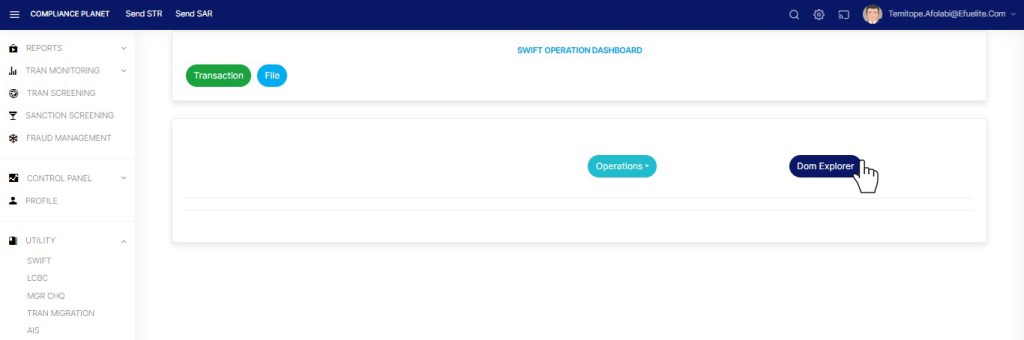
This displays a page as in Fig 31.2b below
STEP 2: Click on ‘DomExplorer’ button on the Swift Operation page. See Fig 31.2b for an example
(Fig. 31.2b)
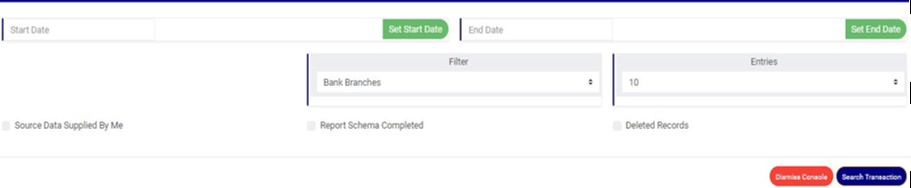
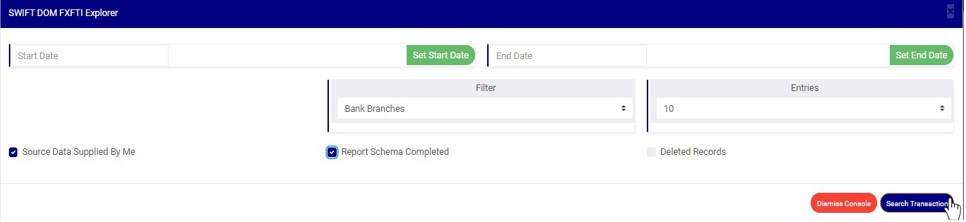
Clicking on the ‘Dom Explorer’ button will display a ’SWIFT DOm FXFTI Explorer’ console as in Fig 31.2c below
(Fig. 31.2c)
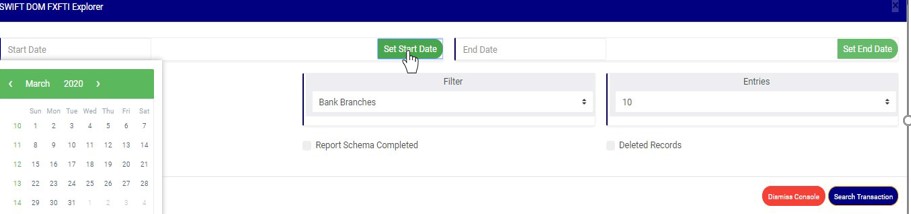
STEP 3: Click on SET START DATE and SET END DATE to specify the period to be covered. See an example in Fig 31.2d below
(fig. 31.2d)
Take a look at the arrows labelled a to d in fig. 31.2e to study the calendar.
Click on the given year to change it to your year of choice.
Click on the given month to change it to your month of choice.
Then, click on the date of the month.
You can also click on the angle brackets on the calendar [ ‘<’ or ‘>’ ] to go backward or forward.
(fig. 31.2e)
STEP 4: Click on the filter box to select a particular bank branch. (See the example in fig. 31.2f). If you want to see the transactions for all branches, select bank branches. It is the first option on the filter list.
(Fig. 31.2f)
STEP 5: Click the ‘entries’ box to change the number of transactions you want to see per page. (See the drop-box in fig. 31.2g. below)
(Fig. 31.2g)
STEP 6: Tick the any of the checkbox as shown in fig 31.2h to specify the transactions you want to view
Select ‘Source Data Supplied by Me’ to see list of SWIFT FXFT transactions whose source data was supplied by you
Select ‘Report Schema Completed’ to see list of SWIFT FXFT transactions with a complete schema
Select ‘Deleted Records’ to see list of SWIFT FXFT transactions that have been deleted.
NOTE: Leave all checkboxes unchecked to see list of all SWIFT FXFT transactions
(Fig. 31.2h)
STEP 7: Click ‘Search Transaction’ as shown in fig 31.2i
(Fig. 31.2i)
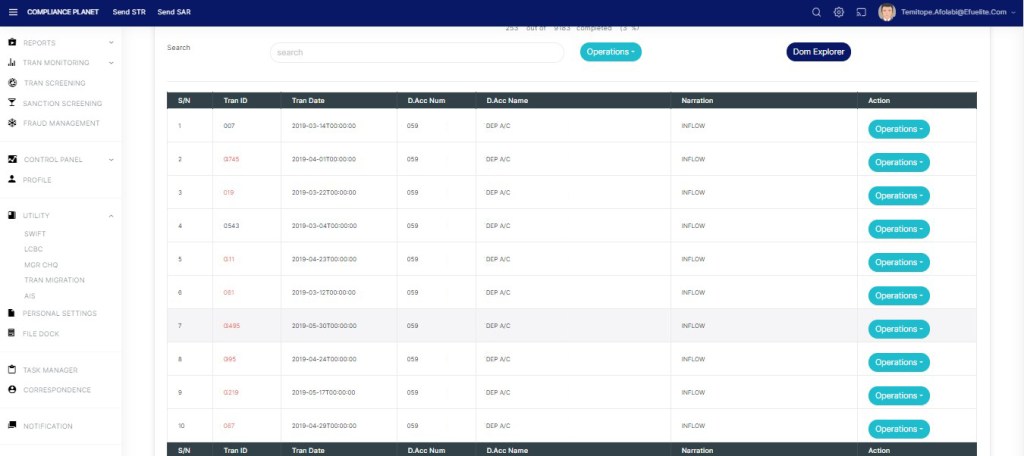
Clicking on the search transaction button will display a page as in Fig 31.2j below
(Fig. 31.2j)
Transactions with transaction ID coloured blue signify that the source account details has been added to the transaction hence, the schema is complete.
Transactions with transaction ID coloured red signify that the source account details has not been added to the transaction hence, the schema is incomplete.
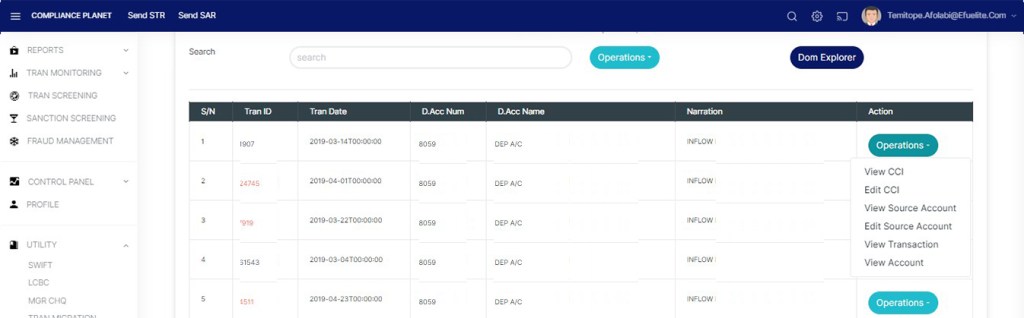
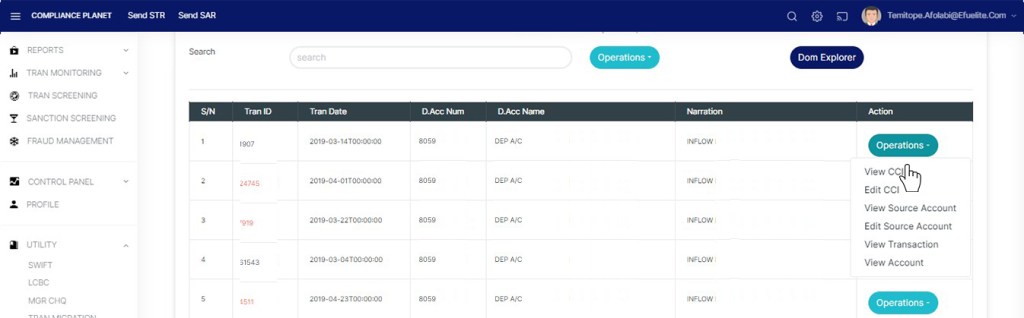
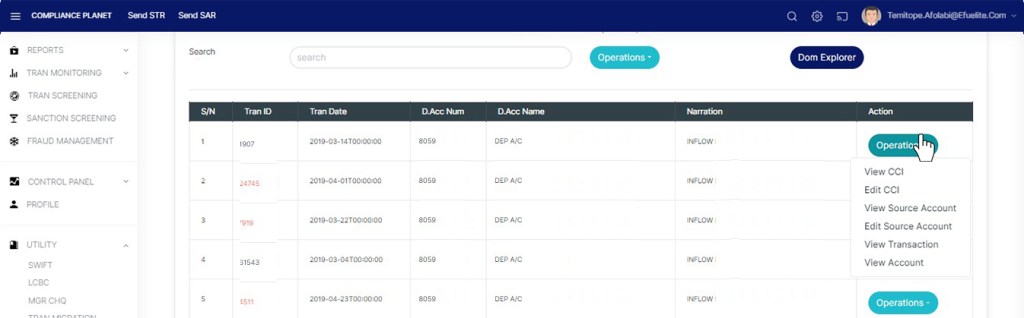
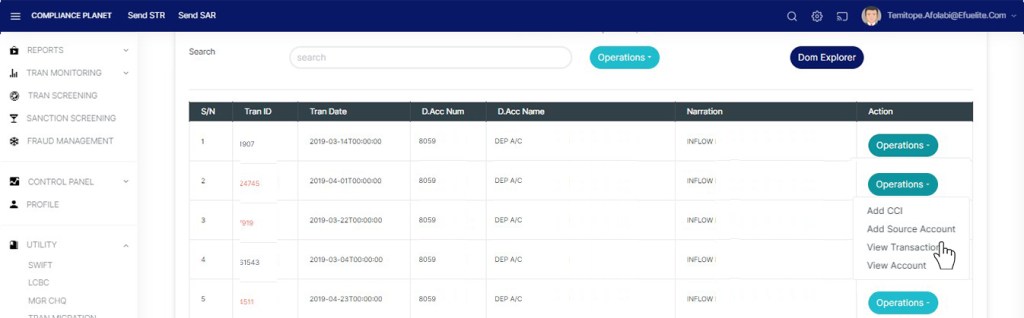
On the Doc explorer page Click on ‘Operations’ button on the Action column, this will display a drop-down as in fig 31.2k below.
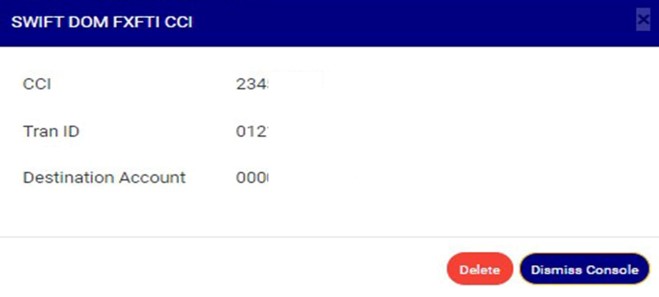
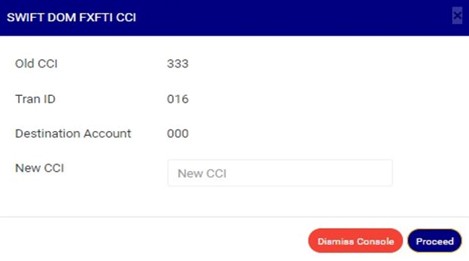
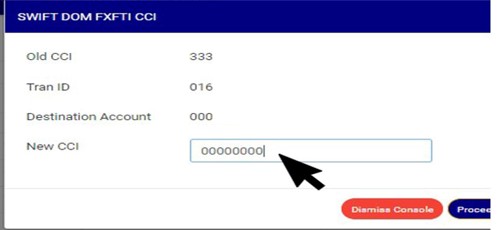
The drop-down shows a list of actions that can be carried out on that SWIFT transaction. These actions include viewing and editing CCI attached to the transaction
(Fig. 31.2k)
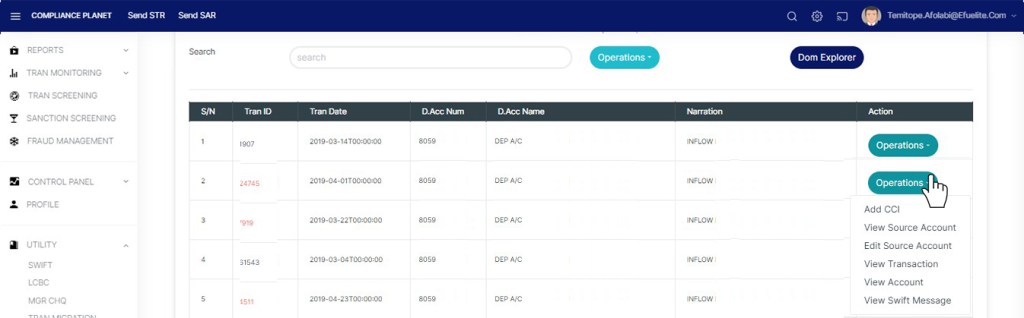
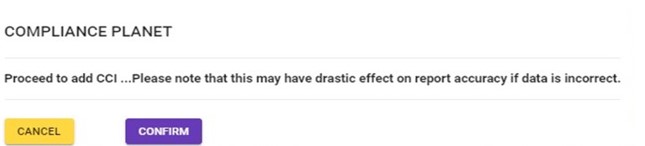
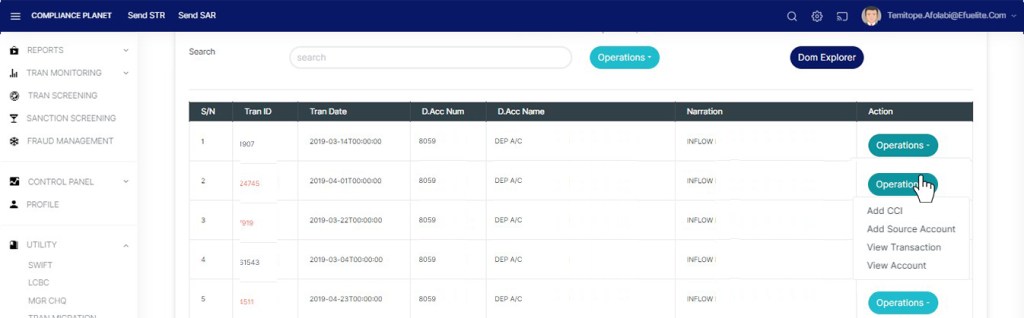
However, if the CCI has not been added to the record the dropdown will have only ‘ADD’ new CCI. See examples in fig 31.2l below.
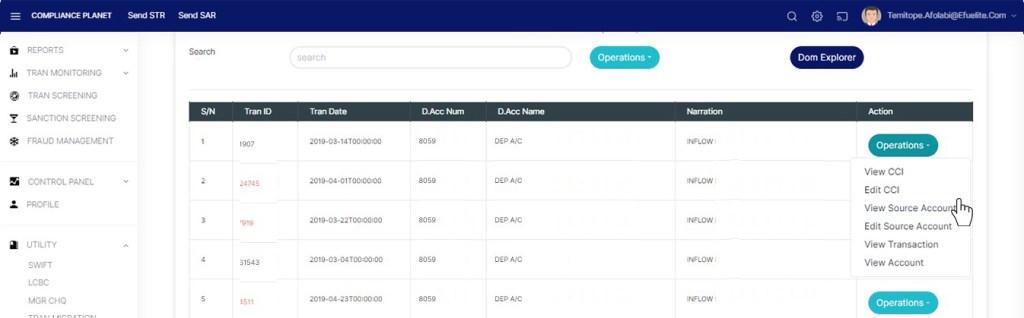
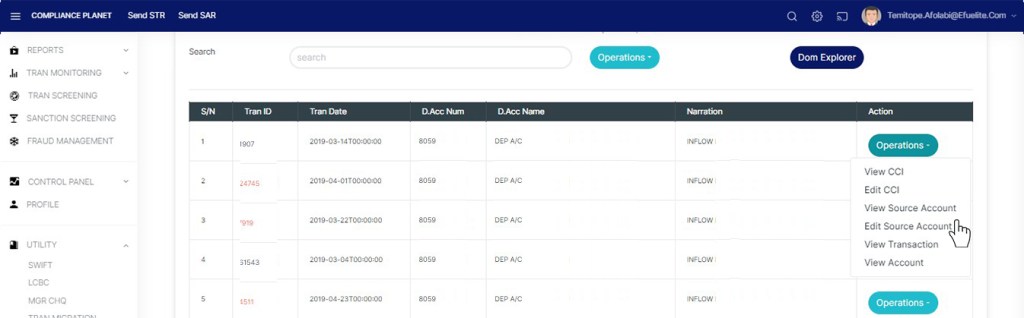
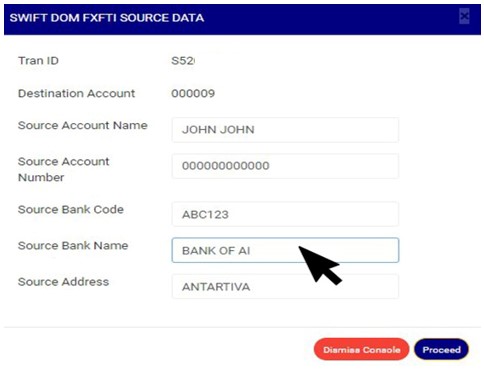
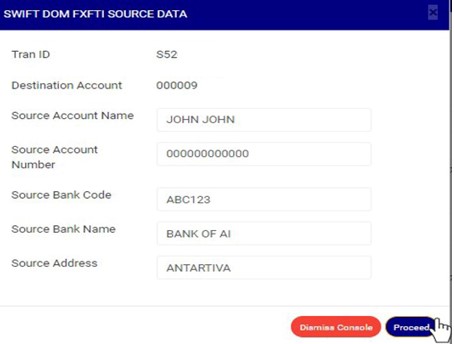
Swift FXFTI records with Source account details will show options to “view source account and “Edit source account”.
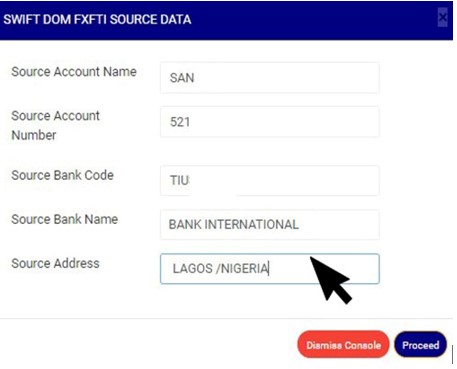
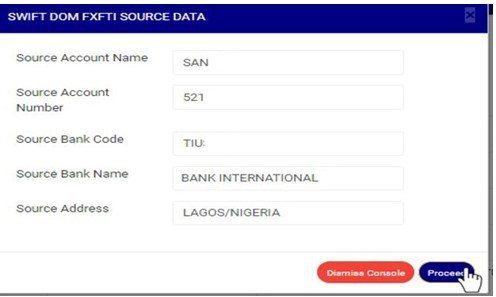
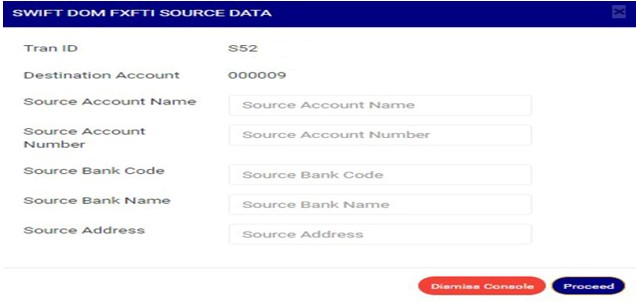
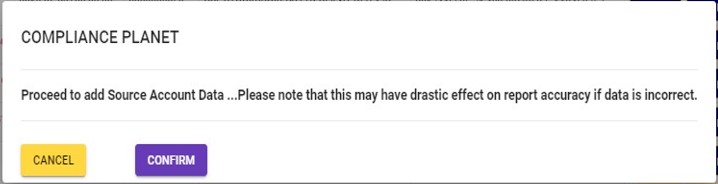
However, if the source account data has not been added, the dropdown will have an option to ‘ADD’ source account. See an example in fig 31.2ad and 31.2ae below.
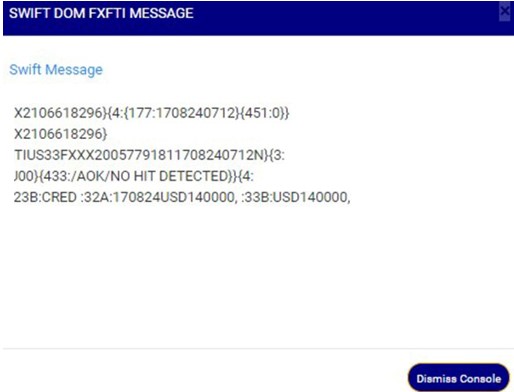
For transactions that have a swift message attached, the software will display an option to view Swift message. This is illustrated in the figures below.
Note: You need to be assigned right to ‘view SWIFT DOM transactions’ to carry out this operation
Click on ‘View Swift Message’ button on the Operations drop-down. See an example in fig 31.2bb below.
(Fig. 31.2bb)
This will display a console as in in fig 31.2bd below.
On the SWIFT FXFTI transaction list page you can make a bulk download of Foreign Exchange Foreign Transactions (FXFT) files either for viewing or editing purpose. The process is explained below
Note: You need to be assigned right to ‘view SWIFT DOM transactions’ and ‘Download SWIFT DOM transactions’ to carry out this operation
STEP 1: Click on the “OPERATIONS” button on the SWIFT FXFTI page.
Note that this operation button is at the top of the page and it is different from the operations button on the action column which is used to carry out operations pertaining to individual transactions. See Fig 31.3a for an example
(fig. 31.3a)
Clicking the Operations button will display a dropdown as in fig. 31.3b below
(fig. 31.3b)
STEP 2: Click on the bulk view as shown in fig 31.3c below
(fig. 31.3c)
The signal console shows on going processes. An example of a signal console is fig 31.3d. You can terminate unfinished processes by clicking ‘CANCEL OPS’.
To minimize signal console, click on DISMISS CONSOLE.
(fig 31.3d)
➔ An excel file with details of the SWIFT FXFT transaction will be downloaded when the process is complete.
Note: You need to be assigned right to ‘view SWIFT DOM transactions’ and ‘Download SWIFT DOM transactions’ to carry out this operation
STEP 1: Click on the “Operations” button on the SWIFT FXFTI transaction page. See Fig 31.3e for an example
(fig. 31.3e)
Clicking the download button will display a dropdown as in fig. 31.3f below
(fig. 31.3f)
STEP 2: Click on the bulk Edit as shown in fig 31.3g below
(fig. 31.3g)
The signal console shows on going processes. An example of a signal console is fig 31.3h. You can terminate unfinished processes by clicking ‘CANCEL OPS’.
To minimize signal console, click on DISMISS CONSOLE.
(fig 31.3h)
An excel file with details of the SWIFT transaction will be downloaded when the process is complete. The details on the downloaded excel file can be edited and uploaded on the software to update multiple SWIFT FXFT transaction details at once. However, the ‘Compliance tran Id’ for each record on the excel file must not be tampered with for the upload to be successful.
On the Swift Operations page you can make a bulk upload of Edited Swift Foreign Exchange Foreign Transactions (FXFT) files. The process is described below.
Note: You need to be assigned right to ‘view SWIFT DOM transactions’ and ‘Bulk Edit SWIFT DOM transactions’ to carry out this operation.
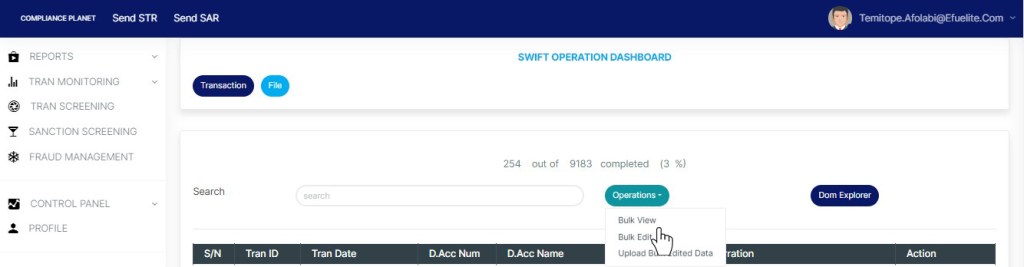
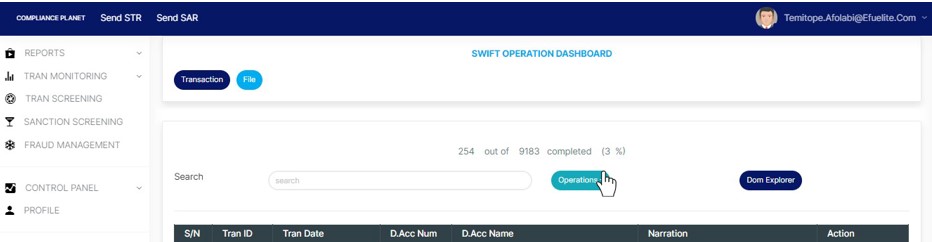
STEP 1: Click on the Operations button on the Swift Transaction page. See Fig 31.3i for an example
(fig. 31.3i)
This will display a dropdown as in fig. 31.3j below
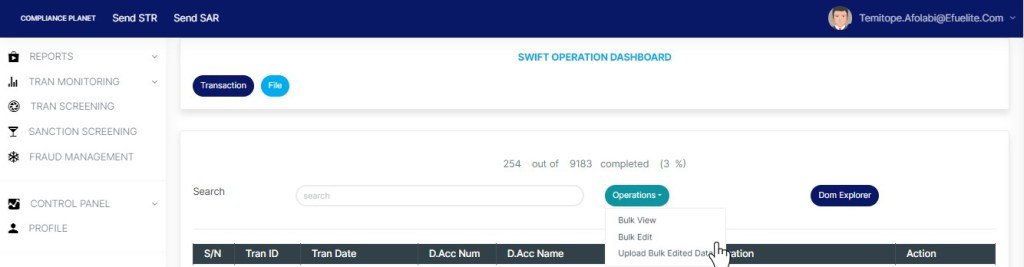
STEP 2: Click “Upload Bulk Edit Data” as shown in fig 31.3j below
(fig. 31.3j)
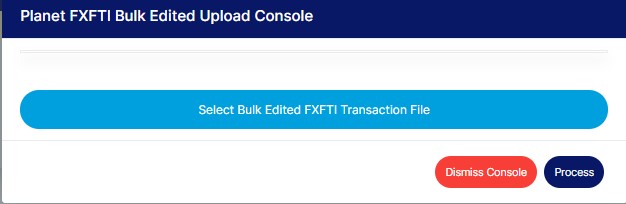
This displays a ‘Planet FXFTI Bulk Edited Upload Console’ as in Fig31.3k below.
(fig. 31.3k)
STEP 3: Click on ‘Select Bulk Edited FXFTI Transaction file’ to choose the edited transaction file you want to upload from your computer. Note that the file must contain at least a transaction record. See this in Fig 31.3l below
(fig. 31.3l)
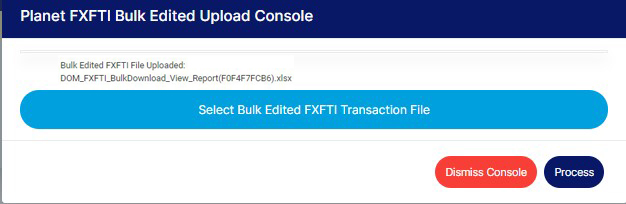
After successful upload of file, the console will display the title of the file, that is, the file name. See fig. 31.3m to see an example of how the console looks like when you successfully upload a file from your computer.
(Fig. 31.3m)
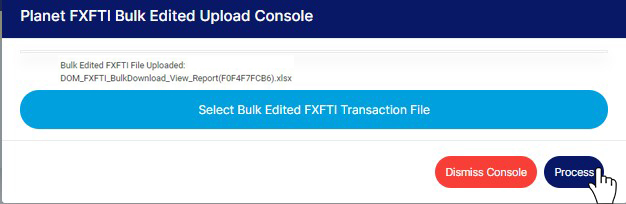
STEP 4: Click on ‘process’ button to proceed with the upload. See fig31. 3n below to see the green button at the bottom-right corner of the console.
(Fig. 31.3n)
This displays a confirmation console as in fig. 31.3o below. Click ‘Confirm’ to continue or ‘Cancel’ to close the console.
This Control Panel feature provides a list of customer sectors and their sub sector tier tags. The customer sector is a section in the AML/CFT RBS report. Here, the operations are;
Editing a customer sector-sub sector tier tag
Deleting a customer sector-sub sector tier tag, and
Creating a customer sector-sub sector tier tag
Note: Only person(s) profiled as deputy supreme admin can carry out account scheme operations.
To perform any of the operations on Customer Sector- sub sector tier tag;
STEP 1: From the left hand side menu, Click ‘Control panel’ as in fig. 14.2a.
Fig 14.2a
This will display a drop down as in Fig 14.2b below.
STEP 2: Click ‘ACCOUNT’ on the drop down list. See an example in Fig 14.2b below.
Fig 14.2b
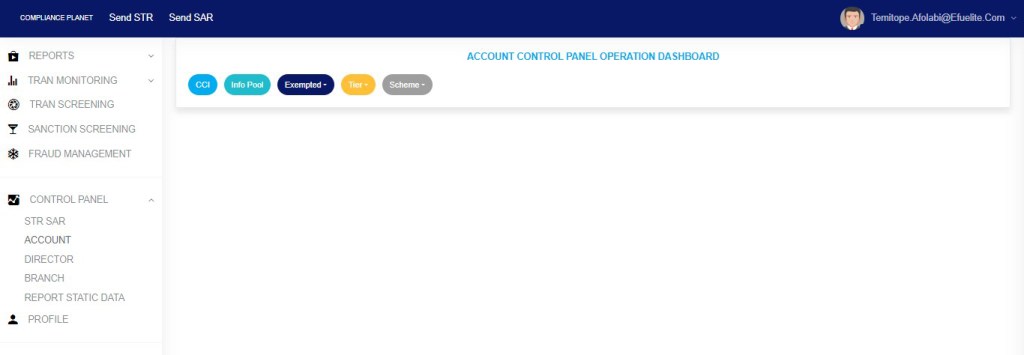
This will display the ACCOUNT CONTROL PANEL OPERATIONS dashboard as in Fig 14.2c below
Fig 14.2c
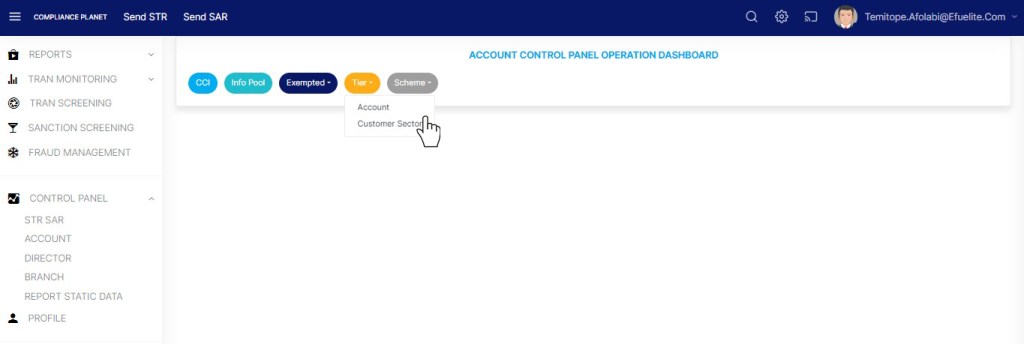
STEP 3: Click “Tier” from the top menu, on the account page. See an example in fig14.2d below
Fig 14.2d
This displays a dropdown as in fig 14.2e below
STEP 4: Click “Customer Sector” on the drop down list as in fig 14.2e below
Fig 14.2e
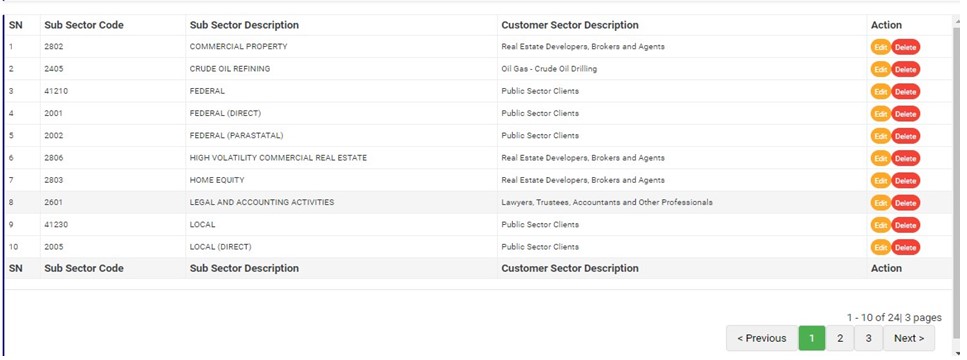
This displays a page showing a list of all customer sectors and sub sectors in the institution, with options to edit, delete and create new information. As stated earlier, customer sector is also referred to as the ‘Customer Tier’. On the table provided on the customer sector tier page, it is represented with the Customer sector description on the table.See fig. 14.2f for an example.
(fig. 14.2f)
As seen in fig. 14.2g, the bottom-right corner of the page, the software gives information about the number of pages of the list, with the page numbers written out. The page numbers represent buttons to go to each page. By clicking on any of the page number, the software takes you to that particular page. Click on ‘NEXT’ to go to the next page or ‘PREVIOUS’ to go to the page before the one you are viewing at that moment.
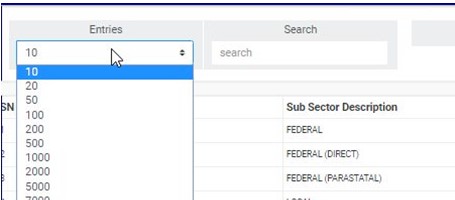
Adjust the number of results per page by clicking on the ‘ENTRIES’ box as in fig. 14.2g.
(Fig. 14.2g)
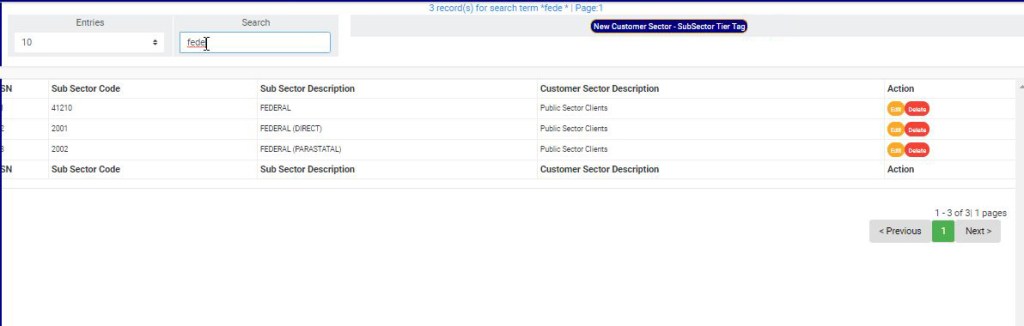
Search for customer sectors and sub sectors by inputting the sub sector code, sub sector description or customer sector description. Search results will appear immediately a character is typed in the search box.. See fig. 14.2h below for an example.
(fig. 14.2h)
Each entry has two (2) action buttons; ‘Edit’ button and ‘Delete’ button and they are explained below.
14.3 How to Edit A Customer Sector Tier Tag
To change details of a customer sub-sector tier tag;
STEP 1: Click the ‘Edit’ button as shown in fig.14.3a below.
(fig. 14.3a)
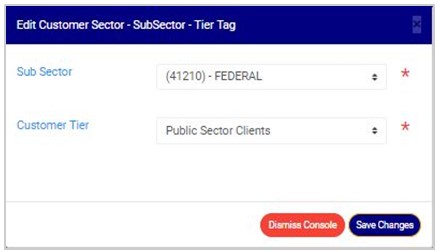
This displays an ‘Edit Customer Sub Sector-Tier tag’ console, as in fig. 14.3b.
(fig. 14.3b)
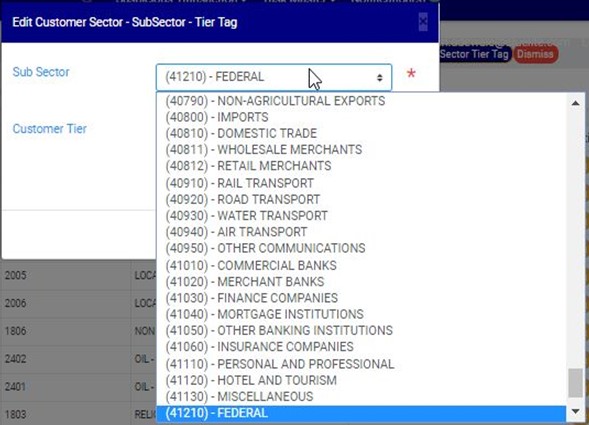
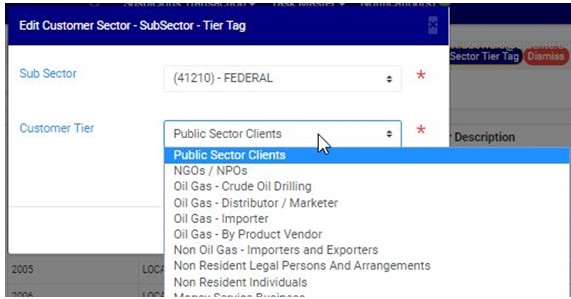
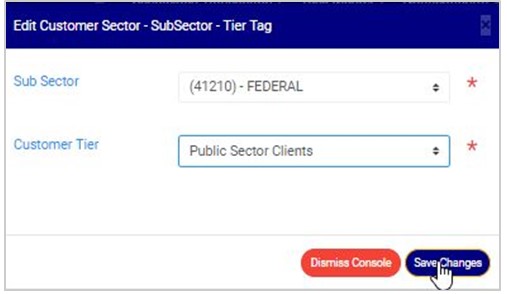
STEP 2: Select new options from the ‘Sub Sector’ box and ‘Customer tier’ box as shown in fig. 14.3c and fig. 14.3d respectively.
(fig. 14.3c)
(fig. 14.3d)
STEP 3: Click on ‘SAVE CHANGES’ as shown in fig. 14.3e below, to update the new changes on the software.
(fig. 14.3e)
This displays a confirmation console as in fig. 14.3f to confirm you want to change the details.
(fig. 14.3f)
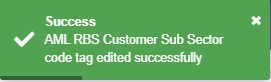
Click on ‘CONFIRM’ to save the changes or cancel to discontinue action. When the changes are saved, a notification will be displayed at the top of the page as in fig. 14.3g below.
(fig. 14.3g)
How to Delete Customer Sector Tier Tag
To delete a customer sector-sub sector-tier tag, click on the ‘DELETE’ button as shown in fig. 14.4a below.
(fig. 14.4a)
This displays a confirmation console to confirm your request to delete the customer sector tier tag as in fig. 14.4b. Click on ‘CONFIRM’ to proceed or ‘CANCEL’ to discontinue.
(fig. 14.4b)
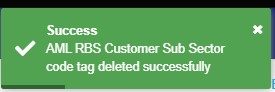
When the operation is complete, a notification will be displayed at the top of the page as in fig. 14.4c.
(fig. 14.4c)
How to Create New Customer Tier Tag
This refers to the adding of a new customer sector-sub sector tier tag. Here is how to do this.
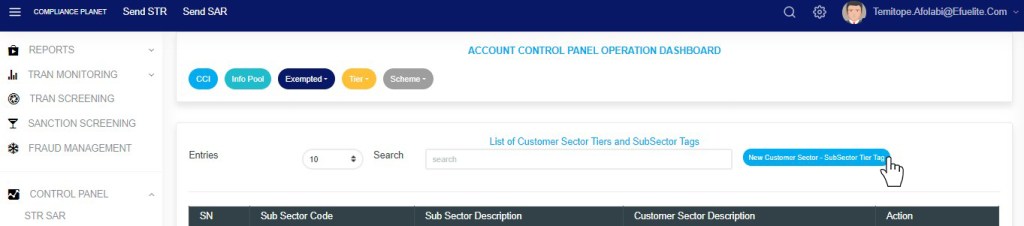
STEP 1: Click on ‘NEW CUSTOMER SECTOR-SUB SECTOR-TIER TAG’ as in fig. 14.5a below.
(fig. 14.5a)
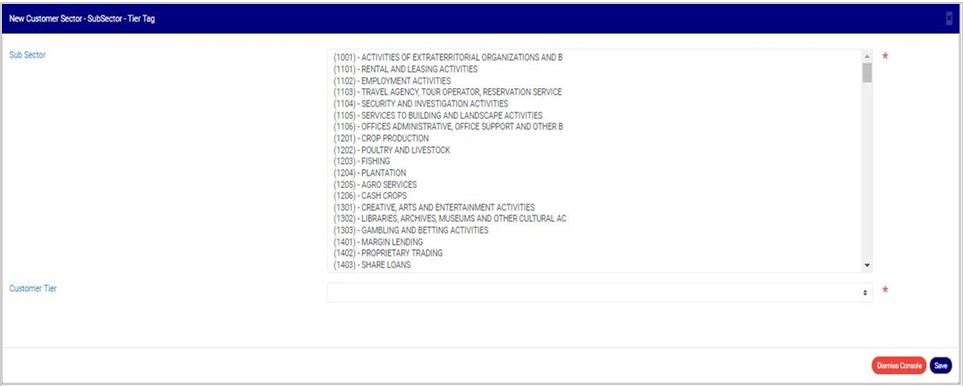
This displays a ‘NEW CUSTOMER SECTOR-SUB SECTOR-TIER’ console. See fig. 14.5b below for an example.
(fig. 14.5b)
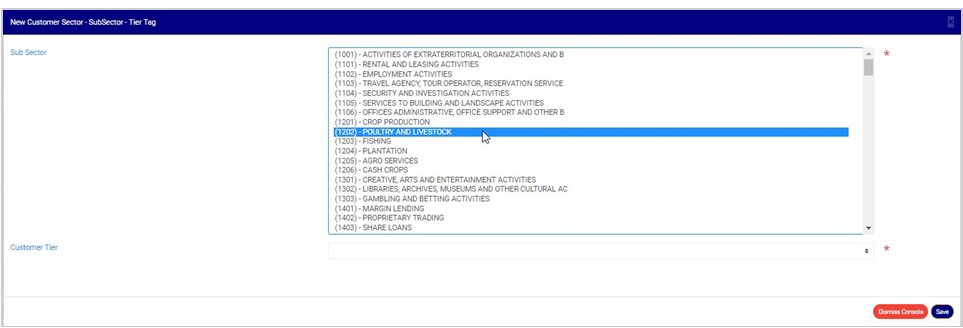
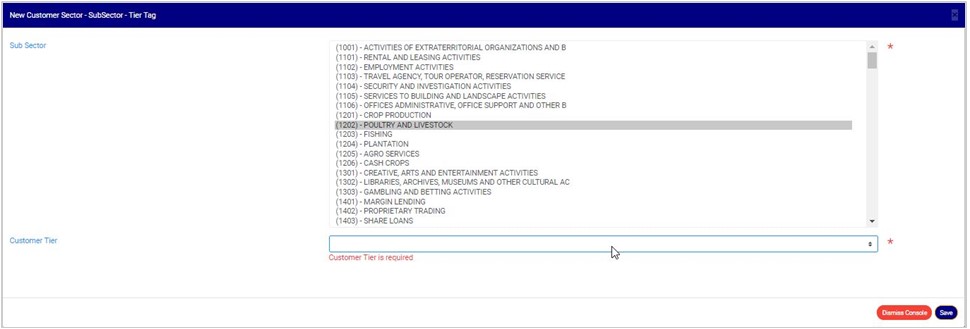
STEP 2: Select ‘Sub Sector’ and ‘Customer Tier’ as shown in fig. 14.5c and fig. 14.5d respectively.
(fig. 14.5c)
(fig. 14.5d)
STEP 3: After selecting the details, click on ‘SAVE’ as shown in fig. 14.5e below.
(fig. 14.5e)
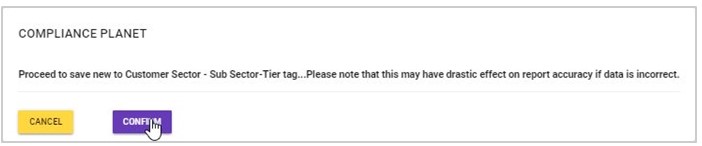
This displays a confirmation console to confirm you want to add the new customer sector-sub sector tier tag. Click on ‘CONFIRM’ to proceed or ‘CANCEL’ to discontinue.
(fig. 14.5f)
If you proceed, a notification as in fig. 14.5g will be displayed at the top of the page when the new customer sector-tier tag has been successfully created.