The next stage of processing after revising an STR/SAR notification is the SUPERVISION STAGE. Only Notifications that have been approved by the revision desk team lead(s) will be pushed to the supervision desk. Here are the steps to supervising a suspicious transaction Notification.
NOTE: Only person(s) profiled as ‘supervision desk officer’ with the right to edit can carry out these operations.
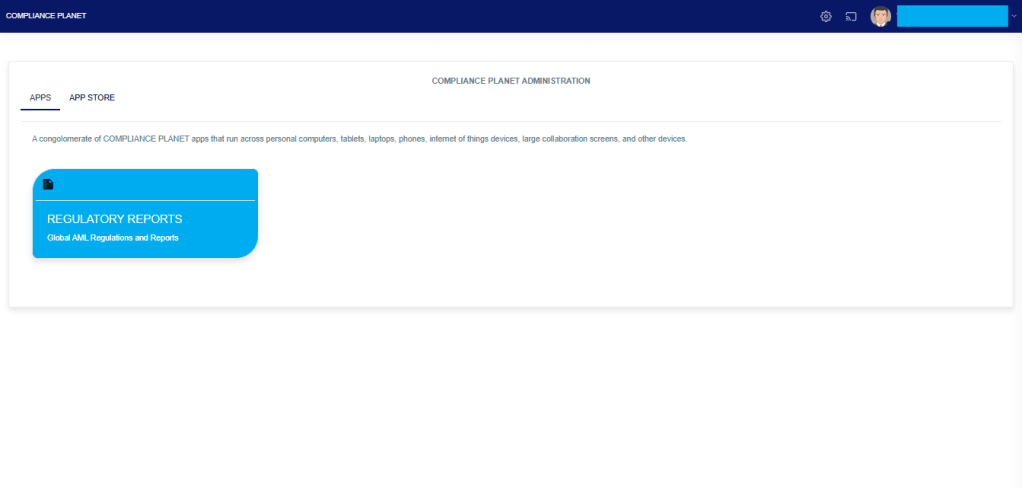
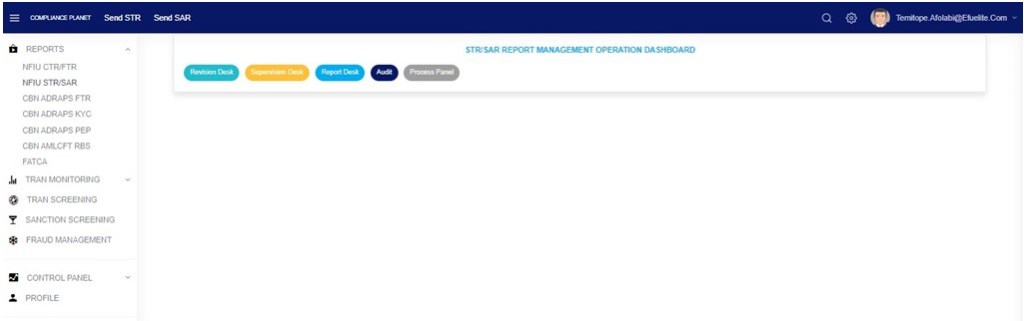
From the app dashboard, click on ‘REGULATORY REPORTS’ as in the image below.
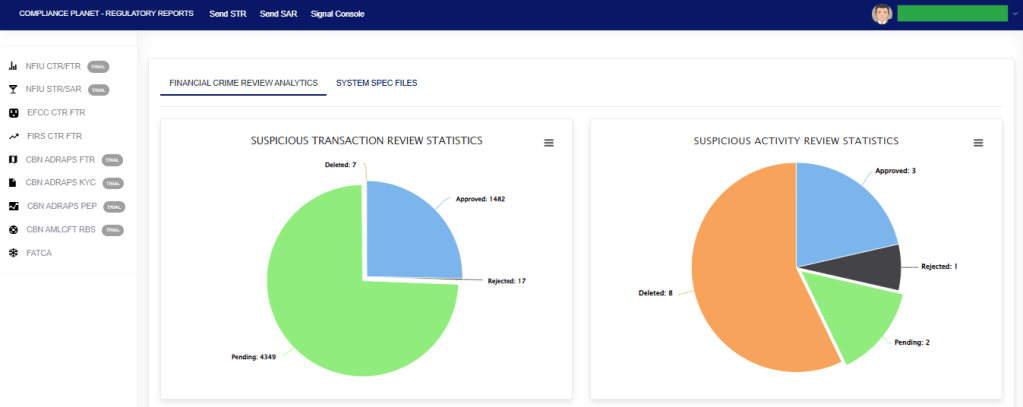
This will display a drop-down as in the image below. The dropdown lists the report types available on the Compliance Planet software.
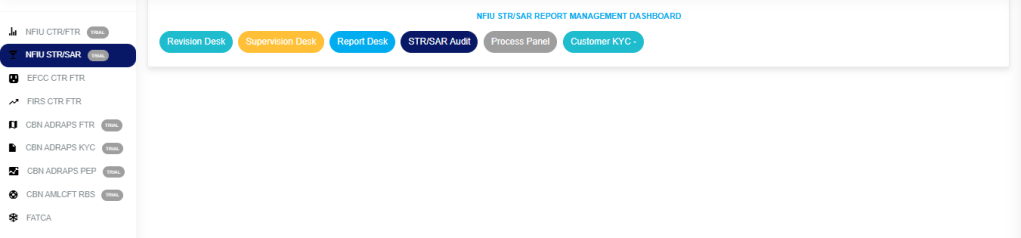
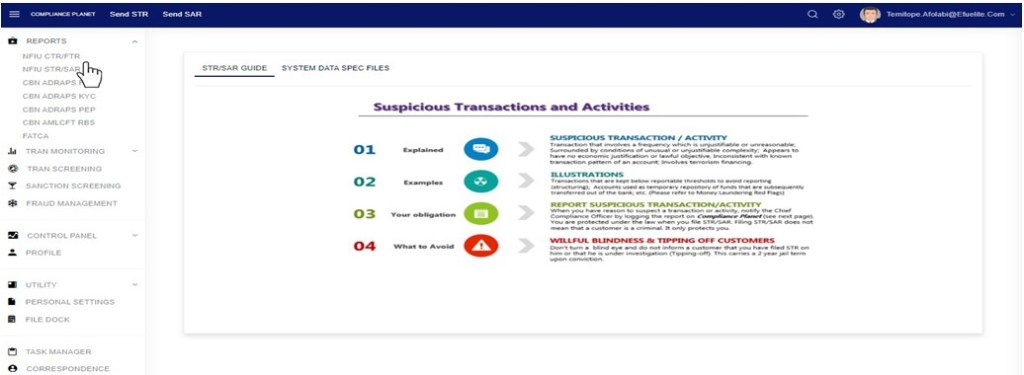
Click “NFIU STR/SAR” from the drop-down menu to open the NFIU STR/SAR page. See the image below.
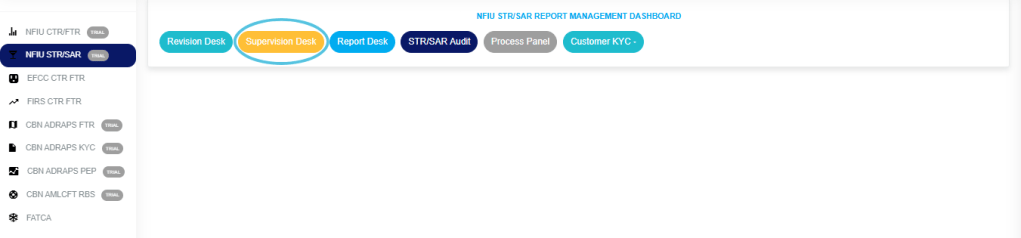
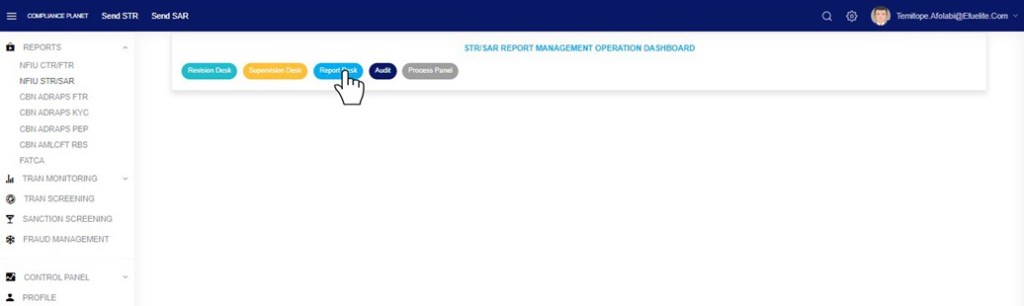
STEP 1: From the top menu, click on “SUPERVISION DESK” as in the image below.
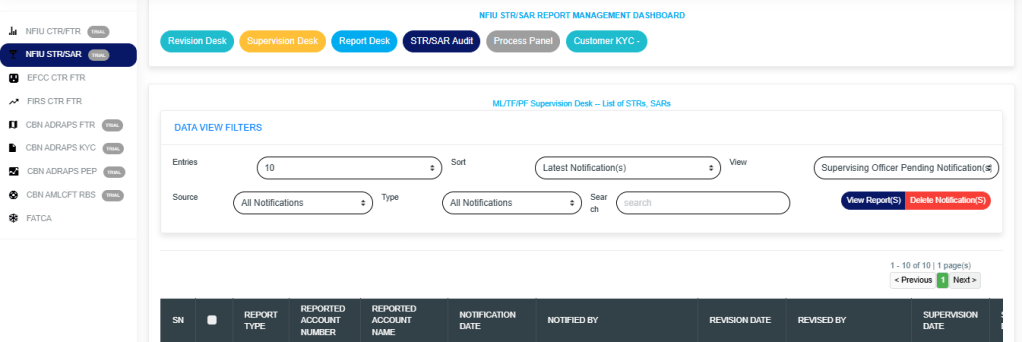
The above action will display the Supervision Desk Page as seen in the image below. Then select the “DATA VIEW FILTERS”.
Click on the “ENTRIES” box to increase the number of Notifications you want to see per page.
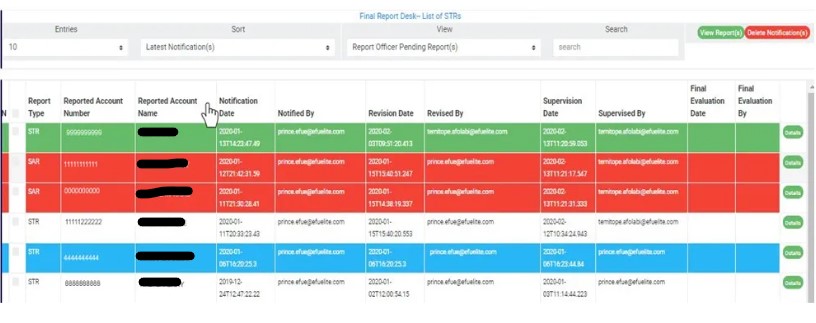
Click on the “SORT” box to sort the notifications by alphabetical order, from the latest to the earliest, or vice versa, as shown.
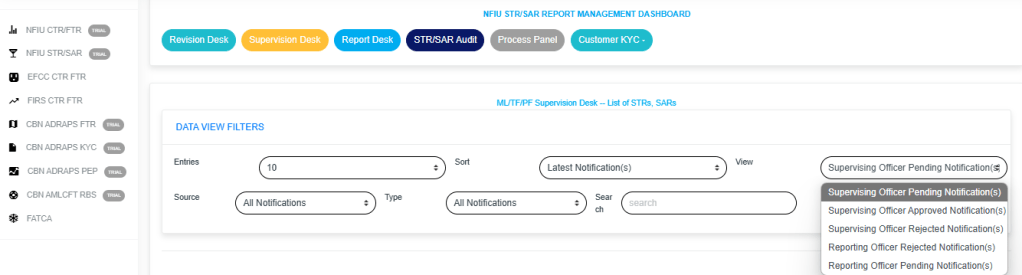
Click on the “VIEW” box to see notifications classified according to the stage of processing they have reached.
Click on the “SOURCE” box to select either All Notifications, Digital Surveillance Notification, or Manually Filled Notifications.
Click on the “TYPE” box to select either All Notification, Suspicious Transaction Notification, or Suspicious Activity Notification.
Click on the “SEARCH” box to search for a particular notification by typing in the customer’s name or account number. More details below.
Click on the “VIEW REPORTS” button after selecting the class of Notification(s) from the VIEW box. This is to view the notifications from any of the selected classes. This button is at the top-right corner of the page.
Click on the “DELETE NOTIFICATIONS” to delete notifications.
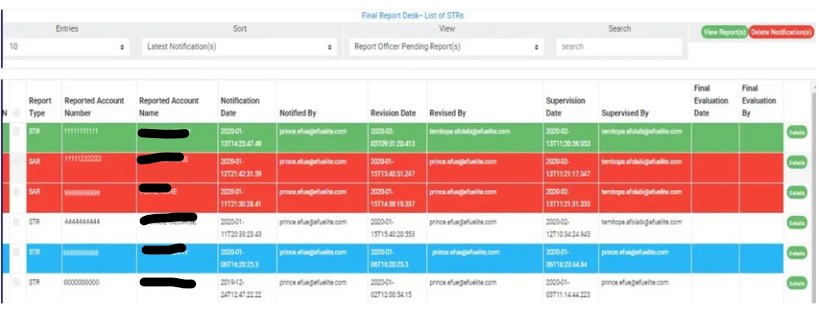
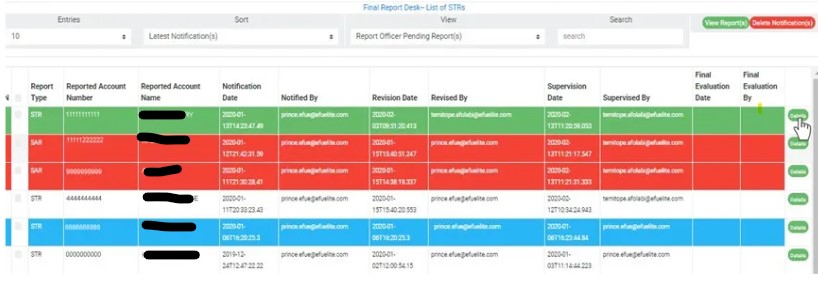
Based on the “VIEW” box details, the notifications are categorized according to their current stage of processing, as shown in the image below.
The classes are:
Supervision Officer Pending Notification(s); these are STR/SAR notifications that have been reviewed and approved by a revision officer, but they have not been treated by the supervision officer.
Supervision Officer Approved Notification(s); these are STR/SAR notifications that have been treated, approved, and forwarded to the reporting officer for further processing. Once a Notification is approved by a supervision officer, it joins the reporting officer pending Notification(s) list for further approval.
Supervision Officer Rejected Notification(s); these are STR/SAR notifications that are not satisfactory to the supervision officer. When a Notification is rejected by the supervision officer, the revision officer will get a mail notification to revisit the Notification and send it again if needed. The Notification this time around will include reason(s) for rejection.
Reporting Officer Rejected Notification(s); these are STR/SAR Notifications that have been treated and approved by the revision officer and/or the supervision officer, but they are unsatisfactory for further approval by the reporting officer.
Reporting Officer Pending Notification(s); these are STR/SAR Notifications that have been approved by revision and/or supervision officer and await the reporting officer’s treatment.
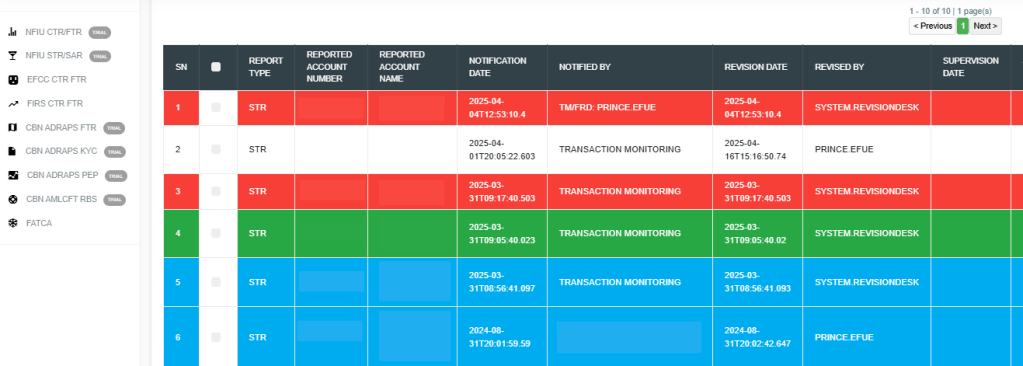
The Notification(s) highlighted “RED” indicate that it has not been viewed by anyone on the Supervising desk.
The Notification(s) highlighted “GREEN” indicate that it has been viewed by you alone.
The Notification(s) highlighted “WHITE” indicates that it has been viewed by you and at least one other Supervising officer.
The Notification(s) highlighted “BLUE” indicates that it has been viewed by other Supervising officer(s), excluding you
At the top-right and bottom-right corners of the page, the software gives information about the number of pages, with the page numbers written out. All the page numbers represent buttons to go to each page. By clicking on any page number, the software takes you to that particular page. Click on the “NEXT “button to take you to the next page. Click the “PREVIOUS” button to return to the page you were viewing earlier.
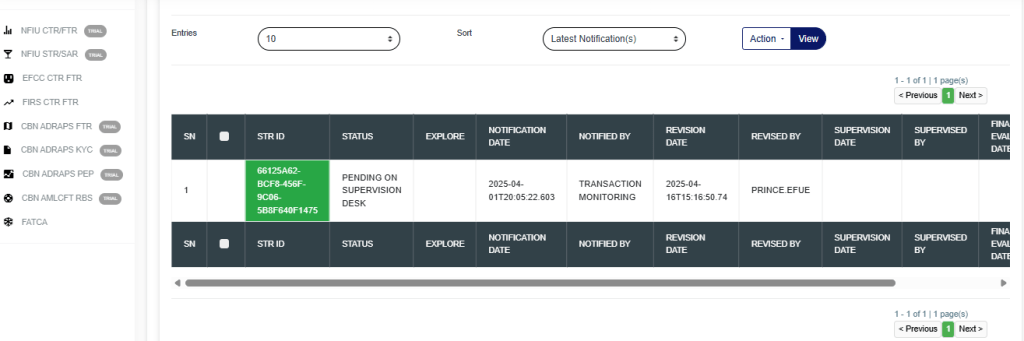
STEP 2: Select the notification to be treated from the ‘SUPERVISION OFFICER PENDING NOTIFICATION(S) by clicking on the “Details” button at the end of the notification row, as in the image below.
STEP 3: By clicking on ‘DETAILS’, the STR SUPERVISION DESK NOTIFICATIONS Page will display as in the image below, then click on “HISTORICAL INVESTIGATION ANALYSIS“.
The “STR OPERATION” shows if there are Deleted STR Notifications, Approved STR Notifications, Rejected STR Notifications, and Pending STR Notifications associated with that specific account.
The “SAR OPERATION” shows if there are Deleted SAR Notifications, Approved SAR Notifications, Rejected SAR Notifications, and Pending SAR Notifications associated with that specific account.
Click on the “ENTRIES” box to increase the number of Notifications you want to see per page.
Click on the “SORT” box to sort the notifications either by alphabetical order or from the latest to the earliest notifications, or vice-versa, as shown.
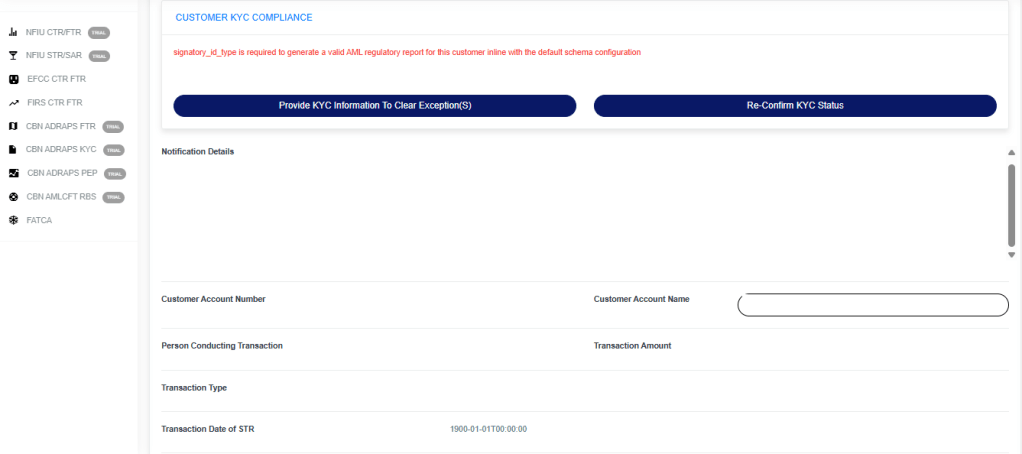
STEP 4: Click on “CUSTOMER KYC COMPLIANCE” to view the missing data for the specific account, as shown in the image below.
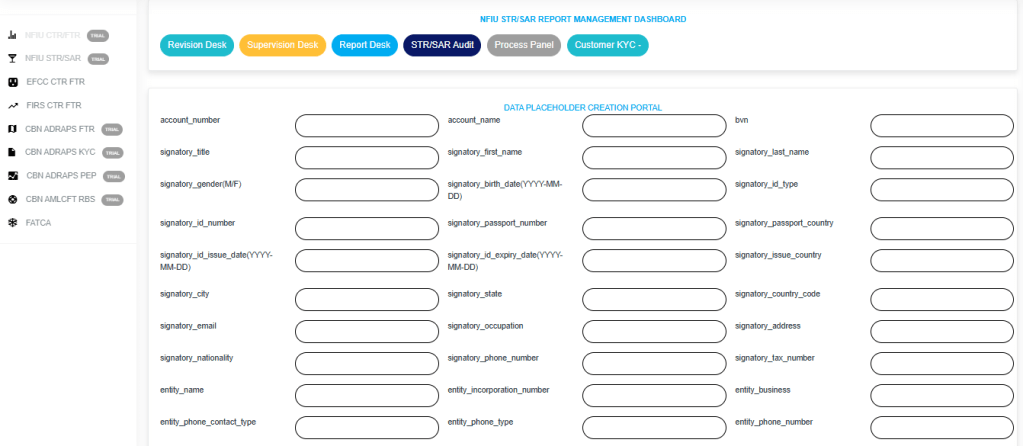
Click on “Provide KYC Information to Clear Exception(s)” to navigate to the page shown below, where you can enter the missing details. Then, click on “Submit Data Procedure” to proceed to the confirmation page.
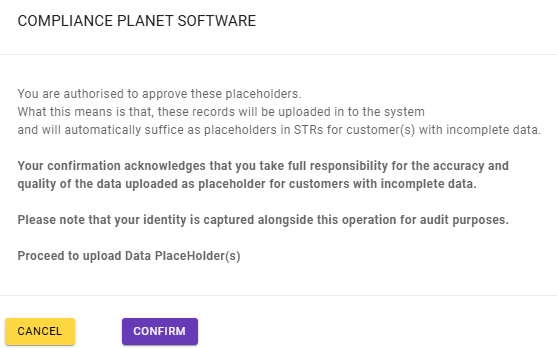
Click “CONFIRM” to upload the data or click “CANCEL” to exit the confirmation process.
If the account has no exceptions, it will appear as shown in the image below.
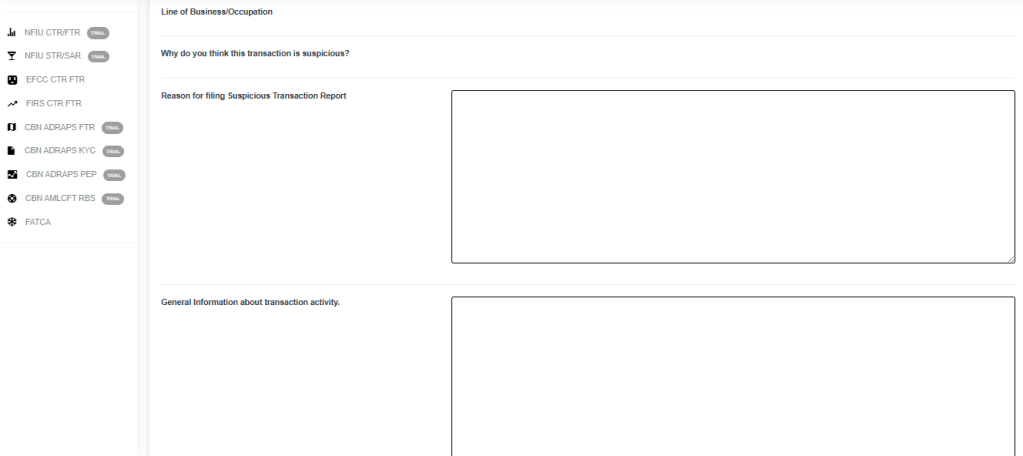
STEP 5: Click on the ‘Reason for Filing Suspicious Transaction Report’ box to edit the revision officer’s reason(s) for approving the Notification. This step is optional. See an example in the image below.
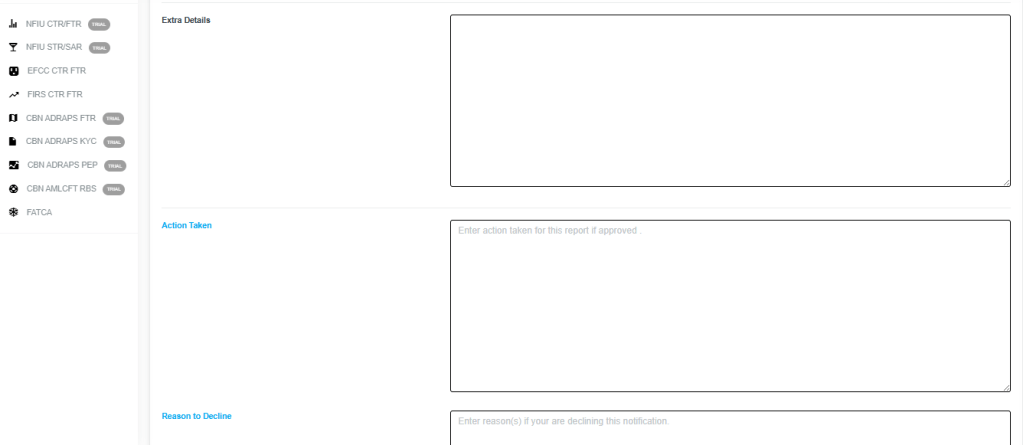
STEP 6: Click on “Extra Details” box to edit the revision officer’s comment and click on the “Action Taken” box to edit action(s) taken concerning the suspicion filed. See an example in the image below.
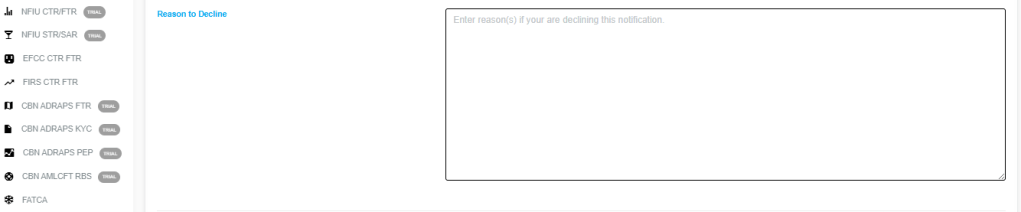
STEP 7: Click on ‘Reason to Decline’ box (if you want to reject the notification) to input your comments. This step is mandatory if you want to reject the notification. See the image below for an example.
STEP 8: Click on “SURVEILLANCE CASES” to view the account’s cases, as illustrated in the image below.
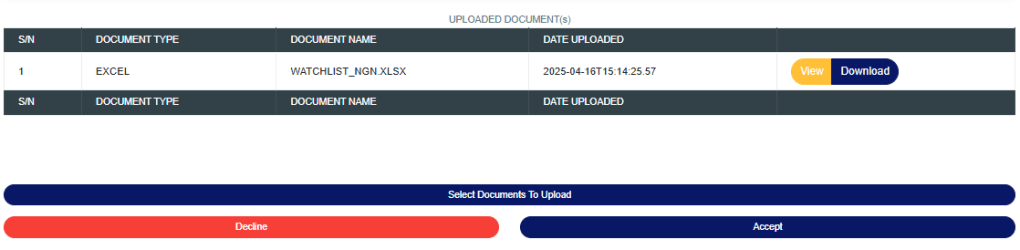
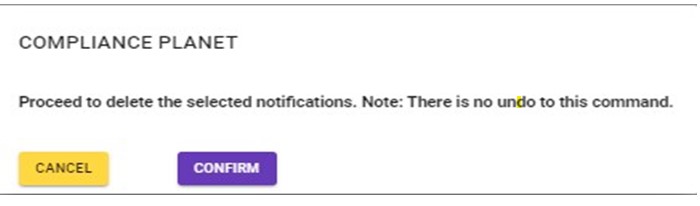
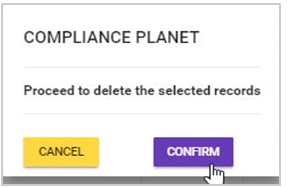
STEP 9: Click on “SELECT DOCUMENTS TO UPLOAD” to add additional documents that support the STR. Next, click on “REJECT” or “ACCEPT”—this will open a confirmation console to verify your selected action. Ensure you are certain of your choice before proceeding, as this action is irreversible once confirmed. Refer to the images below to see how the confirmation console appears when selecting “Reject” and “Accept” respectively. To continue, click CONFIRM; to exit the console without taking action, click CANCEL.
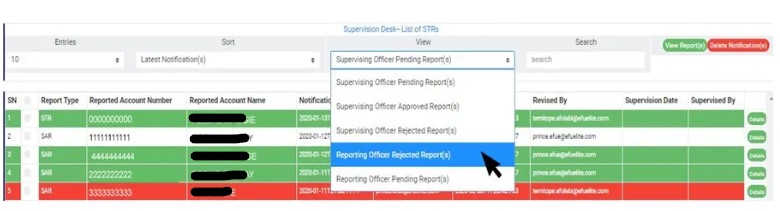
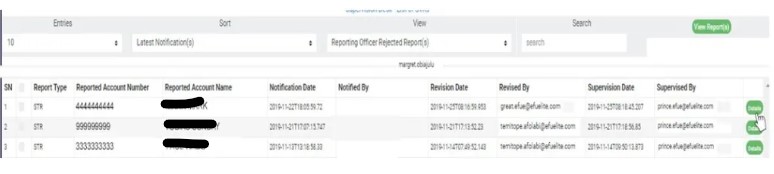
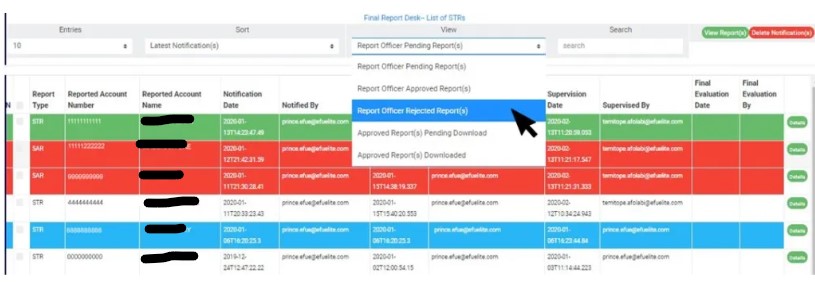
STEP 1: Click on the ‘VIEW’ box and select ‘REPORTING OFFICER REJECTED NOTIFICATION(S)’. See fig. 6.4r below for an example.
(fig. 6.4r)
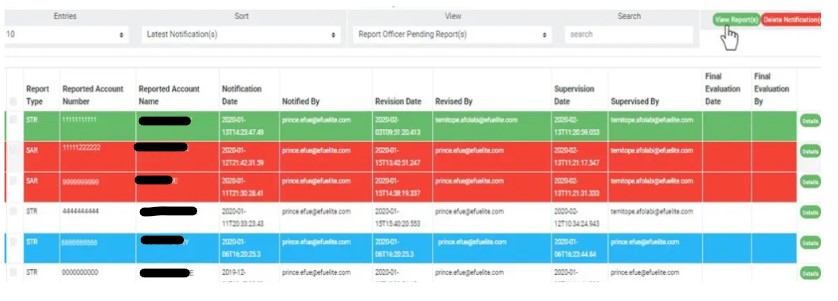
➔ Click on ‘VIEW REPORTS’ to see the notifications. On this page, the supervising officer will be able to re-process Notification for approval again.
STEP 2: To see details of the STR Notification, click on ‘DETAILS’. Every notification still undergoing processing has this button at the end of its row
(fig. 6.4s)
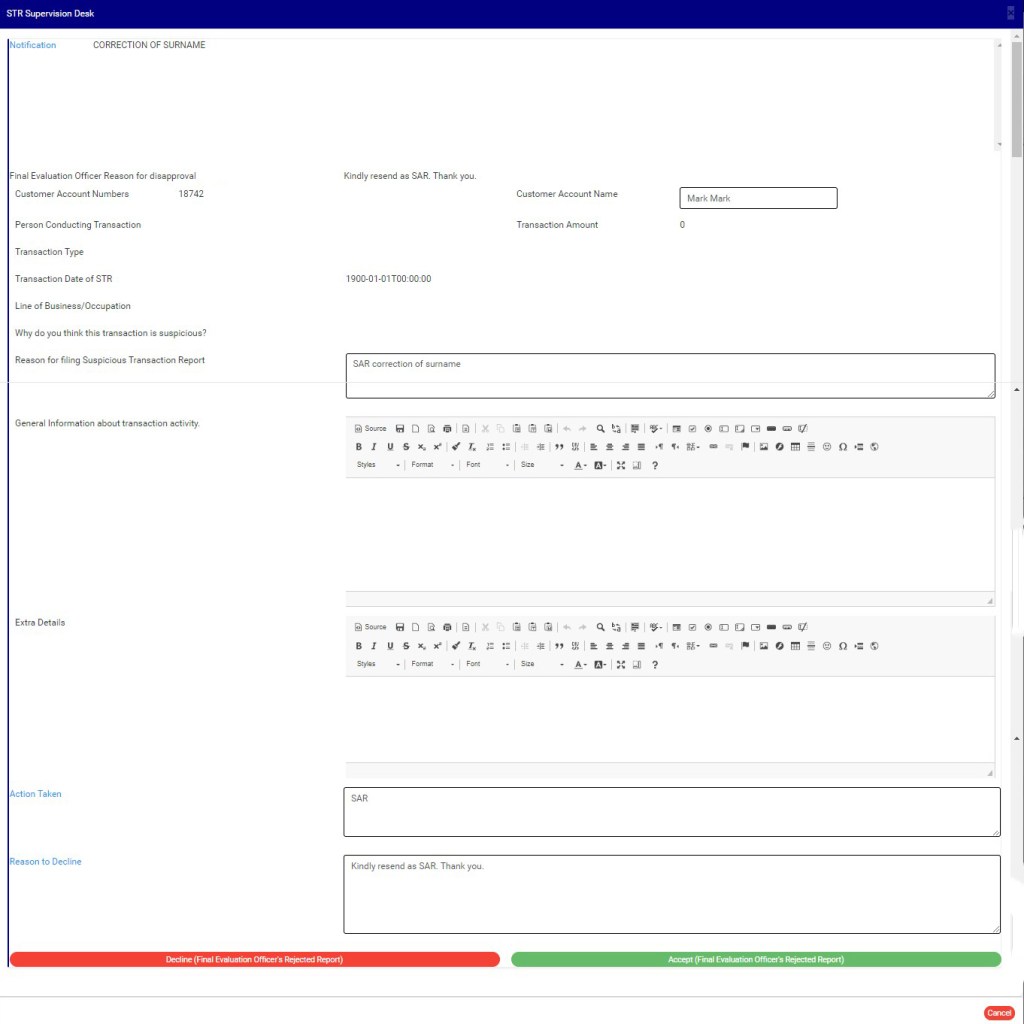
STEP 3: Clicking on the DETAILS button will display a console which allows you to revisit the notification. See fig. 6.3t below for an example.
(fig. 6.4t)
STEP 4: Edit the details you want to change. You can edit all information except the notification itself. This means you can change the Reason for filing report, General information about transaction activity, Extra details, Action taken and reason to decline.
STEP 5: Click on REJECT or ACCEPT. This displays a confirmation console to confirm your selected action. Check that you are sure of your options before rejecting or accepting the notification as this step cannot be reversed once confirmed. See fig. 6.4u and 6.4v for the confirmation console displayed when you decide to ‘reject’ and when you choose to ‘accept’ respectively. To proceed, click on CONFIRM and to cancel the review, click on CANCEL.
(Fig. 6.4u)(fig. 6.4v)
Note: You have to be profiled as a supervisor with rights to edit
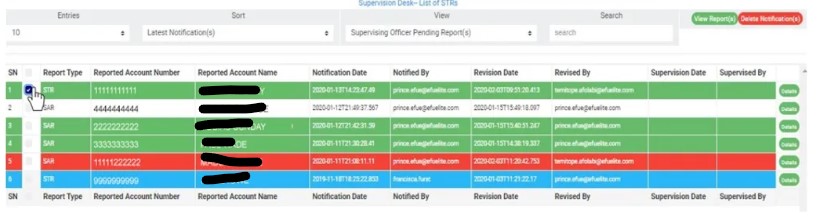
STEP 1: Click on the checkbox beside the report type to select the Notifications you want to delete. See an example in Fig 6.4w below
(fig. 6.4w)
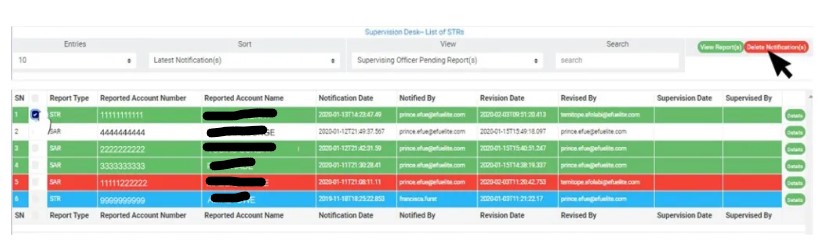
STEP 2: Click on the “Delete Notification(s)” button as shown in in Fig 6.4x below
(fig. 6.4x)
STEP 3: Clicking on “Delete Notification(s)” will display a console to confirm your selected action. See an example in Fig 6.4y below. To proceed, click on CONFIRM and to dismiss the operation, click on CANCEL.
(fig. 6.4y)
NOTE: You have to be profiled as a ‘supervisor’ and a ‘Team Lead’ on supervision Desk.
This data control feature provides a list of account scheme-tier tags. The operations include;
Editing an account scheme tier,
Deleting an account scheme tier, and
Creating a new account scheme tier tag.
Note: Only person(s) profiled as deputy supreme admin can carry out account scheme operations.
To perform any of the operations on ACCOUNT SCHEME-TIER TAGS;
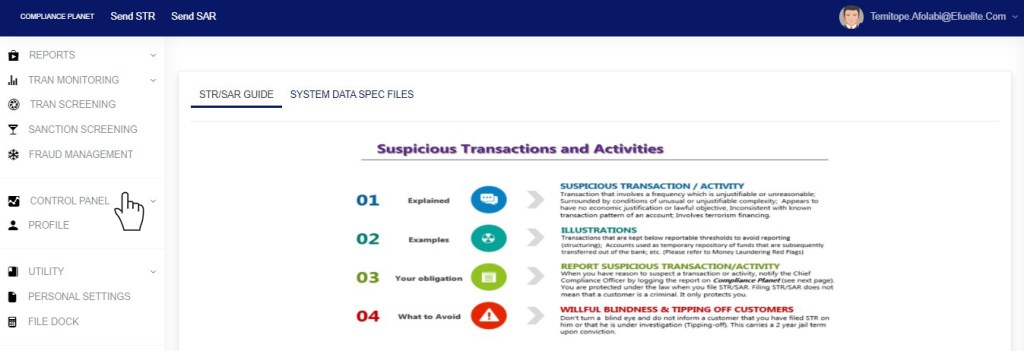
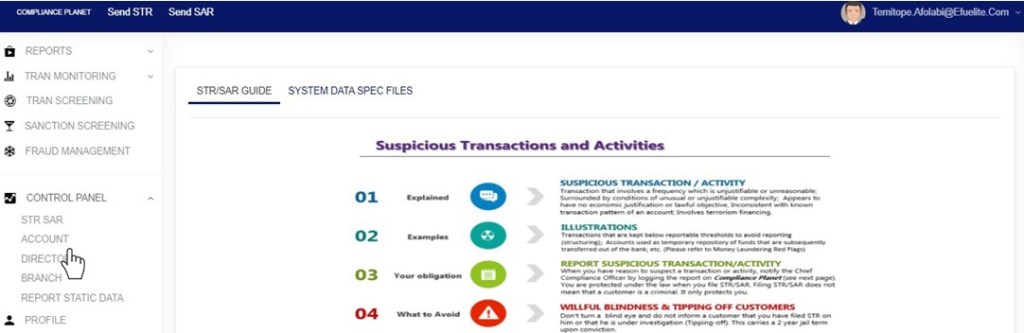
STEP 1: From the left hand side menu, Click ‘Control panel’ as in fig. 13.2a.
Fig 13.2a
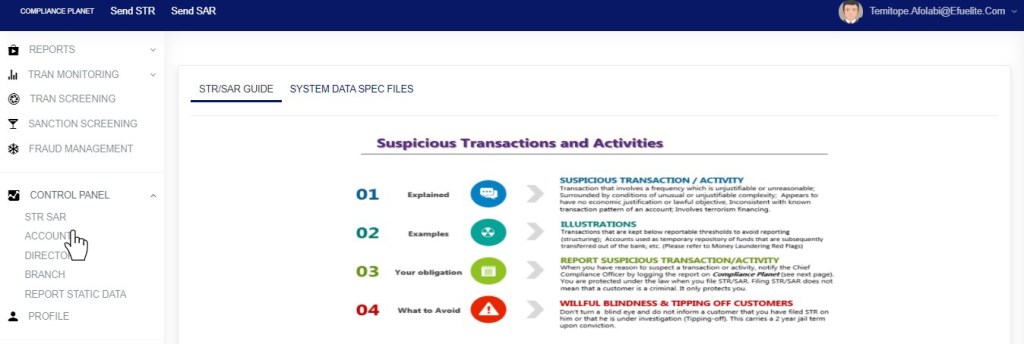
This will display a drop down as in Fig 13.2b below.
STEP 2: Click ‘ACCOUNT’ on the drop down list. See an example in Fig 13.2b below.
Fig 13.2b
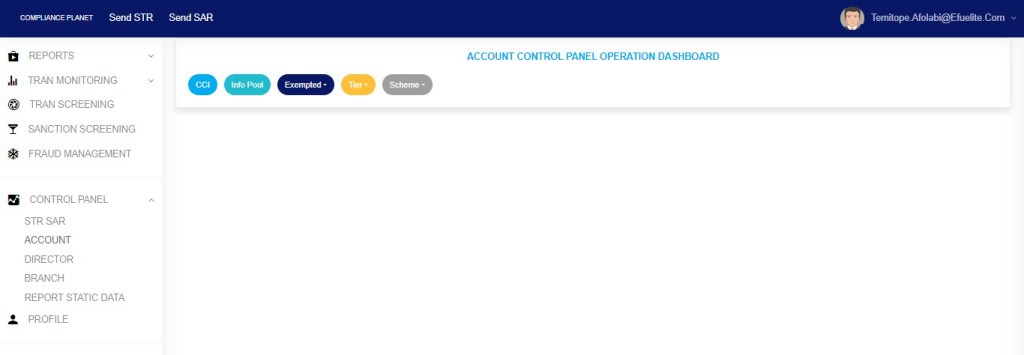
This will display the ACCOUNT CONTROL PANEL OPERATIONS dashboard as in Fig 13.2c below
Fig 13.2c
STEP 3: Click “Tier” from the top menu, on the account page. See an example in fig13.2d below
Fig 13.2d
This displays a dropdown as in fig 13.2e below
STEP 4: Click “Account” on the drop down list as in fig 13.2e below
Fig 12.2e
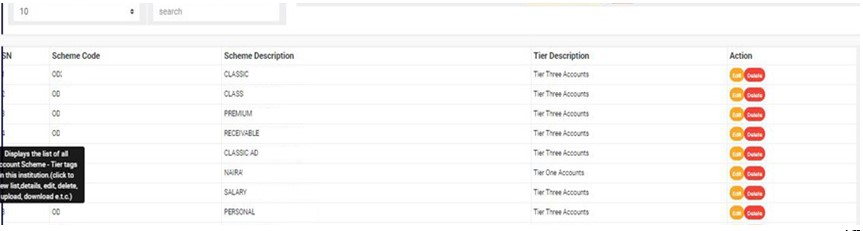
This displays a page showing a list of all account schemes and their tier tags.See fig. 13.2f for an example.
(fig. 13.2f)
From fig. 13.2f above, at the bottom-right corner of the page, the software gives information about the number of pages of the list, with the page numbers written out. The page numbers represent buttons to go to each page. By clicking on any of the page number, the software takes you to that particular page. Click ‘NEXT’ to go to the next page or ‘PREVIOUS’ to go to the page before the current page.
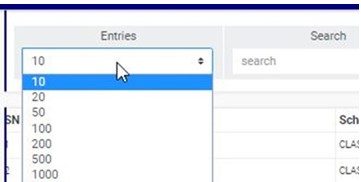
Adjust the number of account scheme tier tags per page by clicking on the ‘ENTRIES’ box. See fig. 13.2g for an example.
(fig. 13.2g)
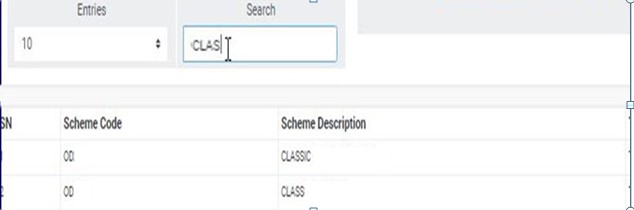
Search for Account Schemes and their tier tags by typing the scheme code, scheme description or tier description. Search results will be displayed immediately a character is typed in the search box. See fig. 13.2h below for an example.
(fig. 13.2h)
Each entry has two (2) action buttons; ‘Edit’ button and ‘Delete’ button. The operations are explained below.
How To Edit an Account Tier
To change details of an account scheme-tier tag;
STEP 1: Click on the ‘Edit’ button as shown in fig.13.3a below.
(fig. 13.3a)
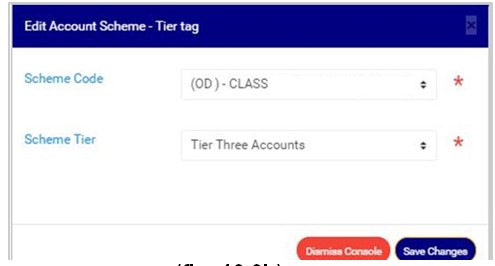
This displays an ‘Edit Account Scheme-Tier tag’ console, as in fig. 13.3b.
(fig. 13.3b)
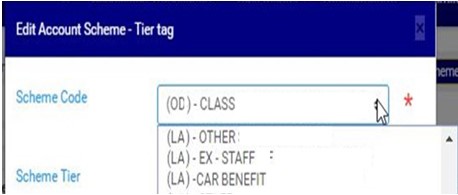
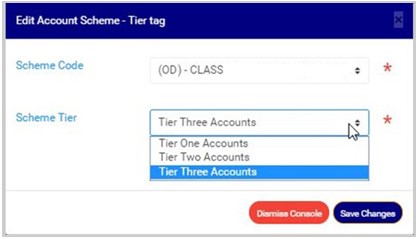
STEP 2: Select a scheme code and/or a scheme tier as in fig. 13.3c and fig. 13.3d respectively, depending on what you want to edit.
(fig. 13.3c)
(fig. 13.3d)
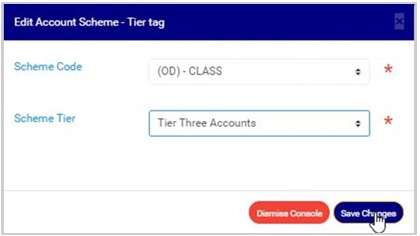
STEP 3: Click ‘SAVE CHANGES’ as shown in fig. 13.3e below, to update the new changes on the software.
(fig. 13.3e)
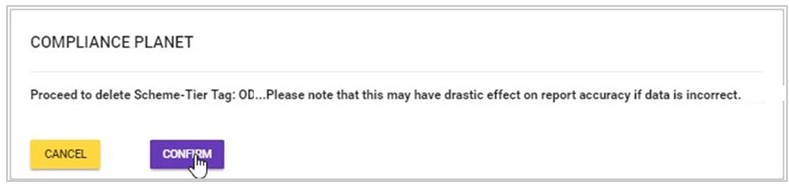
This displays a confirmation console as in fig. 13.3f to confirm you want to change the details.
(fig. 13.3f)
Click on ‘CONFIRM’ as in fig. 13.3f above to save the changes or cancel to discontinue action. When the changes are saved, a notification will be displayed at the top of the page as in fig. 13.3g below.
(fig. 13.3g)
How to Delete an Account Tier
To delete an account scheme-tier tag, click on ‘DELETE’ as in fig. 13.4a below.
(fig. 13.4a)
This displays a confirmation console to confirm your request to delete the account scheme-tier tag as in fig. 13.4b. Click on ‘CONFIRM’ to proceed or ‘CANCEL’ to discontinue.
(fig. 13.4b)
A notification as in fig. 13.4c will be displayed at the top of the page when scheme-tier tag delete is complete.
(fig. 13.4c)
How to Create New Account Scheme-Tier Tag
This refers to the adding of a new account scheme-tier tag. Here is how to do this.
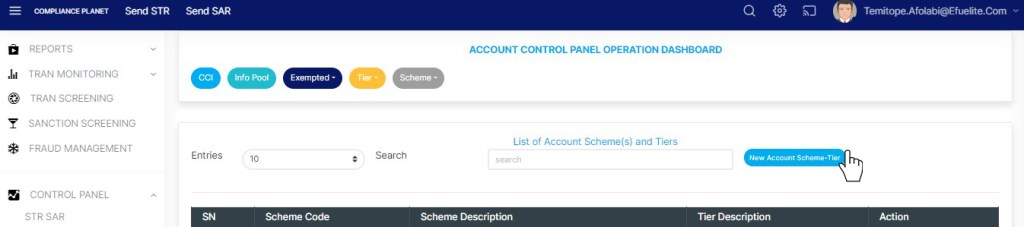
STEP 1: Click on ‘NEW ACCOUNT SCHEME-TIER’ as in fig. 13.5a below.
(fig. 13.5a)
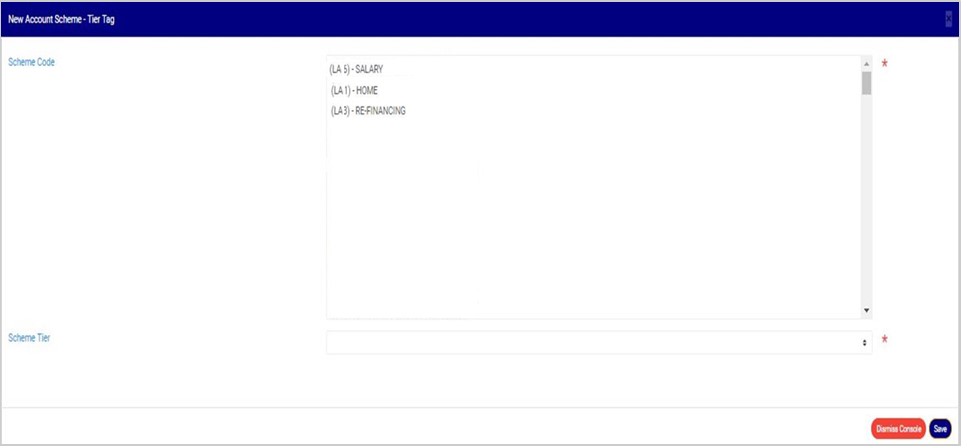
Clicking on ‘NEW ACCOUNT SCHEME-TIER’ will display a console titled, ‘NEW ACCOUNT SCHEME-TIER TAG’, on which you are to select details of the scheme. See fig. 13.5b below for an example.
(fig. 13.5b)
Select account scheme code from the list of scheme codes as seen in fig. 13.5c for an example.
(fig. 13.5c)
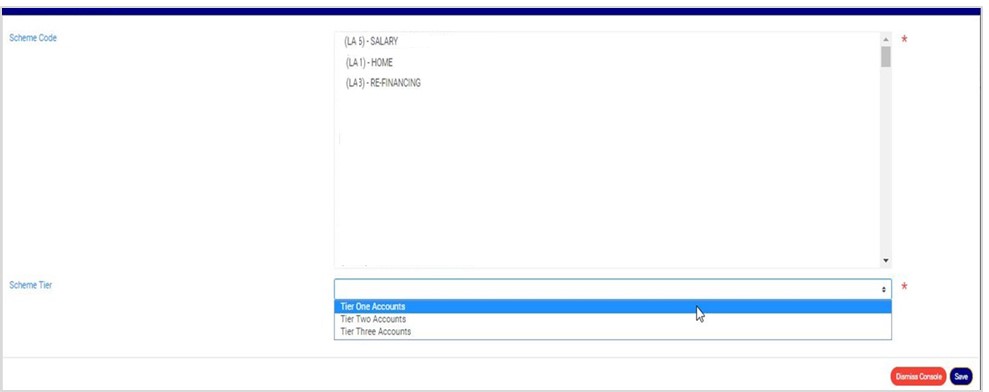
Select scheme-tier tag as shown in fig. 13.5d below.
(fig. 13.5d)
STEP 2: Click ‘SAVE’ as shown in fig. 13.5e below to add the new scheme tier-tag.
(fig. 13.5e)
This displays a confirmation console as in fig. 13.5f below. Click on ‘CONFIRM’ to proceed with the creation of a new account scheme tier tag or ‘CANCEL’ to discontinue.
(fig. 13.5f)
If you proceed, a notification as in fig. 13.5g will be displayed at the top of the page when the account scheme-tier tag is successfully created.
This is the final stage of processing STR/SAR Notifications. Once approved by the reporting officer, the Notifications can be downloaded. Below are steps on how to finalize approval to report STRs/SARs. Also, in this section, you will learn how to download an STR/SAR file.
How to Evaluate and Give Final Approval
Notifications that have been approved by revising officer(s) and/or supervising officer(s) move to the ‘REPORTING OFFICER PENDING NOTIFICATION (S)’ list to be given the final approval. The treatment of a SAR Notification is different from that of a STR Notification. Therefore, the review and final approval on the reporting desk is categorized into two (2) on this desk; EVALUATING AND APPROVING STRs and EVALUATING AND APPROVING SARs.
NOTE: You have to be profiled as a report evaluation officer on report desk with rights to EDIT to be able to carry out this operation.
In this section, you will learn how to evaluate and give final approval for each Notification type, but first, here is how to locate a pending Notification irrespective of its Notification type (STR or SAR).
STEP 1: from the left hand side menu, Click on ‘REPORTS’ as in fig 6.5a below
fig 6.5a
This will display a drop down as in fig 6.4.1b below. The dropdown lists the report types available on the compliance planet software.
STEP 2: Click ‘NFIU STR/SAR on the drop down list. See an example in Fig 6.5b below.
fig 6.5b
This will display the NFIU STR/SAR page as in Fig 6.5c below
Fig 6.5c
STEP : From the top menu, click Report desk as in Fig 6.5d below
This displays a page as in fig. 6.5e below.
(fig. 6.5e)
The notification(s) highlighted “RED” indicates that the notification(s) has not been viewed by anyone on the Reporting desk.
The notification(s) highlighted “GREEN” indicates that the notification(s) has been viewed by you alone.
The notification(s) highlighted “WHITE” indicates that the notification(s) has been viewed by you and at least one other Reporting officer(s)
The notification(s) highlighted “BLUE” indicates that the notification(s) has been viewed by other Reporting officer(s) excluding you
You can increase the number of notifications you want to see per page by clicking on the ENTRIES box. Pick any number of entries per page of your choice. See fig. 6.5f below for an example.
(fig. 6.5f)
STEP 2: You can sort the notifications by clicking on any of the column header, either by alphabetical order or from the latest to the earliest notifications or vice-versa. This step is optional. See fig. 6.5g for an example.
(Fig. 6.5g)
STEP 3: Click on the VIEW box to see notifications classified according to the stage of processing they have gotten to. See fig. 6.5h for the classes of Notifications available to a reporting officer’s view. Select any of them.
(fig. 6.5h)
As seen in fig. 6.5e above, the classes are;
Reporting Officer Pending Notification(s); these are STR/SAR notifications that have been reviewed and approved by a revision officer and/or supervising officer but they have not been treated by the reporting officer. This is the default view of the reporting officer
Reporting Officer Approved Notification (s); these are STR/SAR notifications that have been treated, approved by reporting officer. Once a notification is approved by reporting officer, it joins the Approved Report(s) Pending Download list.
Reporting Officer Rejected Notification(s); these are STR/SAR notifications that are not satisfactory to the reporting officer. When a notification is rejected by the reporting officer, the supervising officer will get a mail notification to revisit the STR/SAR notification and send again if need be.
Approved Notification(s) Pending Download; these are STR/SAR notifications that have been treated and approved by all officers and await download.
Approved Notification(s) Downloaded; these are STR/SAR notifications that have been downloaded.
STEP 4: After selecting the class of Notification (s) from the VIEW box, click on ‘VIEW REPORT(S)’ to see the notification(s). This button is at the top-right corner of the page just as it was in the pages for the other desks. See fig. 6.5i for an example.
(fig. 6.5i)
Also, you can search for a particular notification by typing the customer name or account number concerned in the search box. See fig. 6.5j below for an example of a search
(fig. 6.5j)
Also, at the bottom-right corner of the page, the software gives information about the number of pages, with the page numbers written out. All the page numbers represent buttons to go to each page. By clicking on any page number, the software takes you to that particular page. There is the ‘NEXT’ button to take you to the next page when you click on it and there is the ‘PREVIOUS’ button to take you to the page before the current page. See these features in fig. 6.5g above.
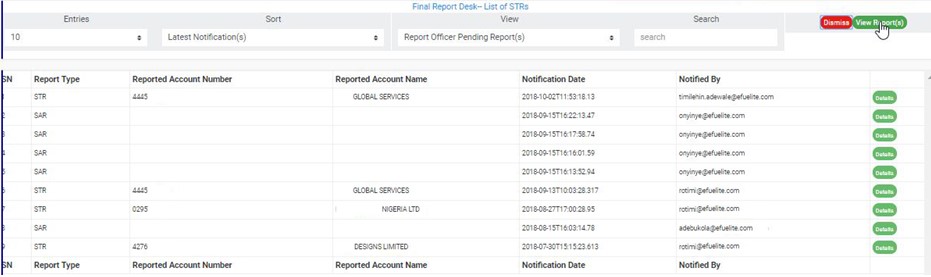
From fig. 6.5e, 6.5f, 6.5g, 6.5h, 6.5i and 6.5j above, it can be seen that the NFIU STR report page reveals information about the notifier, the date of notification, the reported account number, the reported account name and the report type. The report type column specifies if the Notification is a suspicious transaction or a suspicious action. As stated earlier, the treatment of Notifications differs according to their report type. Now, that you already know how to locate Notifications for final review and approval on the reporting desk, here is how to treat each report type.
This section provides a guide on how to evaluate and approve a suspicious transaction. The STR Notifications awaiting final approval are in the ‘REPORTING OFFICER PENDING NOTIFICATION(S)’ list.
Note: You have to be profiled as a Reporting officer on report desk with rights to EDIT to be able to carry out this operation.
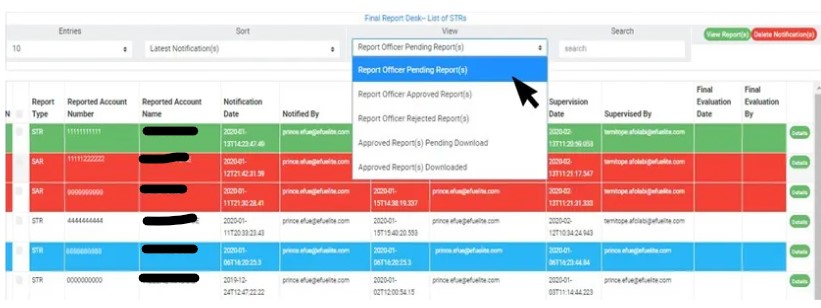
STEP 1: Select ‘REPORTING OFFICER PENDING NOTIFICATION(S)’ from the VIEW box as shown in fig. 6.5k below.
(fig. 6.5k)
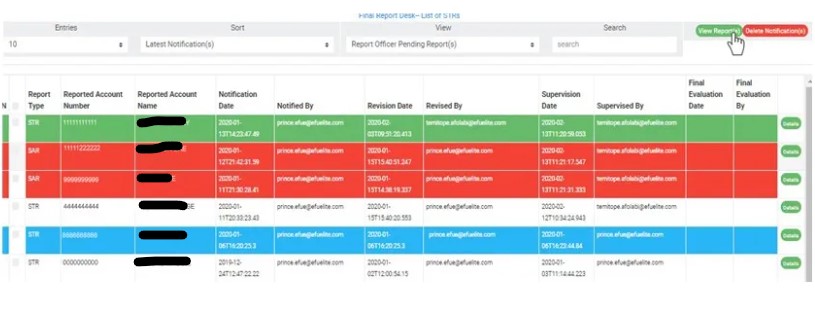
STEP 2: Click on VIEW REPORTS. This will display Notifications awaiting final approval. See the cursor clicking on this button and the Notifications in fig. 6.5l below.
(fig. 6.5l)
STEP 3: Select the STR to be treated by clicking on the ’DETAILS’ button at the end of the notification row. See the cursor clicking on the button in fig. 6.5m below.
(fig. 6.5m)
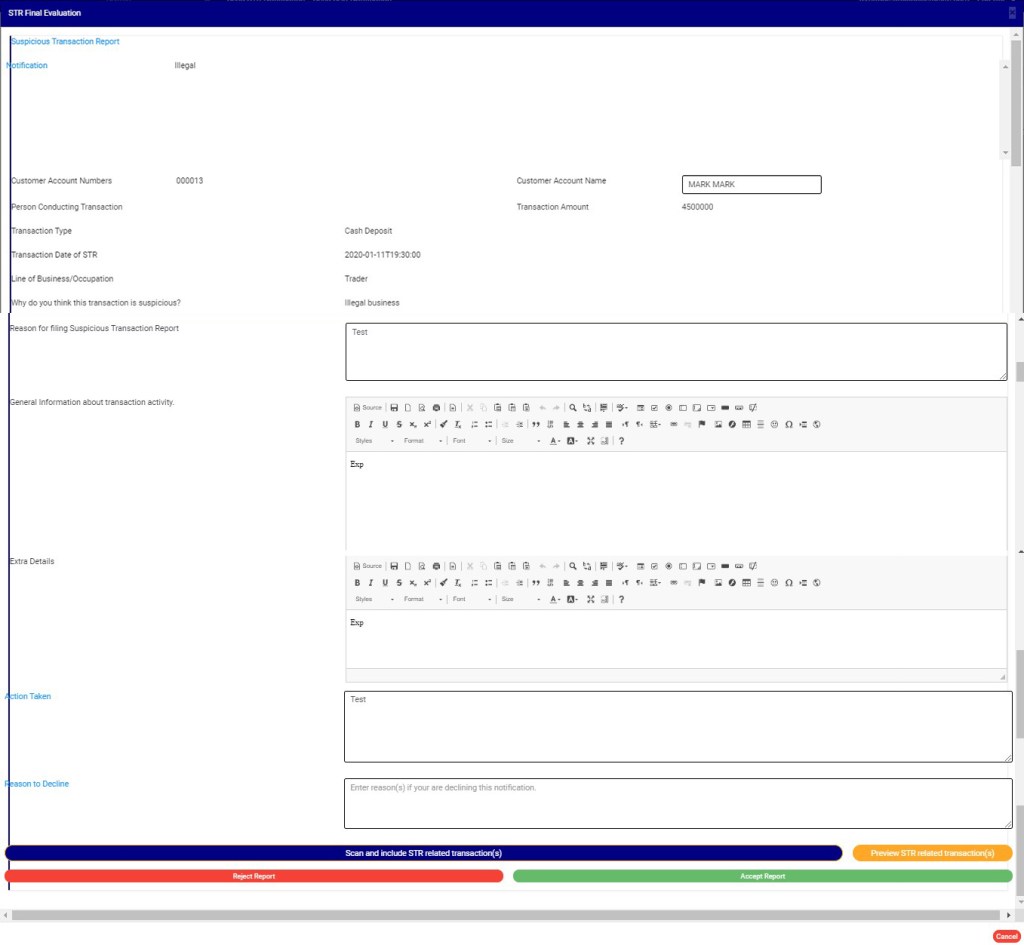
This displays a console titled, ‘STR Final Evaluation’. See fig. 6.5n below for an example of the STR final approval console.
(Fig. 6.5n)
This console offers information about the revision officer and the supervision officer with their comments and actions. The final approval console for STRs has two features the console for SARs does not have.
These are;
Scanning and adding details of transactions related to a suspicious transaction in the report to be generated.
Previewing the tagged related STR transactions.
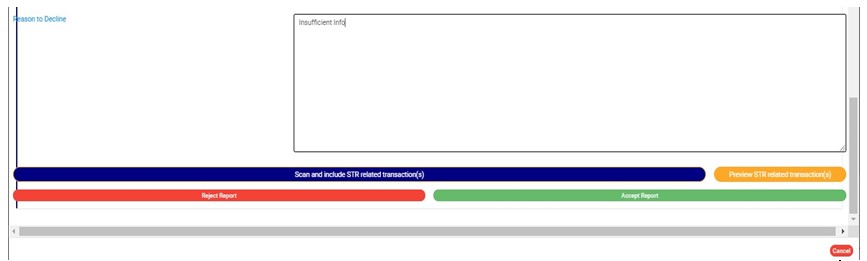
STEP 4: Enter reason to decline (If any) based on your observation. This step is mandatory if you want to reject the Notification. Check out fig. 6.5o below for an example.
(Fig. 6.5o)
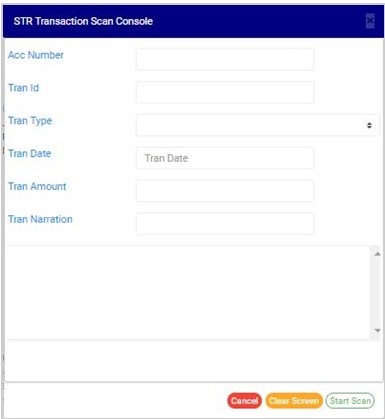
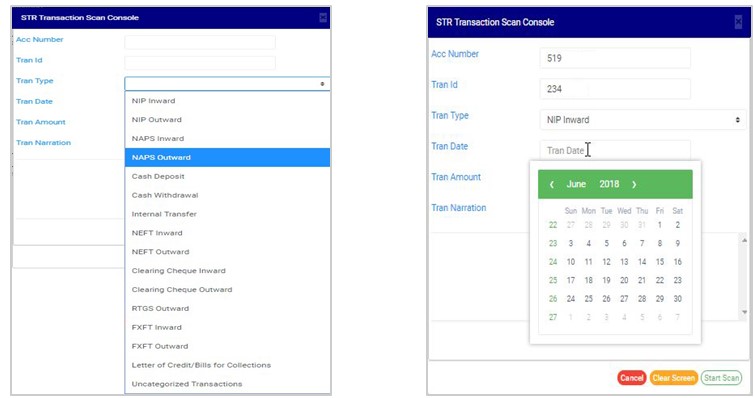
STEP 5: Click on ‘SCAN AND INCLUDE STR RELATED TRANSACTION’to add STR related transaction(s) to the report to be generated. Adding details of related STR transactions will make your report comprehensive and well detailed. Clicking on this button will bring up another console on which you are to input the details of the related transaction. See fig. 6.5p below for an example of a scan console.
(fig. 6.5p)
Follow the instructions below to make use of a SCAN CONSOLE;
Enter the Account Number involved in the related transaction. This account number must exist in the account base.
Enter the transaction ID.
Click on the ‘Tran Type’ box to select the CTR/FTR Transaction type from a drop-down list as in fig. 6.5q below and set the transaction date from ‘Tran Date’ as seen in fig. 6.5r also.
(fig. 6.5q) (fig. 6.5r)
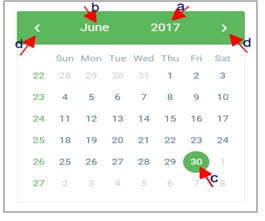
Here is how to make use of a calendar. Take a look at the arrows labelled a – d in fig. 6.5s to study the calendar;
Click on the given year to change it to your year of choice.
Click on the given month to change it to your month of choice.
Click on the date of the month.
You can also click on the angle brackets on the calendar [ ‘<’ or ‘>’ ] to go backward or forward.
(Fig 6.5s)
Enter the amount involved in the related transaction.
Input the ‘narration’ of the related transaction.
Click on ‘START SCAN’ for software to scan and include the transaction in the Notification. See the cursor pointing to this button in fig. 6.5q below.
To clear all the details already entered in, click on ‘CLEAR SCREEN’. The software will wipe off the details immediately.
To close the scan console, click on ‘CANCEL’.
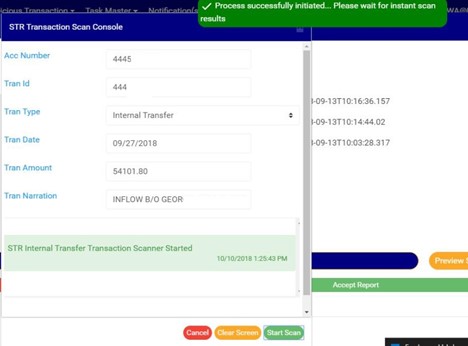
See fig. 6.5t below for an example of a console with already filled in details, ready for scanning.
(fig. 6.5t)
The software immediately starts a scan when you click on ‘Start Scan’. During the scan a notification will be displayed at the top of the page. See fig. 6.5u for an example.
(fig. 6.5u)
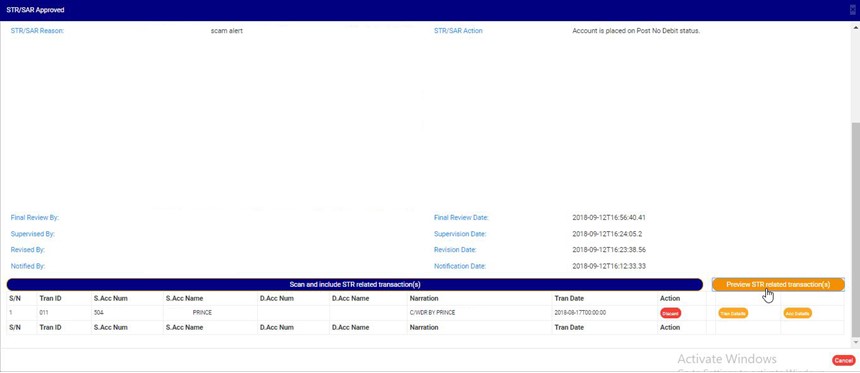
STEP 6: Click on ‘Preview STR Related Transaction(s)’ to see the related STR transactions you scanned earlier. This button is next to the ‘SCAN AND INCLUDE STR RELATED TRANSACTION’ button. See this feature in fig. 6.5o above. By clicking on the preview button, a table will appear right under the scan and preview button, listing the scanned STR related transaction(s) as in fig, 6.5v below.
(Fig. 6.5v)
As seen in fig. 6.5v above, the table comes with features to delete the transaction from the STR, see the details of the transaction and details of the account involved.
To delete a scanned transaction from the Notification, click on ‘DISCARD’. See an example in fig. 6.5w below.
(fig. 6.5w)
To see the details of a transaction, click on ‘TRAN DETAILS’. This button is between the ‘discard button’ and the ‘Acc details’ button as seen in fig. 6.5x below.
(fig. 6.5x)
By clicking on ‘TRAN DETAILS’, a console as in fig. 6.5y below will be displayed, giving details about the scanned transaction.
(fig. 6.5y)
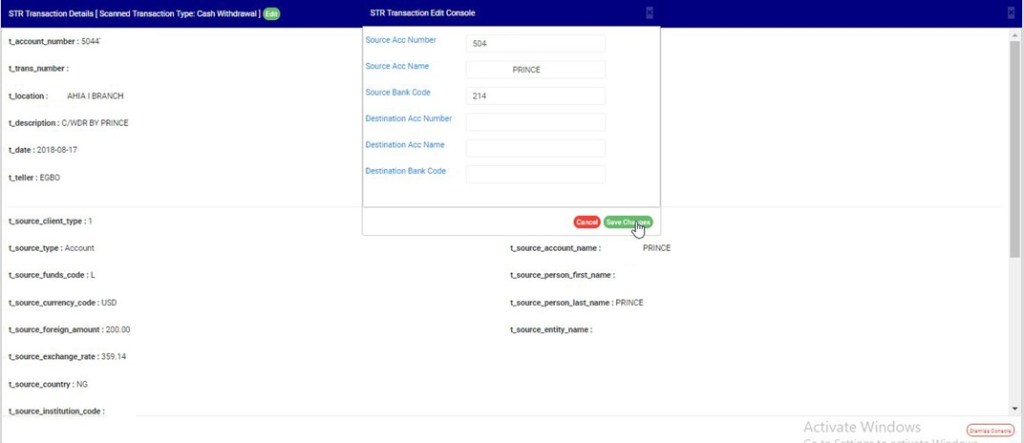
You can also edit some of the transaction details. The details that can be changed are; source account number, source account name, source account bank code, destination account number, destination account name and destination bank code. To edit these details, click on ‘EDIT’. This button is on the title pane of the console. See the cursor clicking on the ‘EDIT’ button in fig. 6.5y above.
Clicking on ‘EDIT’, a console with the aforementioned details will be displayed as in fig. 6.5z below. Make the changes you want and click on ‘SAVE CHANGES’. See the cursor clicking on the button to save the changes made in fig. 6.5z.
(fig. 6.5z)
Click on ‘ACC DETAILS’ to see the details of the accounts involved in the scanned related transaction. See an example in fig. 6.5aa below.
(fig. 6.5aa)
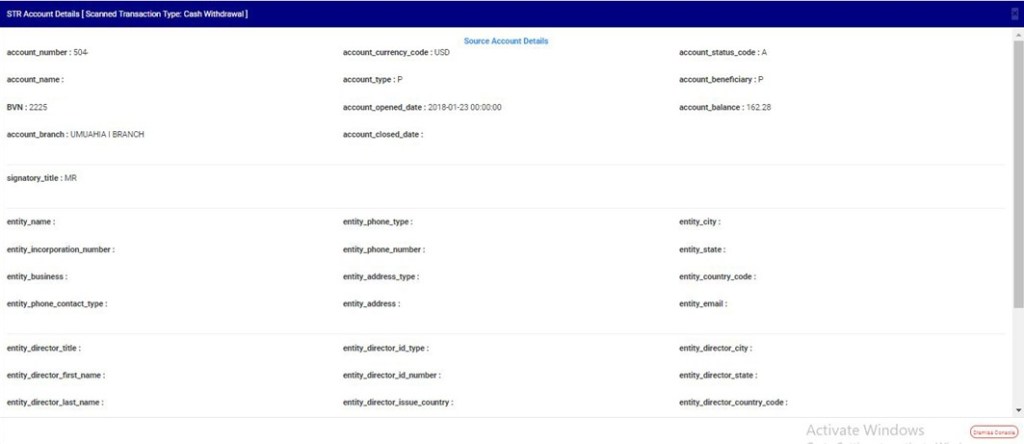
Clicking on the ‘ACC DETAILS’ button, a console will be displayed as in fig. 6.5ab below. As seen below, this console gives details about both the source account and the destination account. These details cannot be edited. After viewing, click on the ‘DISMISS CONSOLE’ button at the bottom-right corner of the console.
(fig. 6.5ab)
You can scan and include as many transactions as you want to your suspicious transaction Notification.
STEP 7: Click on ‘ACCEPT’ to approve the STR or ‘REJECT’ if Notification is unsatisfactory. The software will display a confirmation console to confirm your selected option. See fig. 6.5ac and 6.5ad to see examples of when you choose to ‘accept’ or ‘reject’ respectively. To proceed, click on CONFIRM and to cancel the action, click on CANCEL. Check that you are sure of your options before confirming your request to reject or accept the Notification because this step is irreversible.
This section provides a guide on how to treat a suspicious action and give a final approval. The SAR Notifications awaiting final approval are also in the ‘REPORTING OFFICER PENDING NOTIFICATION(S)’ list.
NOTE: You have to be profiled as a report evaluation officer on report desk with rights to EDIT to be able to carry out this operation.
STEP 1: Select ‘REPORTING OFFICER PENDING NOTIFICATION(S)’ from the VIEW box as shown in fig. 6.5ae below.
(fig. 6.5ae)
STEP 2: Click on VIEW REPORTS and notifications awaiting final approval will be displayed immediately. See the cursor on this button and the Notifications in fig. 6.5af below.
(fig. 6.5af)
STEP 3: Select the SAR to be treated by clicking on the ’DETAILS’ button at the end of the SAR notification row. See the cursor clicking on the button in fig. 6.5ag below.
(fig. 6.5ag)
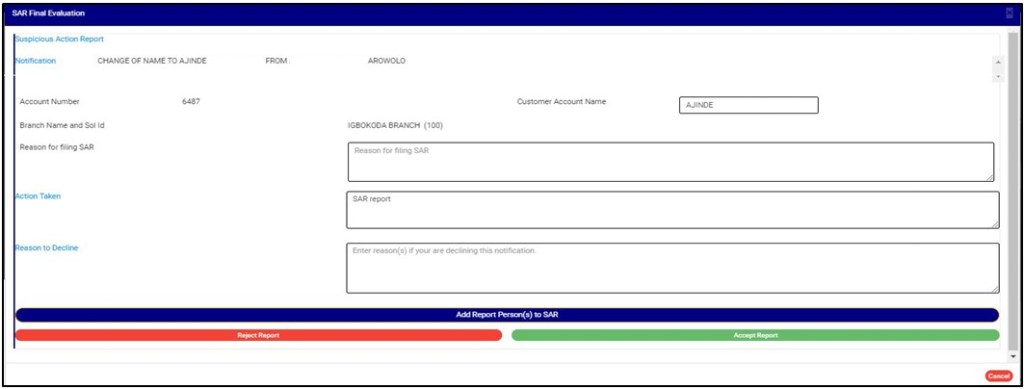
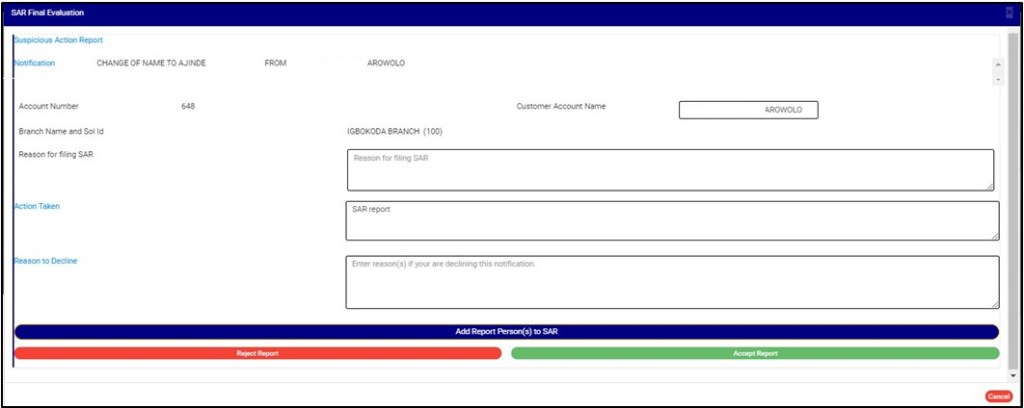
This displays a console titled, ‘SAR FINAL EVALUATION’. See fig. 6.5ah below for an example of the SAR final approval console.
(fig. 6.5ah)
From the example in fig. 6.5ah shown above, the final approval console for SARs reveals information about action taken and the reason(s) for the Notification, but is different from the console for a STR. This console has a feature for adding report person(s) to an SAR.
STEP 4: Enter any extra notes in the “reason to decline “box based on your observation. This step is mandatory if you want to reject the Notification. Check out fig. 6.5ai below for an example.
(fig. 6.5ai)
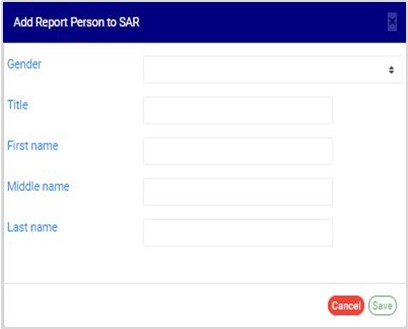
STEP 5: Click on ‘ADD REPORT PERSON(S) TO SAR’ to add details of report person. Report person refers to the person that sent the SAR Report.This displays a console as in. Fig. 6.5aj is an example of the console to input details of report person.
(fig. 6.5aj)
Follow the instructions below to make use of the console seen in fig. 6.5ag.
Select the gender of report person by clicking on the ‘Gender’ box.
Enter the title of report person
Enter the first name of report person
Enter the middle name of report person
Enter the last name of report person
Click on ‘SAVE’. To close the console, click on CANCEL.
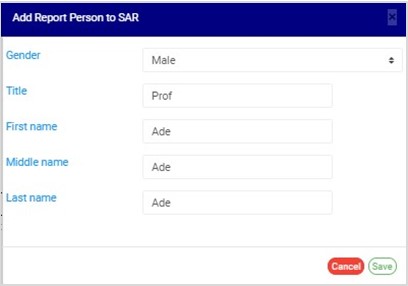
See fig. 6.5ak for an example of a console with details ready to save
(fig. 6.5ak)
The software will add the new information you have added right under the ‘ADD REPORT PERSONS TO SAR’ button just as in fig. 6.5al below. Click on ‘ADD REPORT PERSONS TO SAR’ to add more persons.
(fig. 6.5al)
As shown in fig. 6.5al above, there are two buttons at the end of the row for each report person. These are; ‘EDIT’ button and ‘DELETE’ button. To change the details for a report person, click on ‘EDIT’ and the console just as in fig. 6.5ak above will be displayed. Make the changes and click on save. To remove a report person from a SAR, click on ‘DELETE’.
STEP 6: Click on ‘ACCEPT’ to give final approval or ‘REJECT’ to disapprove the Notification. A confirmation console will be displayed to confirm your selected action. See fig. 6.5am and 6.5an to see examples of when you choose to ‘accept’ or ‘reject’ respectively. To proceed, click on ‘CONFIRM’ and to cancel the action, click on ‘CANCEL’. Check that you are sure of your options before confirming your request to accept or reject the Notification because this step is irreversible.
The STR/SAR notification process panel gives information about Pending Notifications (i.e. notifications that are yet to be attended to) on STR/SAR revision, supervision and report desk.
Note: Only persons assigned right(s) to ‘view STR/SAR reports’ will be able carry out this operation.
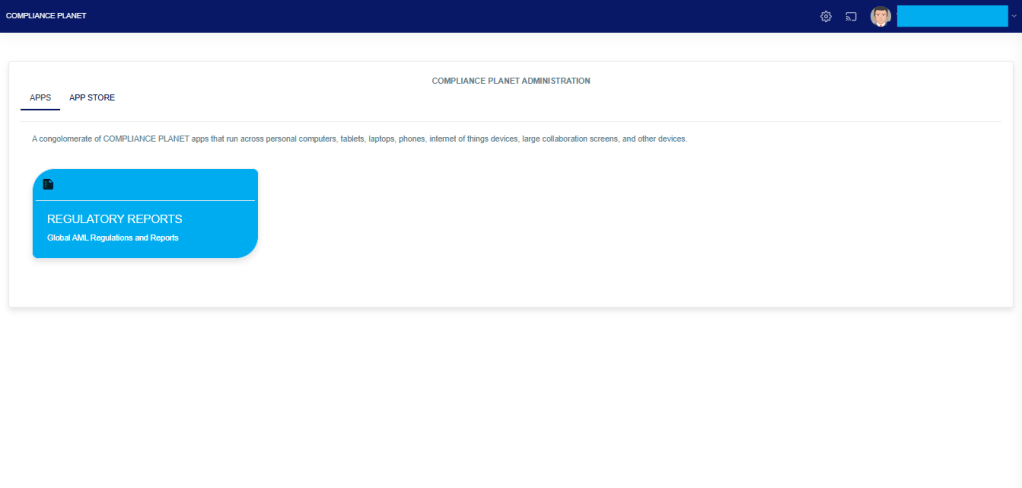
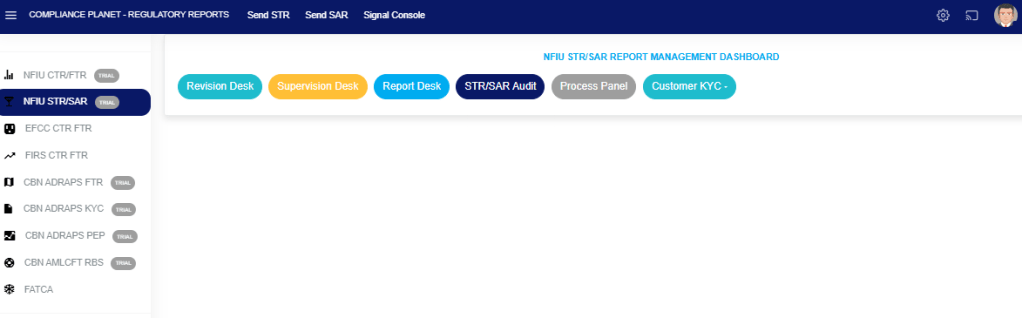
From the app dashboard, click on “REGULATORY REPORTS” as displayed in the image below.
This will display a drop-down, as shown in image below. The drop-down menu lists the report types available on the Compliance Planet software.
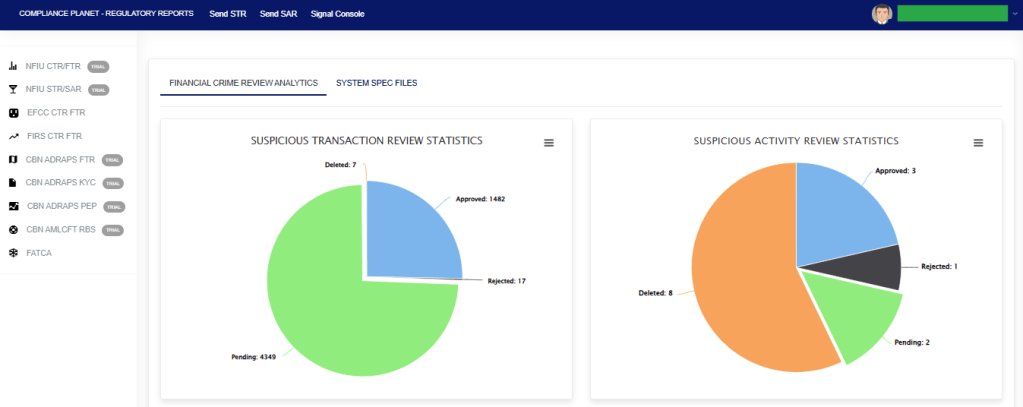
Click ‘NFIU STR/SAR’ on the drop-down list and display the STR/SAR page as displayed in the image below.
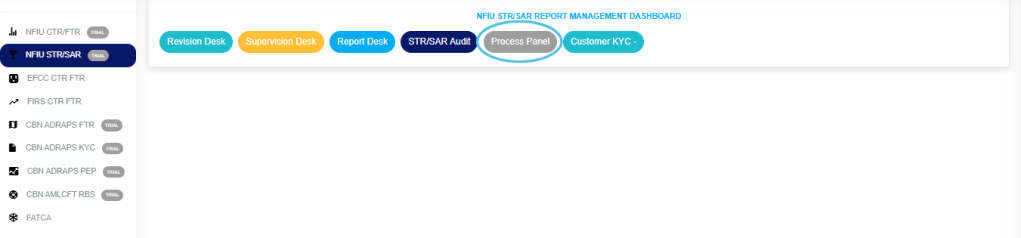
STEP 1: From the top menu, Click “Process Panel” as in the image below.
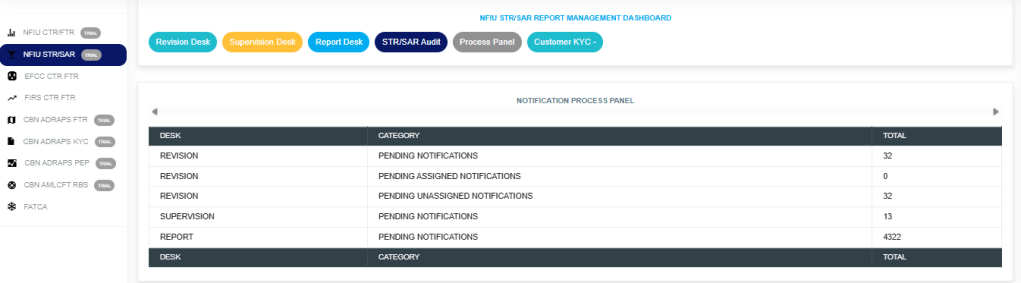
The above action will display the Notification Process Panel Page as shown below.
On the page the software gives information of total revision desk pending Notifications, revision desk pending assigned notifications, revision desk pending assigned notifications, supervision desk pending notifications and reporting desk pending notifications.
The ‘APPROVED LIST’ page provides a list of all corporate account directors’ information that have been verified and approved by the financial institution .Here also; details of corporate account director can be viewed, edited, deleted and disapproved, either individually or in bulk. Here are steps on how to make use of the features on the Approved list page.
NOTE: Only person(s) profiled as deputy Admin will be able to carry out this operation.
From the left hand side menu, Click ‘Control panel’ as in fig. 10.1a.
Fig 10.1a
This will display a drop down as in Fig 10.1b below.
Fig 10.1b
Click ‘DIRECTOR’ on the drop down list. See an example in Fig 10.1c below.
Fig 10.1c
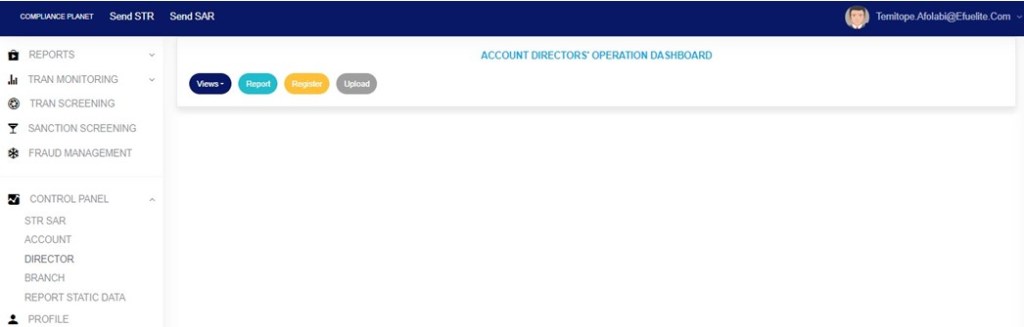
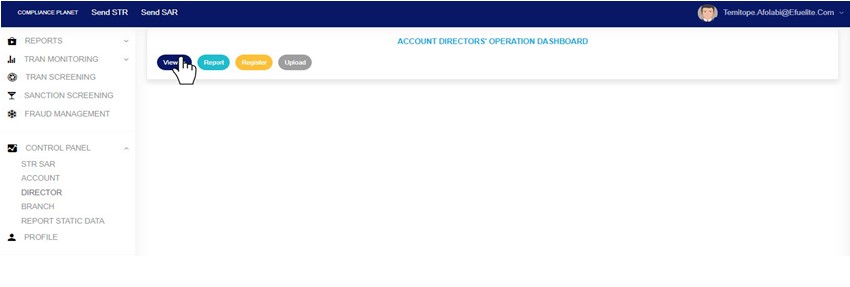
This will display the ACCOUNT DIRECTORS OPERATIONS dashboard as in Fig 10.1d below
Fig 10.1d
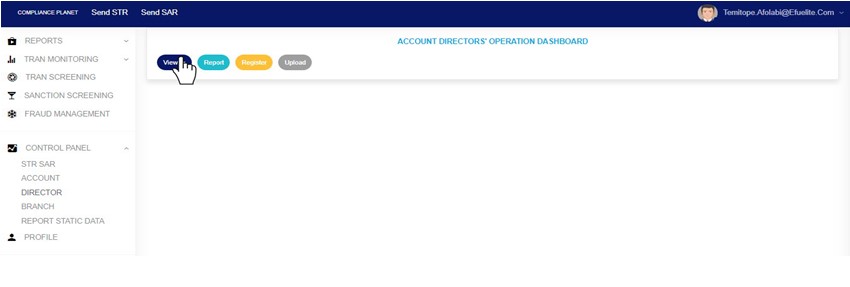
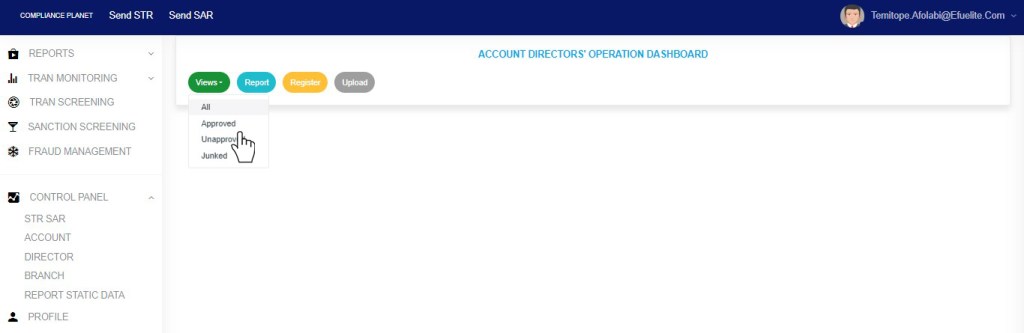
From the top menu, Click ‘View’ as shown in fig. 10.5a below
(fig. 10.5a)
This will display a dropdown as in fig 10.5b below
STEP 2: Click “Approved” from the drop-down list as in fig 10.5b below
Fig 10.5b
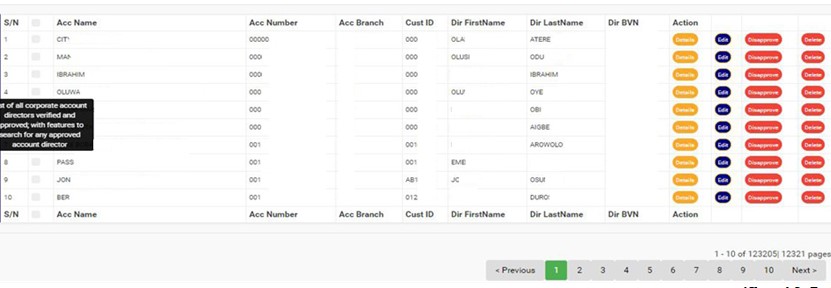
This will display a page listing out the director information that has been verified and approved. See fig. 10.5c below for an example.
(fig. 10.5c)
At the bottom-right corner of the page, the software gives information about the number of pages of the approved director list, with the page numbers written out. The page numbers are buttons to go to each page. By clicking on any page number, the software takes you to that particular page. Click on ‘NEXT’ to go to the next page or click on ‘PREVIOUS’ to go to the page before the current page.
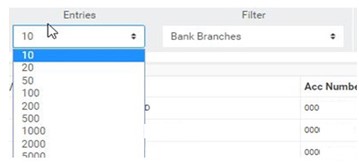
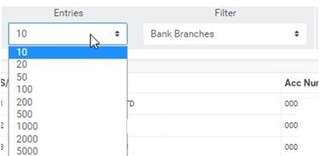
Adjust the number of approved account directors you want to see per page by clicking on the ENTRIES box as in fig. 10.5d below.
(fig. 10.5d)
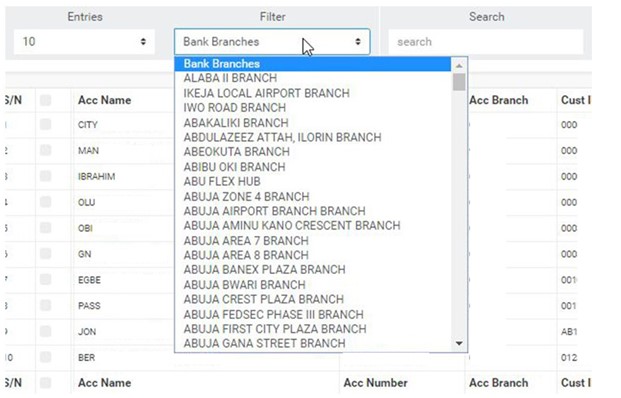
To see approved director information of corporate accounts for any of the branches, select the branch name from the filter box as seen in fig. 10.5e below. The default list is always for all branches of the institution.
(fig. 10.5e)
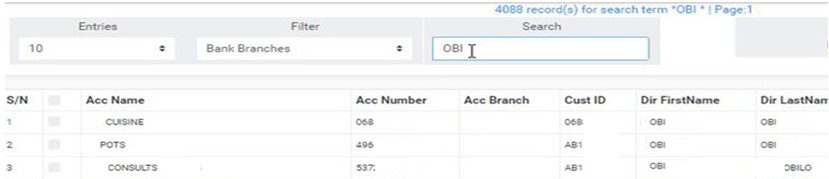
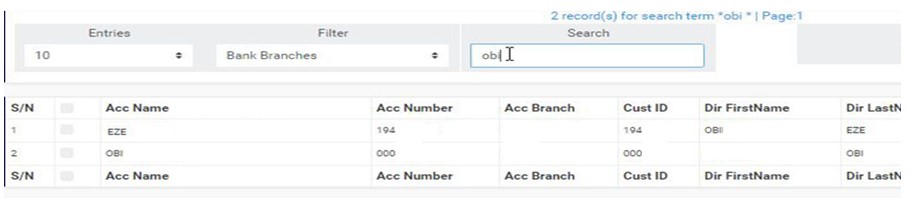
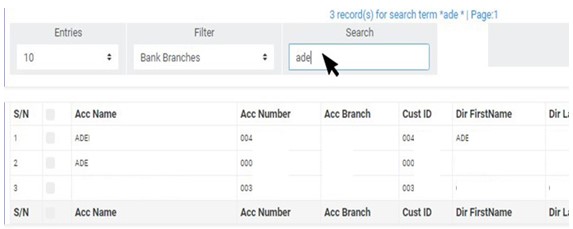
Search for a corporate account director information by the account name, account number, director’s first name, last name or director’s BVN in the search box. See an example of a search in fig. 10.5f below. Search results will appear as you type in the search box.
(fig. 10.5f)
On this page, each director information on the list has four (4) action buttons. These buttons are used for individual operations of the respective director information in the list. They are;
‘DETAILS’ button,
‘EDIT’ button
‘DISAPPROVE’ button and
‘DELETE’ button
Here is how to make use of the action buttons.
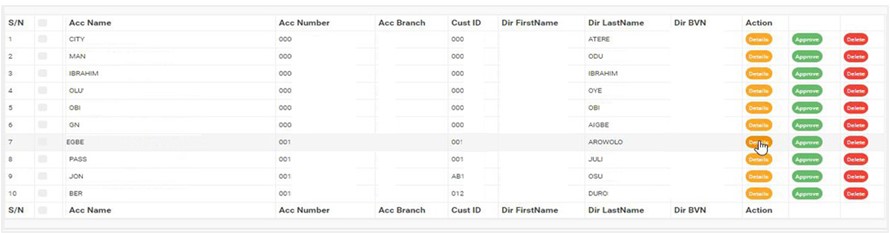
Click on ‘DETAILS’ as in fig. 10.5f below to view the details of a corporate account director.
(fig. 10.5f)
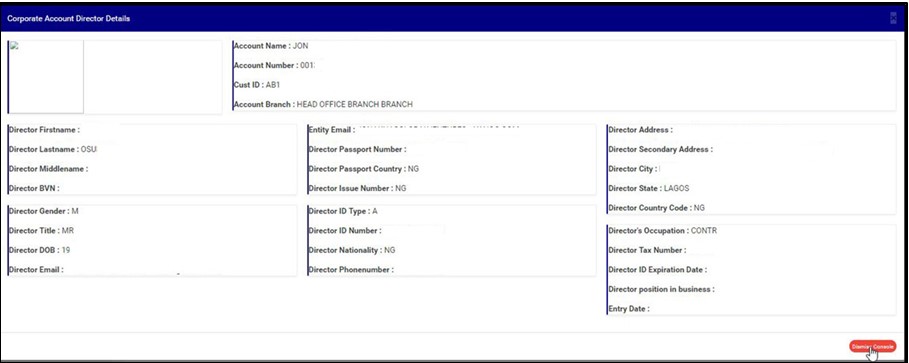
This will display a Corporate Account Director Details console as in fig. 10.4g below. After viewing, click on ‘DISMISS CONSOLE’ (as shown below) to close the console.
(fig. 10.5g)
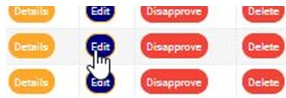
To make changes to the details of a director, click on ‘EDIT’ as shown in fig. 10.5h below.
Note; Only person(s) profiled as deputy Admin will be able to carry out this operation.
(fig. 10.5h)
This will display an ‘Edit Corporate Account Director’ console where you can edit the previously saved director information and also, add other details in the fields that are yet to be filled. Note that the account number, account name, account branch, customer ID and BVN cannot be changed. See an example of the console in fig. 10.5i.
(fig. 10.5i)
Click on ‘SAVE’ to make the changes permanent.
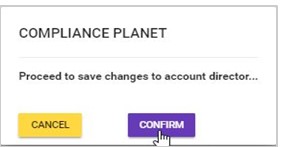
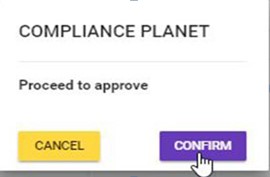
This displays a confirmation console to confirm you want to make the changes. Click on ‘CONFIRM’ as shown in fig. 10.5j to proceed or ‘CANCEL’ to go back to the ‘Edit Corporate Account Director’ console.
(fig. 10.5j)
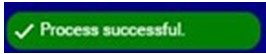
By clicking on ‘CONFIRM’, the console will be closed. When the changes have been saved, a notification will be displayed at the top of the page as seen in fig. 10.5k below.
(Fig. 10.5k)
To disapprove director information that was previously verified and approved, click on ‘DISAPPROVE’ as shown in fig. 10.5l below.
NOTE: Only person(s) profiled as supreme Admin will be able to carryout this operation.
(fig. 10.5l)
This displays a confirmation console to confirm your request to DISAPPROVE the director information. Click on ‘CONFIRM’ to proceed or ‘CANCEL’ to stop action. See fig. 10.5m for an example.
(fig. 10.5m)
When the disapproval is successful, a notification will be displayed at the top of the page as in fig. 10.5n, the director information will be removed from the approved list page and added to the unapproved list of corporate director information.
(fig. 10.5n)
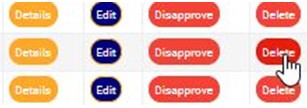
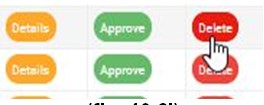
To delete any of the corporate account director information, click on ‘DELETE’ as shown in fig. 10.5o below.
NOTE: Only person(s) profiled as deputy supreme Admin and assigned right(s) to “view directors list” and “disapprove director” will be able to carry out this operation.
(fig. 10.5o)
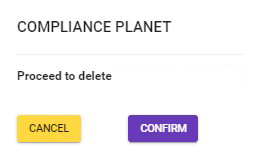
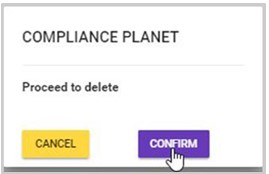
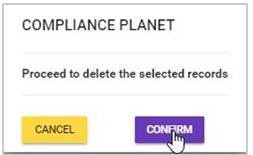
This displays a confirmation console to confirm your request to delete the director information. Click on ‘CONFIRM’ to proceed with the delete or ‘CANCEL’ to stop action. See fig. 10.5p for an example.
(fig. 10.5p)
When the delete is done, a notification as in fig. 10.5q will be displayed at the top of the page, the deleted account director information will removed from the general list and the approved list and added to the Account Directors Junk List.
(fig. 10.5q)
Bulk Operations
At the top-right area of the Approved List page, there are features to carry out bulk treatment of more than one account director information together. As shown in fig. 10.5r below, these features are;
‘Download Excel’ button
‘Disapprove Selected’ button and
‘Delete Selected’ button
To carry out any bulk operation,
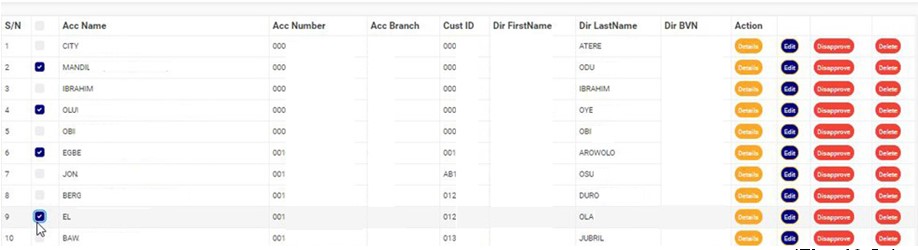
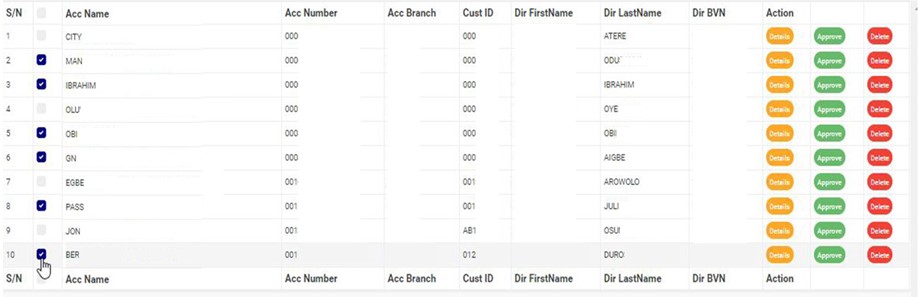
Select the corporate account director information to be treated. Select the account director information by clicking on their checkboxes. See fig. 10.5s below for an example.
(Fig. 10.5s)
To select or deselect all the accounts, click on the checkbox on the table title bar, that is, the checkbox between ‘S/N’ and ‘ACC NAME’. See fig. 10.5t for an example.
(fig. 10.5t)
After making your selection, Click “Operations” button as shown in fig 10.5u below
(fig. 10.5u)
This will display a dropdown as in Fig 10.5v below
By clicking on the ‘Download Excel’ button, an excel file filled with the details of selected approved account director information will be downloaded to your computer.
Click on the ‘DOWNLOAD EXCEL’ button as seen in fig. 10.5w below.
NOTE Only person(s) profiled as deputy supreme Admin and assigned right(s) to “view directors list” and “download excel report” will be able to carryout this operation.
(fig. 10.5w)
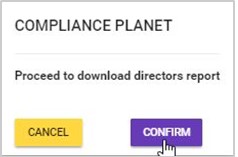
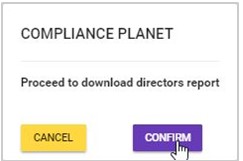
This displays a confirmation console as in fig. 10.5x below. Click on ‘CONFIRM’ to proceed with the download or ‘CANCEL’ to discontinue.
(fig. 10.5x)
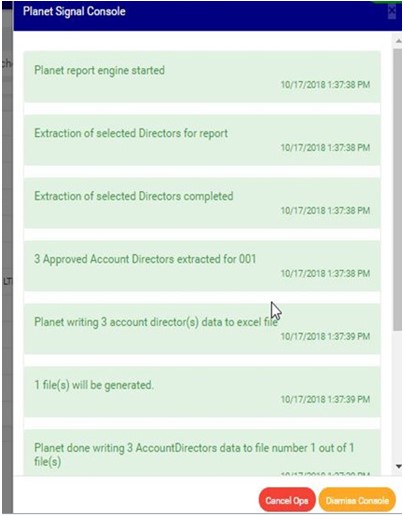
The signal console shows ongoing processes as in fig. 10.5y below and a notification will be displayed at the top of the page when the file download is complete.
(fig. 10.5y)
To close the signal console, click on its ‘DISMISS CONSOLE’ button;
To terminate the ongoing processes, click on ‘CANCEL OPS’.
This displays a confirmation console, Click on ‘CONFIRM’ as seen in fig. 10.5z below to proceed.
By clicking on the ‘Disapprove Selected’ button, all the selected director information will be disapproved and moved to the Account Directors Unapproved List on the planet.
NOTE only person(s) profiled as deputy supreme Admin and assigned right(s) to “view directors list” and “Disapprove directors (Bulk)” will be able to carryout this operation.
Here is how to make a bulk disapproval.
Click on the ‘DISAPPROVE SELECTED’ button as seen in fig. 10.5aa below.
(fig. 10.5aa)
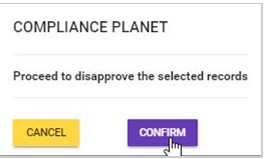
This displays a confirmation console to confirm your request to DISAPPROVE the director information. Click on ‘CONFIRM’ to proceed or ‘CANCEL’ to stop action. See fig. 10.5ab for an example.
(fig. 10.5ab)
When the disapproval is successful, a notification will be displayed at the top of the page as in fig. 10.5ac below. Then, the director information will be removed from the approved list page and added to the unapproved list of corporate director information.
By clicking on the ‘Delete Selected’ button, all the selected director information will be removed from the general list and the approved list, and added to the account directors’ junk list.
NOTE only person(s) profiled as deputy supreme Admin and assigned right(s) to “view directors list” and “Disapprove directors (Bulk)” will be able to carryout this operation.
Click on the ‘DELETE SELECTED’ button as seen in fig. 10.5ad below.
(fig. 10.5ad)
This displays a confirmation console as in fig. 10.5ae below. Click on ‘CONFIRM’ to proceed with the delete or ‘CANCEL’ to discontinue.
(fig. 10.5ae)
A notification will be displayed at the top of the page when the bulk delete is successful. See fig. 10.5af below for an example.
The ‘UNAPPROVED LIST’ page provides a list of all corporate account directors’ information that are yet to be verified and/or approved by the financial institution. Information that were previously verified and approved but have been disapproved again will also appear here.
Note only persons profiled as a ‘Deputy Supreme Admin’ with right to ‘view account directors’ will be able to view unapproved account directors list.
Here are steps on how to make use of the features on the ‘Unapproved list’ page.
From the left hand side menu, Click ‘Control panel’ as in fig. 10.1a.
Fig 10.1a
This will display a drop down as in Fig 10.1b below.
Fig 10.1b
Click ‘DIRECTOR’ on the drop down list. See an example in Fig 10.1c below.
Fig 10.1c
This will display the ACCOUNT DIRECTORS OPERATIONS dashboard as in Fig 10.1d below
Fig 10.1d
From the top menu, Click ‘View’ as shown in fig. 10.6a below
(fig. 10.6a)
This will display a dropdown as in fig 10.6b below
STEP 2: Click “Unapproved” from the drop-down list as in fig 10.6b below
Fig 10.6b
This displays a page listing out the director information that has not been verified and approved by the institution. See fig. 10.6c below for an example.
(fig. 10.6c)
At the bottom-right corner of the page, the software provides information about the number of pages of the list, with the page numbers written out. The page numbers are buttons to go to each page. By clicking on any page number, the software takes you to that particular page. Click on ‘NEXT’ to go to the next page or click on ‘PREVIOUS’ to go to the page before the one you are viewing at that moment.
Adjust the number of unapproved account director information you want to see per page by clicking on the ENTRIES box as in fig. 10.6d below.
(fig. 10.6d)
To see the unapproved director information of corporate accounts for any of the branches, select the branch name from the filter box as shown in fig. 10.6e below. The default list is always for all branches of the institution.
(fig. 10.6e)
Search for a corporate account director information by the account name, account number, director’s first name, last name or director’s BVN in the search box. See an example of a search in fig. 10.6f below. Search results will appear as you input a character in the search box.
(fig. 10.6f)
On this page, each director information on the list has three (3) action buttons. These buttons are used for individual operations of the respective director information in the list. They are;
‘DETAILS’ button,
‘APPROVE’ button and
‘DELETE’ button
Here is how to make use of the action buttons.
Click on ‘DETAILS’ as in fig. 10.6g below to view the details of the unapproved corporate account director.
Note only persons profiled as a Deputy Supreme Admin with right to view account directors will be able to view unapproved account directors list.
(fig. 10.6g)
This displays a Corporate Account Director Details console as in fig. 10.6h below. After viewing, click on ‘DISMISS CONSOLE’ (as shown below) to close the console.
(fig. 10.6h)
To approve a directors’ information, click on ‘APPROVE’ as shown in fig. 10.6i below.
Note: Only persons profiled as a Deputy Supreme Admin with right to “view account directors” and “disapprove directors” will be able to carry out this operation.
(fig. 10.6i)
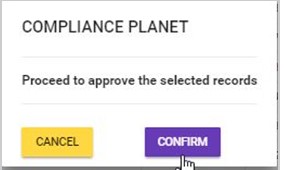
This displays a confirmation console as in fig. 10.6j to confirm your request to APPROVE that director information. Click on ‘CONFIRM’ to proceed or ‘CANCEL’ to stop action..
(fig. 10.6j)
When the approval is successful, a notification will be displayed at the top of the page as in fig. 10.6k below. The director information will be removed from the ‘Unapproved list’ page and added to the ‘Approved list’ of corporate director information.
(fig. 10.6k).
To delete any of the corporate account director information, click on ‘DELETE’ as shown in fig. 10.6l below.
Note only persons profiled as a Deputy Supreme Admin with right to “view account directors” and “delete directors” will be able to carry out this operation.
(fig. 10.6l)
This displays a confirmation console as in fig. 10.6m to confirm your request to delete the unapproved director information. Click on ‘CONFIRM’ to proceed with the delete or ‘CANCEL’ to stop action.
(fig. 10.6m)
When the delete is done, a notification as in fig. 10.6n will be displayed at the top of the page; the deleted account director information will removed from the general list and the unapproved list and added to the Account Directors Junk List.
(Fig. 10.6n)
Bulk Operations
Also, there are features to carry out bulk treatment of more than one account director information together at the top-right area of this page. These features are;
‘Download Excel’ button
‘Approve Selected’ button and
‘Delete Selected’ button
To carry out any bulk operation, select the corporate account director information to be treated first. Select the account director information by clicking on their checkboxes. See fig. 10.6o below for an example.
(fig. 10.6o)
To select/deselect all the accounts, click on the checkbox on the table title bar, that is, the checkbox between ‘S/N’ and ‘ACC NAME’. See fig. 10.6p for an example.
(fig. 10.6p)
After making your selection, Click “Operations” button as shown in fig 10.6q below
(fig. 10.6q)
This will display a dropdown as in Fig 10.6r below
(fig. 10.6r)
A. Bulk Download
By clicking on the ‘Download Excel’ button, an excel file filled with the details of the selected unapproved account director information will be downloaded to your computer.
NOTE: Only persons profiled as a Deputy Supreme Admin with right to “view account directors” and “download report (excel)” will be able to carry out this operation.
Click on the ‘DOWNLOAD EXCEL’ button as seen in fig. 10.6s below.
(fig. 10.6s)
This displays a confirmation console as in fig. 10.6t below. Click on ‘CONFIRM’ to proceed with the download or ‘CANCEL’ to discontinue.
(fig. 10.6t)
The signal console shows ongoing processes as in fig. 10.6u below and a notification will be displayed at the top of the page when the download is complete.
(fig. 10.6u)
To close the signal console, click on its ‘DISMISS CONSOLE’ button;
Terminate ongoing processes by clicking on ‘CANCEL OPS’.
This displays a confirmation console, click on ‘CONFIRM’ to proceed. A notification will also be displayed at the top of the page when the cancellation is successful.
By clicking on the ‘Approve Selected’ button, all the selected director information will be approved and moved to the Account Directors ‘Approved List’ on the software.
Note: Only persons profiled as a Deputy Supreme Admin with right to “view account directors” and “approve directors (bulk)” will be able to carry out this operation.
Here is how to make a bulk approval.
Click on the ‘APPROVE SELECTED’ button as seen in fig. 10.6v below.
(fig. 10.6v)
This displays a confirmation console as in fig. 10.6w to confirm your request to APPROVE the selected director information. Click on ‘CONFIRM’ to proceed or ‘CANCEL’ to stop the action.
(fig. 10.6w)
When the approval is successful, a notification will be displayed at the top of the page as in fig. 10.6x below. Then, the director information will be removed from the ‘Unapproved list’ and added to the ‘Approved list’ of corporate director information.
By clicking on the ‘Delete Selected’ button, all the selected director information will be removed from the general list and the unapproved list, and added to the account directors’ junk list.
Note: Only persons profiled as a Deputy Supreme Admin with right to “view account directors” and “delete director (bulk)” will be able to carry out this operation.
Click on the ‘DELETE SELECTED’ button as seen in fig. 10.6y below.
(fig. 10.6y)
This displays a confirmation console as in fig. 10.6z below. Click on ‘CONFIRM’ to proceed with the delete or ‘CANCEL’ to discontinue.
(fig. 10.6z)
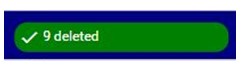
A notification will be displayed at the top of the page when the bulk delete is successful. See fig. 10.6aa below for an example.
The ‘JUNK LIST’ page provides a list of all corporate account directors’ information, approved or unapproved, that was deleted from the general, approved, or unapproved list.
NOTE: Only person(s) profiled as deputy supreme Admin and assigned right(s) to “view directors list” will be able to carry out this operation.
From the left hand side menu, Click ‘Control panel’ as in fig. 10.1a.
Fig 10.1a
This will display a drop down as in Fig 10.1b below.
Fig 10.1b
Click ‘DIRECTOR’ on the drop down list. See an example in Fig 10.1c below.
Fig 10.1c
This will display the ACCOUNT DIRECTORS OPERATIONS dashboard as in Fig 10.1d below
Fig 10.1d
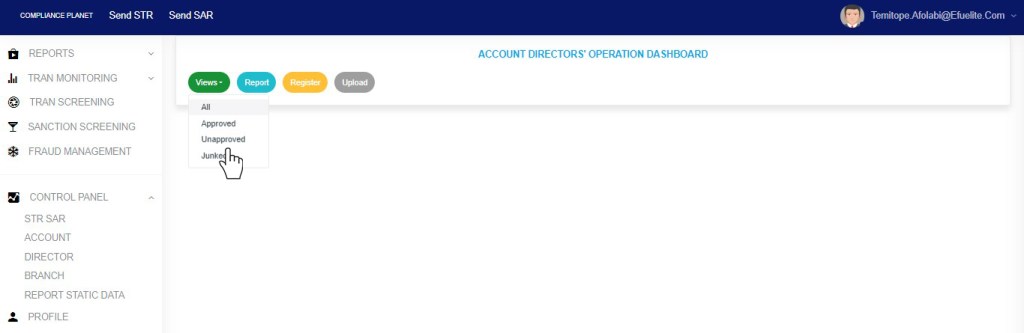
From the top menu, Click ‘View’ as shown in fig. 10.7a below
(fig. 10.7a)
This will display a dropdown as in fig 10.7b below
Click “Junked” from the drop-down list as in fig 10.7b below
Fig 10.7b
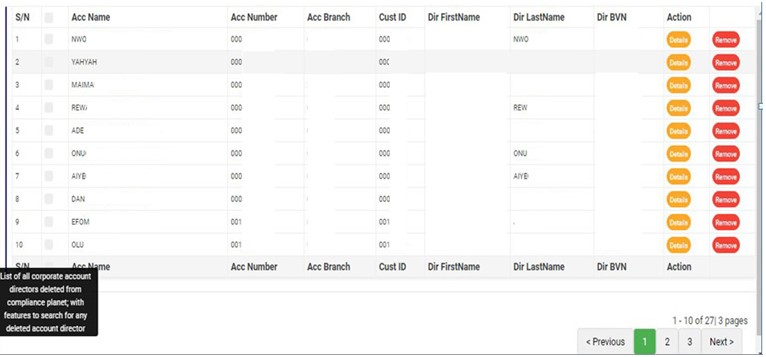
This displays a page listing out the director information that were deleted from the general list, approved list and unapproved list. See fig. 10.7c below for an example.
(fig. 10.7c)
At the bottom-right corner of the page, the software provides information about the number of pages of the junk list, with the page numbers written out. The page numbers are buttons to go to each page. By clicking on any page number, the software takes you to that particular page. Click on ‘NEXT’ to go to the next page or click on ‘PREVIOUS’ to go to the page before the one you are viewing at that moment.
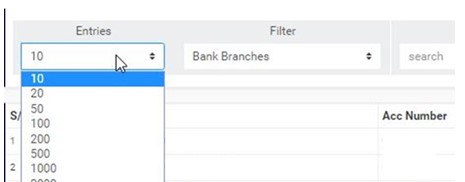
Adjust the number of the account director information you want to see per page by clicking on the ENTRIES box as in fig. 10.7d below.
(fig. 10.7d)
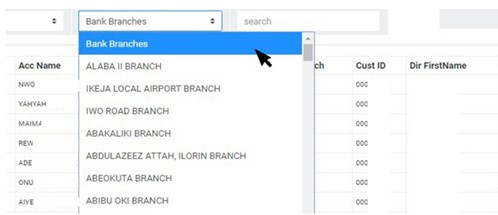
To see deleted director information of corporate accounts for any of the branches, select the branch name from the filter box as shown in fig. 10.7e below. The default list is always for all branches of the institution.
(fig. 10.7e)
Search for a corporate account director information by the account name, account number, director’s first name, last name or director’s BVN in the search box. See an example of a search in fig. 10.7f below. Search results will appear as you input a character in the search box.
(fig. 10.7f)
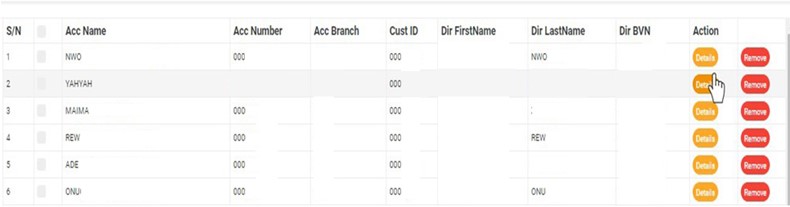
Each corporate account director information on the junk list has two (2) action buttons; the ‘DETAILS’ button and the ‘REMOVE’ button. These buttons are used for the treatment of the respective director information on the list. Here is how to make use of the action buttons.
Click on ‘DETAILS’ as in fig. 10.7g below to view the details of the deleted corporate account director.
(fig. 10.7g)
This displays a ‘Corporate Account Director Details’ console as in fig. 10.7h below.
(Fig. 10.7h)
After viewing, click on ‘DISMISS CONSOLE’ (as shown below) to close the console.
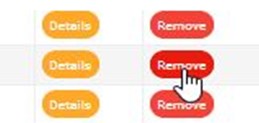
To restore director information back to the general list, click on ‘REMOVE’ as shown in fig. 10.7i below. This is the reversal of the ‘delete’ action that was previously carried out on that particular director information.
(fig. 10.7i)
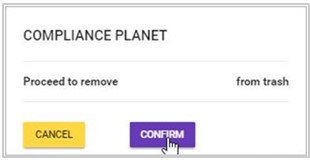
This displays a confirmation console as in fig. 10.7j to confirm your request to REMOVE that director information from the junk list (trash). Click on ‘CONFIRM’ to proceed or ‘CANCEL’ to stop action.
(fig. 10.7j)
When the removal is done, a notification will be displayed at the top of the page as in fig. 10.7k below. The director information will be removed from the ‘Junk list’ and added back to the ‘General list’ and ‘Approved list’ or ‘Unapproved list’ of corporate director information.
(fig. 10.7k)
Bulk Removal
To carry out bulk removal, select the corporate account director information to be treated. Select the account director information by clicking on their checkboxes. See fig. 10.7l below for an example.
(fig. 10.7l)
To select/deselect all the accounts, click on the checkbox on the table title bar, that is, the checkbox between ‘S/N’ and ‘ACC NAME’. See fig. 10.7m for an example.
(fig. 10.7m)
After making your selection,Click “Operations” button as in fig 10.7n below.
(fig. 10.7n)
This will display a drop-down as in Fig 10.7o below
(fig. 10.7o)
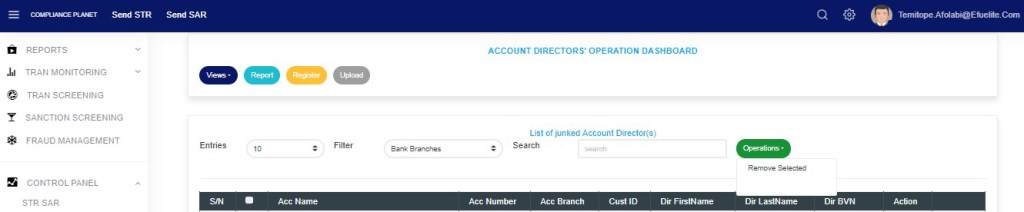
Click on the ‘REMOVE SELECTED’ button as seen in fig. 10.7p below.
By clicking on ‘Remove Selected’, all the selected director information will be removed from the junk list, and added back to the account directors’ general list. Director information that has been approved previously will also be added back to the approved list, while unapproved information will be added to the unapproved list. Here is how to make a bulk removal.
(fig. 10.7p)
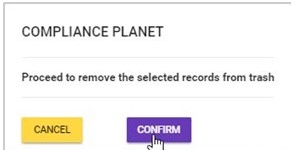
This displays a confirmation console as in fig. 10.7q to confirm your request to REMOVE the selected director information. Click on ‘CONFIRM’ to proceed or ‘CANCEL’ to stop the action.
(fig. 10.7q)
When the removal is done, a notification will be displayed at the top of the page as in fig. 10.7r below. Then, the director information will be removed from the ‘Junk list’.
This operation entails the analysis of corporate accounts involved in currency transactions but do not have director information. Here, the various types of director reports can be downloaded. Here are steps for generating analyses for the corporate accounts without director information and downloading the various report types.
NOTE: Only person(s) profiled as deputy supreme admin can carry out this operation.
From the left hand side menu, Click ‘Control panel’ as in fig. 10.1a.
Fig 10.1a
This will display a drop down as in Fig 10.1b below.
Fig 10.1b
Click ‘DIRECTOR’ on the drop down list. See an example in Fig 10.1c below.
Fig 10.1c
This will display the ACCOUNT DIRECTORS OPERATIONS dashboard as in Fig 10.1d below
Fig 10.1d
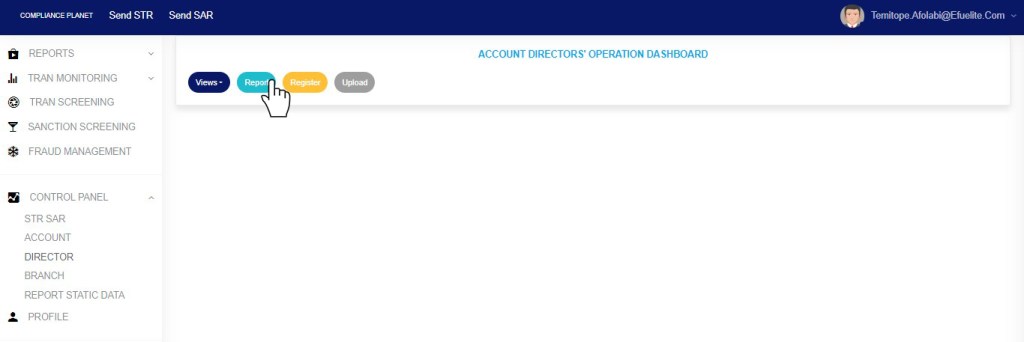
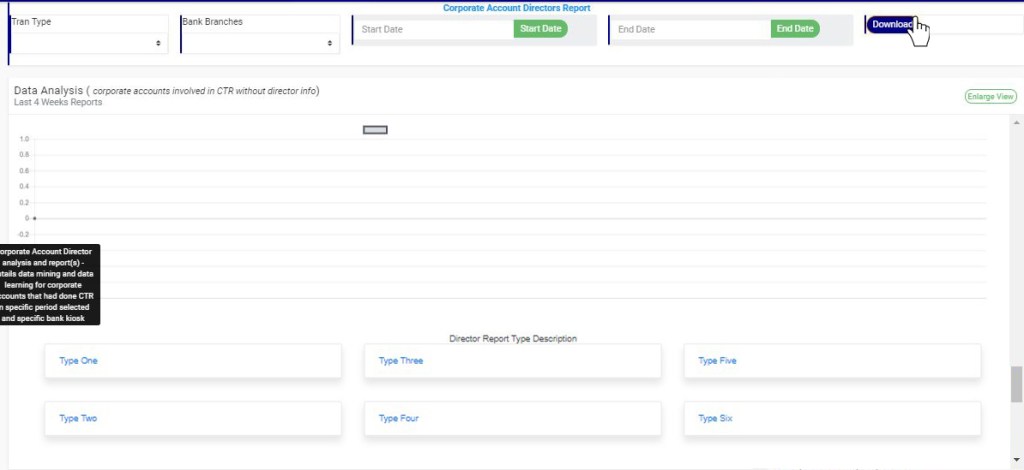
STEP 1:From the top menu, Click ‘Report’ as shown in fig. 10.8a below
(fig. 10.8a)
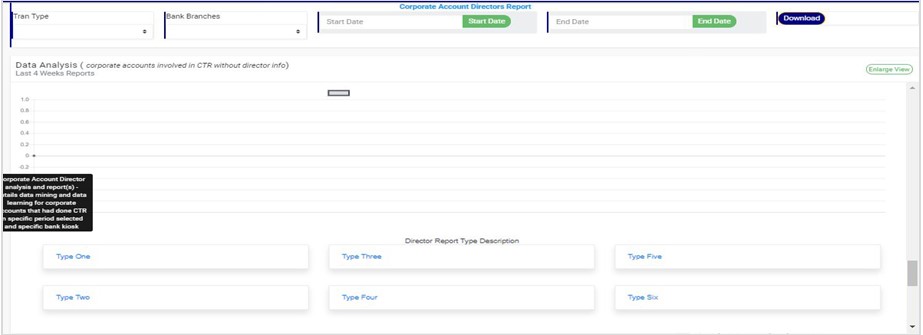
This will display a page as shown in fig. 10.8b below.
(fig. 10.8b)
How to Download Corporate Account Reports
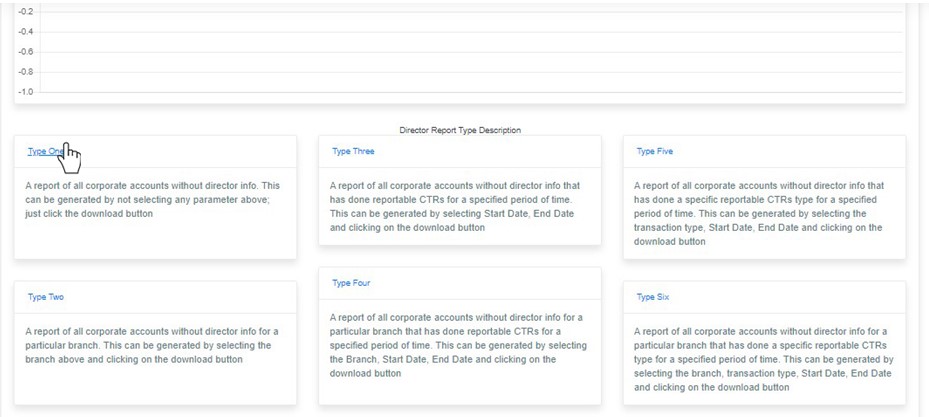
This section is a guide on downloading the various report types. If you do not know the distinguishing features of each report type, you are advised to read the directions on the Director Report type description.
To view any Director Report type description click on the type you want to view as in fig. 10.8c below before selecting any option or feature on this page.
This is a report of all the corporate accounts involved in CTR without director information. To download this report, just click on the ‘DOWNLOAD’ button only. See an example in fig. 10.8d below.
(fig. 10.8d)
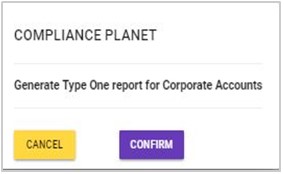
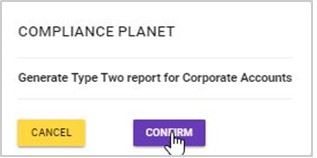
This displays a confirmation console as seen in fig. 10.8e. Click on ‘CONFIRM’ to proceed with the download or ‘CANCEL’ to discontinue.
(fig. 10.8e)
The signal console shows ongoing processes as in fig. 10.8f below. Once download is complete, a notification will be displayed at the top of the page.
This is a report of all the corporate accounts involved in CTR without director information for a particular branch of the financial institution. Here is how to download this report.
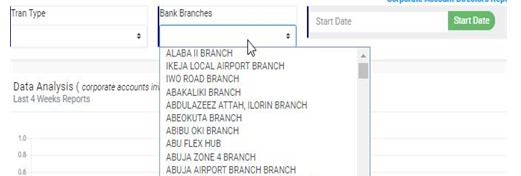
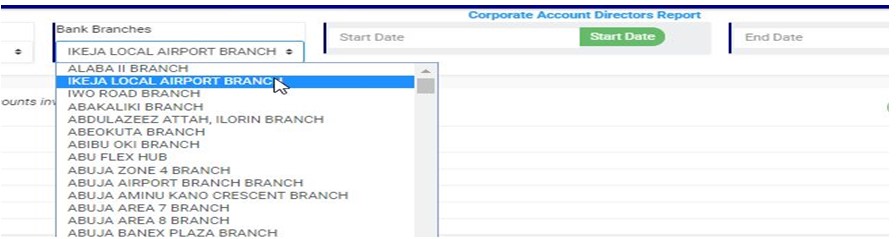
STEP 1: Select branch name from the ‘BANK BRANCHES’ box as in fig. 10.8g below.
(fig. 10.8g)
STEP 2: Click on ‘DOWNLOAD’ to download type two report. This displays a confirmation console as seen in fig. 10.8h. Click on ‘CONFIRM’ to proceed with the download or ‘CANCEL’ to discontinue.
(fig. 10.8h)
The signal console shows ongoing processes (as in fig. 10.8f for type one) and a notification will also displayed at the top of the page when download is complete.
This is a report of all the corporate accounts involved in CTR without director information within a specified period of time. Here is how to download this report.
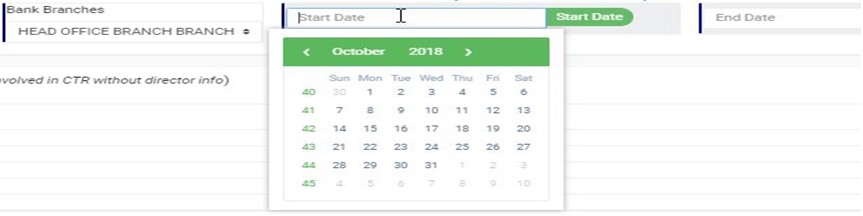
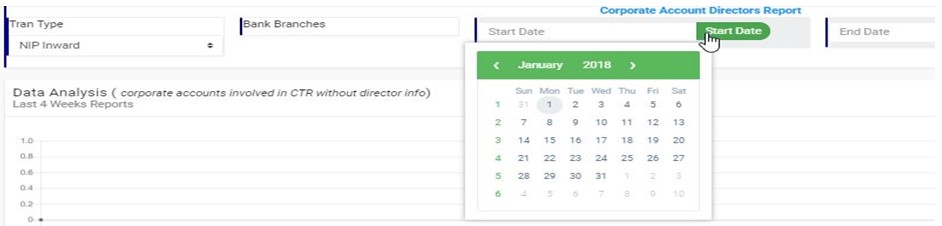
STEP 1: Select the ‘START DATE’ and ‘END DATE’ from the date boxes to specify period for which you want to download report. The start date and end date refer to the beginning and the end of the period respectively. See fig. 10.8i below for an example.
(fig. 10.8i)
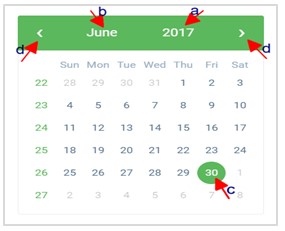
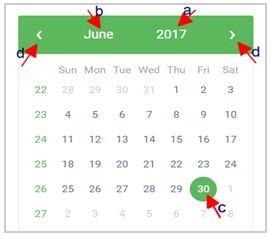
Take a look at the arrows labelled a to d in fig. 10.8j to learn how to operate a calendar.
Click on the given year to change it to your year of choice.
Click on the given month to change it to your month of choice.
Then, click on the date of the month.
You can also click on the angle brackets on the calendar [ ‘<’ or ‘>’ ] to go backward or forward.
(fig. 10.8j)
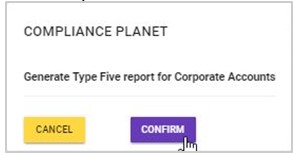
STEP 2: Click on ‘DOWNLOAD’ to download type three report. This displays a confirmation console as seen in fig. 10.8k. Click on ‘CONFIRM’ to proceed with the download or ‘CANCEL’ to discontinue.
(fig. 10.8k)
The signal console shows ongoing processes (as in fig. 10.8f for type one) and a notification will be displayed at the top of the page when download is complete.
This is a report of all the corporate accounts involved in CTR without director information for a particular branch within a specified period of time. Here is how to download this report.
STEP 1: Select branch name from the ‘BANK BRANCHES’ box as in fig. 10.8l below.
(fig. 10.8l)
STEP 2: Select the ‘START DATE’ and ‘END DATE’ from the date boxes to specify the period; the start date and end date being the beginning and the end of the period respectively. See fig. 10.8m below for an example.
(fig. 10.8m)
Take a look at the arrows labelled a to d in fig. 10.8n to learn how to operate a calendar.
Click on the given year to change it to your year of choice.
Click on the given month to change it to your month of choice.
Then, click on the date of the month.
You can also click on the angle brackets on the calendar [ ‘<’ or ‘>’ ] to go backward or forward.
(fig. 10.8n)
STEP 3: Click on ‘DOWNLOAD’ to download the type four report. This displays a confirmation console as seen in fig. 10.8o. Click on ‘CONFIRM’ to proceed with the download or ‘CANCEL’ to discontinue.
(fig. 10.8o)
The signal console shows ongoing processes (as in fig. 10.8f for type one) and a notification will be displayed at the top of the page when download is complete too.
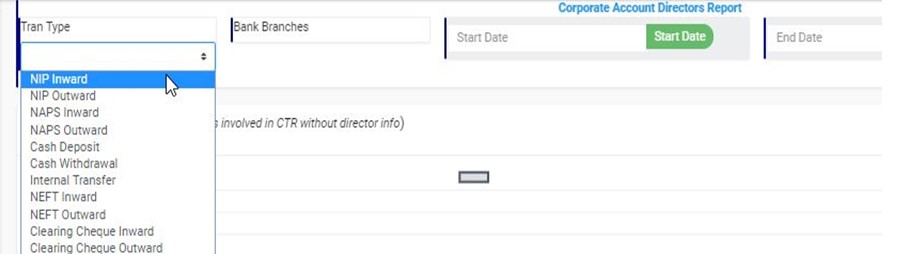
This is a report of all the corporate accounts without director information that were involved in a specific currency transaction type within a specified period of time. Here is how to download this report.
STEP 1: Select the transaction type from the ‘TRAN TYPE’ box as in fig. 10.8p below.
(fig. 10.8p)
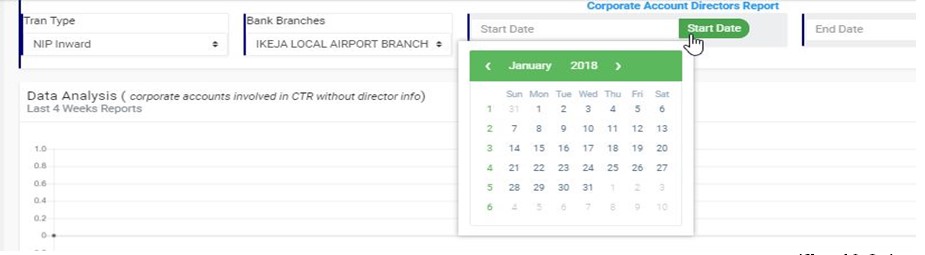
STEP 2: Select the ‘START DATE’ and ‘END DATE’ from the date boxes to specify the period; the start date and end date being the beginning and the end of the period respectively. See fig. 10.8q below for an example.
(fig. 10.8q)
Take a look at the arrows labelled a to d in fig. 10.8r to learn how to operate a calendar.
Click on the given year to change it to your year of choice.
Click on the given month to change it to your month of choice.
Then, click on the date of the month.
You can also click on the angle brackets on the calendar [ ‘<’ or ‘>’ ] to go backward or forward.
(fig. 10.8r)
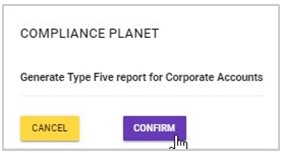
STEP 3: Click on ‘DOWNLOAD’ to download the type five report. This displays a confirmation console as seen in fig. 10.8s. Click on ‘CONFIRM’ to proceed with the download or ‘CANCEL’ to discontinue.
(fig. 10.8s)
The signal console shows ongoing processes (as in fig. 10.8f) and a notification will be displayed at the top of the page when the download is complete too.
This is a report of all the corporate accounts without director information for a particular branch that were involved in a particular currency transaction type within a specified period of time. Here is how to download this report.
STEP 1: Select the transaction type from the ‘TRAN TYPE’ box as in fig. 10.8t below.
(fig. 10.8t)
STEP 2: Select branch name from the ‘BANK BRANCHES’ box as in fig. 10.8u below.
(fig. 10.8u)
STEP 3: Select the ‘START DATE’ and ‘END DATE’ from the date boxes to specify the period; the start date and end date being the beginning and the end of the period respectively. See fig. 10.8v below for an example.
(fig. 10.8v)
STEP 3: Click on ‘DOWNLOAD’ to download the type six report. This displays a confirmation console as seen in fig. 10.8w. Click on ‘CONFIRM’ to proceed with the download or ‘CANCEL’ to discontinue.
(fig. 10.8w)
The signal console showing ongoing processes (as in fig. 10.8f for type one) will be displayed and a notification will be displayed at the top of the page when the download is complete also.
10.8.2 How to Analyse Corporate Accounts
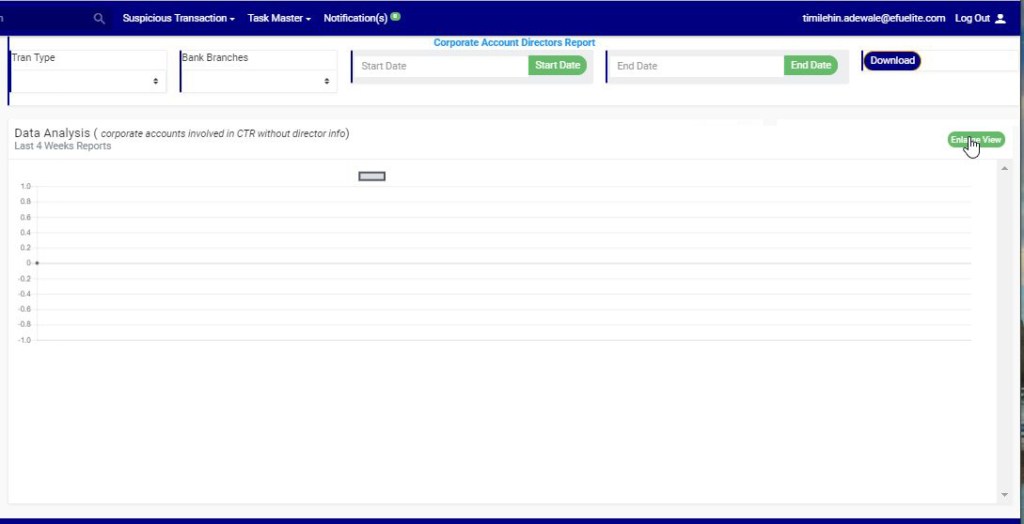
The Compliance Planet software, through the graph on the director report page, offers an analysis of CTRs involving corporate accounts without director information for the past four (4) weeks. On opening the director report page, the graph will automatically show an analysis of all transactions involving corporate accounts without director information during the last four weeks. If there are no analysis as in fig. 10.8x below, it means during the last four weeks, there were no transactions involving corporate accounts without director information.
(fig. 10.8x)
To get a bigger view of the graph, click on ‘ENLARGE’ as shown in fig. 10.8x above. See fig. 10.8y for an enlarged view of the graph. Click on ‘DISMISS’ to close the enlarged view.