How to Create TM Policy Group On Digital Financial Crimes Surveillance In Compliance Planet Anti Money Laundering/Core Banking Finance Software

TM policy is a set of instructions or parameters by which we want the Compliance Planet to monitor transaction(s). The TM policy group creation process on the Compliance Planet Anti-Money Laundering/Core Banking Finance software has been designed to be dynamic, allowing users to set custom flows and parameters.

Steps to creating “New Policy” from POLICY GROUP are described below.

STEP 1: From the app store, click “DIGITAL FINANCIAL CRIMES SURVEILLANCE” and select change status as in Fig. 5.1b below.
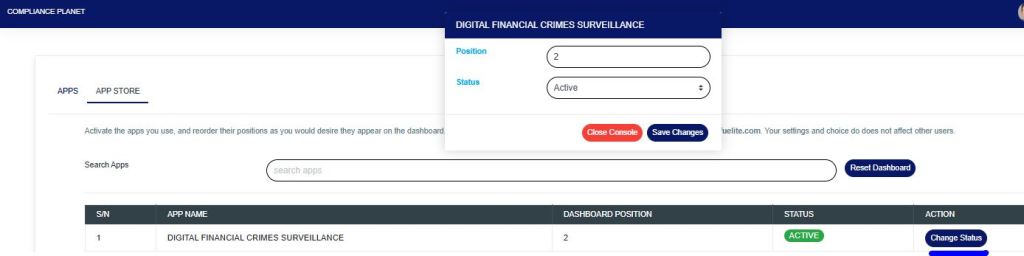
FIG 5.1b

From the window, change status to “ACTIVE” as in Fig. 5.1.1b below.
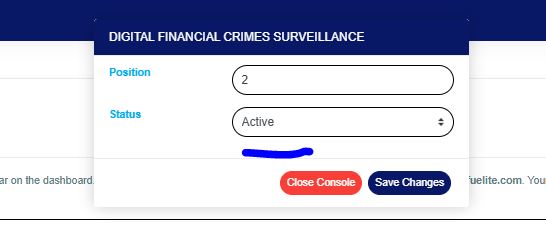
FIG 5.1.1b

The app would be reflected in the “APP dashboard” as shown in Fig. 5.1.2b below.
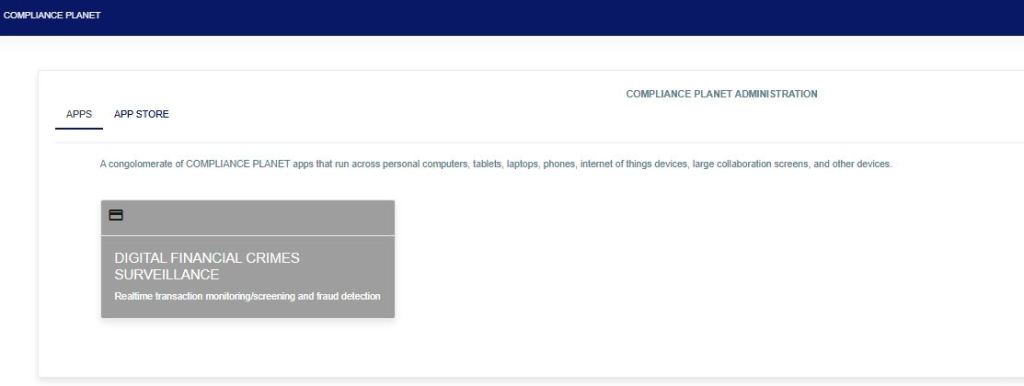
FIG 5.1.2b

STEP 2: Click on “DIGITAL FINANCIAL CRIMES SURVEILLANCE” and the app displays the menu page that shows different graphical representations as in Fig. 5.1.3b below.
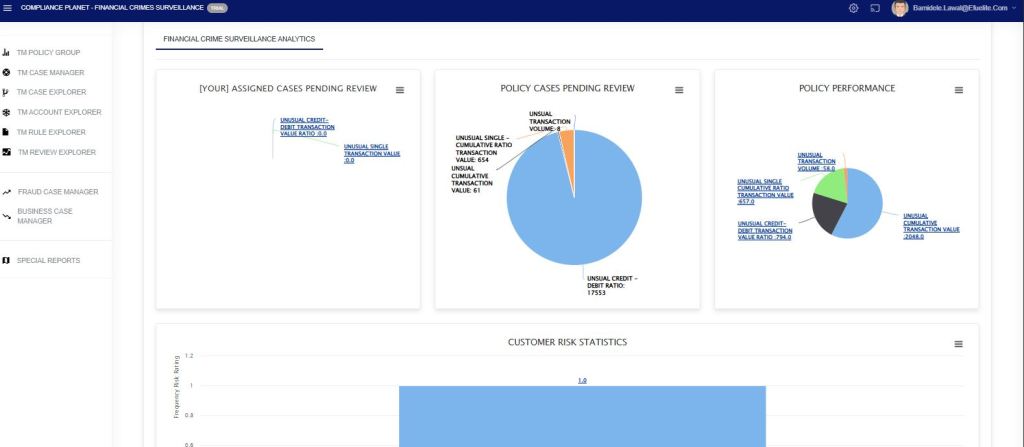
FIG 5.1.3b

From the left-hand side, the first menu “TM POLICY GROUP” displays all the policy categories as shown in fig.5.1c
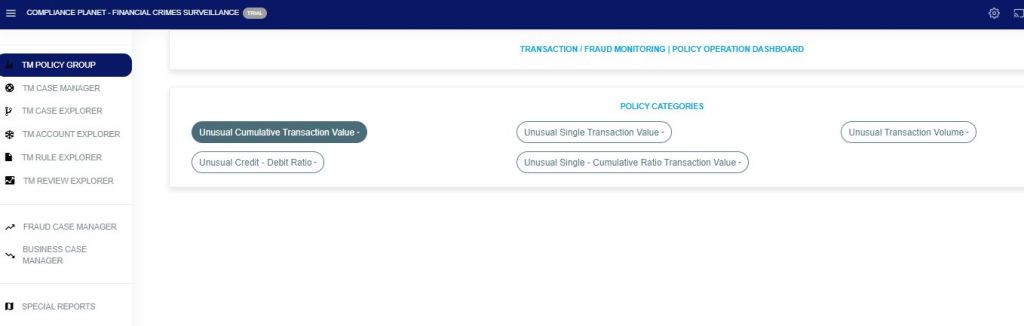
FIG 5.1c

STEP 3: Click on the desired group policy from the “POLICY CATEGORIES” in fig. 5.1d. This displays a dropdown menu.

From the drop-down menu, click on “New.” This will display the policy creation page.
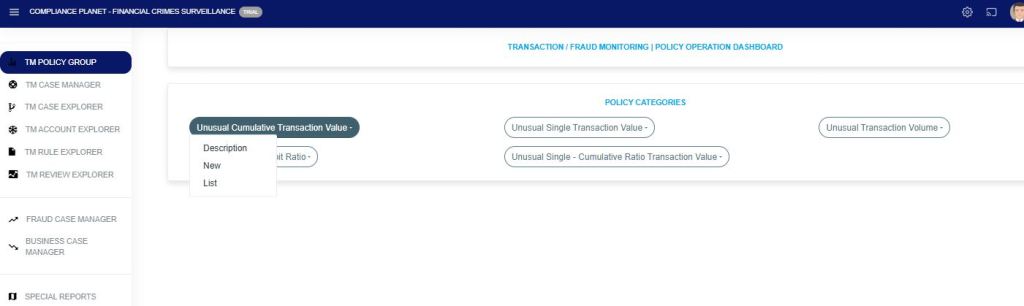
FIG 5.1d

STAGE 1: Fill in the Basic details required as in FIG 5.1e.

  • Name: Fill in the policy name.
  • Description: Fill in the policy description.

Click on the “Save and Continue” button. This will save this stage and take you to the next stage.
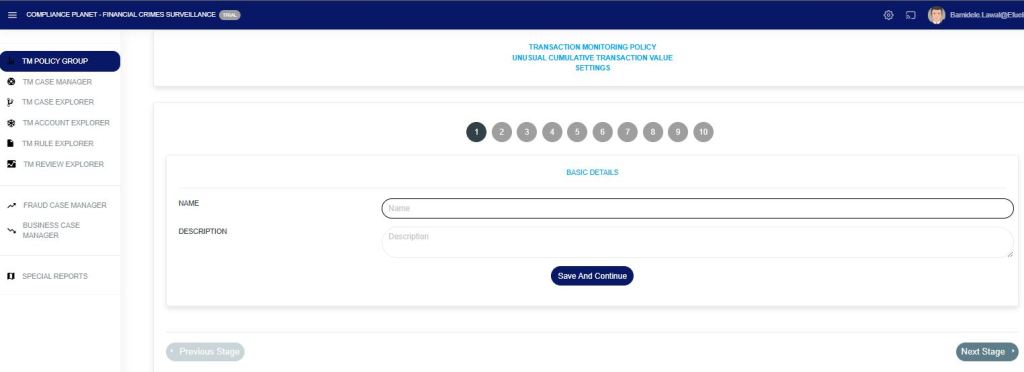
FIG 5.1e

STAGE 2: This is the policy filter stage. Fill in the fields according to your policy rule.

FIG 5.1f

BVN: Enter the BVN(s) in the field provided. To input multiple BVNs, separate each one with a comma (,).

ACCOUNT: Enter the ACCOUNT NUMBER(s) in the field provided. To input multiple ACCOUNT NUMBERS, separate each one with a comma (,).

ACCOUNT SCHEME (included): Click on the dropdown to select the ACCOUNT SCHEMES you want to include.

ACCOUNT SCHEME (not included): Click on the dropdown to select the ACCOUNT SCHEMES you want to exclude.

SUBSECTOR SCHEME (included): Click on the dropdown to select the SUBSECTOR SCHEMES you want to include.

SUBSECTOR SCHEME (not included): Click on the dropdown to select the SUBSECTOR SCHEMES you want to exclude.

BRANCHES (included): Click on the dropdown to select the BRANCHES you want to include.

BRANCHES (not included): Click on the dropdown to select the BRANCHES you want to exclude.

INCLUSIVE NARRATION: Enter keywords in the transaction narration to be included, separating them with a pipe (aml|compliance|planet|).

EXCLUSIVE NARRATION: Enter keywords in the transaction narration to be excluded, separating them with a pipe (aml|compliance|planet|).

TRAN. TYPE: Click the dropdown and select the transaction type. It can be either credit, debit, or both credit and debit.

TRAN. CURRENCY: Click the dropdown and select the currency for the transaction.

TRAN INDUCED TYPE: Click the dropdown and select the transaction induced type.

TRAN SECTOR: Click the dropdown and select the transaction sector.

ACCOUNT OWNERSHIP: Click the dropdown and select the account ownership type.

ACCOUNT TIER: Click the dropdown and select the account tier type. It can be either Tier 1, Tier 2, or Tier 3.

ACCOUNT STATUS: Click the dropdown and select the account status. It can be either all accounts, accounts that are still open, or accounts that are closed.

ACCOUNT PRODUCT TYPE: Click the dropdown and select the account product type. It can be either Individual accounts or corporate accounts.

CUSTOMER TYPE: Click the dropdown and select the customer type.

BLACKLISTED BVN: Turn on the button if you want to filter only BVNs that are on the blacklist.

TRACK TRAN LOCATION: Turn on the button to view or enable tracking of the geographical location where each transaction occurred.

PRE-CLASSIFIED ACCOUNT RISK LEVEL: Click and select the risk level assigned to the account before applying the policy. It can be either low, medium, or high.

POST CLASSIFIED ACCOUNT RISK LEVEL: Click and select the updated risk level after applying the policy. It can be either low, medium, or high.

Click on the “Save and Continue” button. This will save this stage and take you to the next stage.

Note: The mandatory fields are “Tran Currency” and “Tran Type“.

STAGE 3: From (Fig. 5.1g), select the transaction amount alert type from the “Tran Amount Alert type” drop-down. Depending on the alert type chosen, an amount field will be displayed where the transaction amount needs to be entered.

Click on the “Save and Continue” button. This will save this stage and take you to the next stage.

fig 5.1g

STAGE 4: This stage sets the Tran Date Alert Type, Account Creation Date Alert Type, and Account Age Alert Type
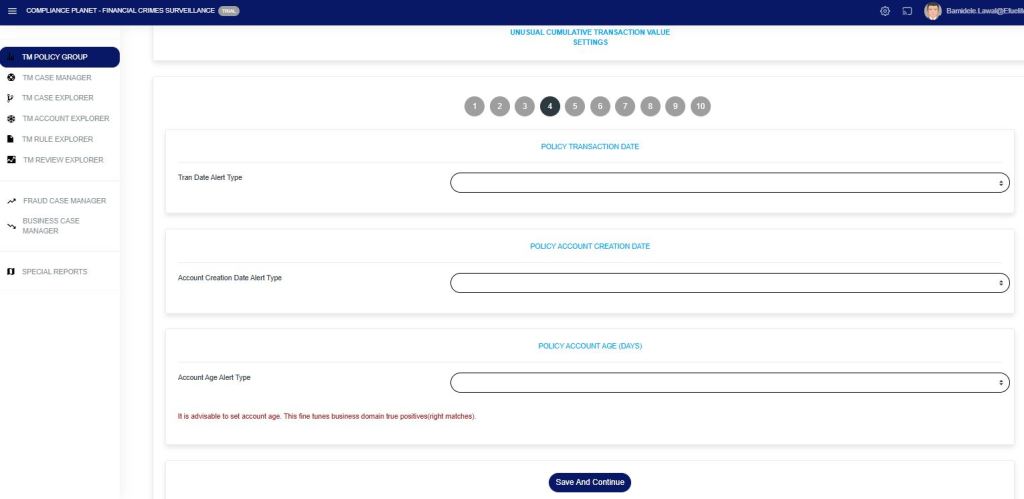
fig 5.1h
  1. Tran Date Alert Type: Click on the dropdown and select the transaction date alert type.
    Raise alert for *Transaction date earlier than* – This option allows you to select a date; an alert will be raised for any transaction that occurred before the specified date.
    Raise Alert for *Transaction Date Later Than* – This option allows you to select a date; an alert will be raised for any transaction that occurred after the specified date.
    Raise Alert for *Transaction Date within this Date Range* – This option allows you to select a date range; alerts will be raised for transactions that fall within the specified period.
    Depending on the alert type selected, a date field will be displayed where the transaction date needs to be entered.
  2. Account Creation Date Alert Type (Optional): Click on the dropdown and select the account creation date alert type.
    Raise Alert for *Accounts Created on Exact Date* – This option allows you to select a specific date; alerts will be raised for accounts created on that exact day.
    Raise Alert for *Accounts Created Before* – This option allows you to select a date; alerts will be raised for any account created before the chosen date.
    Raise alert for *Accounts created date later than* – This option allows you to select a date; alerts will be raised for accounts created after the specified date.
    Raise alert for *Accounts created date within this date range* – This option allows you to select a date range; alerts will be raised for accounts created within the specified period.
    Depending on the alert type selected, a date field will be displayed where the account creation date needs to be entered.
  3. Account Age Alert Type: Click on the dropdown and select the account age alert type. This helps to monitor accounts created within a particular period, e.g., 48 hours (2 days) or a week (7 days).
    Raise alert for *exact account age* – This option allows you to select a specific age in days; an alert will be raised for accounts that match the specified age.
    Raise alert for *Account age lesser than* – This option allows you to specify an age threshold; alerts will be raised for accounts with an age less than the specified threshold.
    Raise alert for *Account age greater than* – This option allows you to select an age threshold; alerts will be raised for accounts older than the specified number of days.
    Raise alert for *Account age within this date range* – This option allows you to select a Lower and higher age threshold (in Days); alerts will be raised for accounts that fall within the specified age range.

Note: This Account Age Alert Type is a dynamic parameter that changes over time, regardless of the current date.

Click on the “Save” button for each section to save the changes for that section. Click the “Continue” button to proceed to the next stage.

STAGE 5: The “Watch List” is to specifically monitor account (s) that have been profiled on the watch list menu that bridges the policy rule.

The “Execution Date alert type” sets a specific date or a date range for when the policy will be executed.

Click the drop-down and select the execution date alert type. Depending on the alert type chosen, a date field will be displayed where the execution date needs to be entered.

Click on the “Save and Continue” button. This will save your progress at this stage and take you to the next stage.
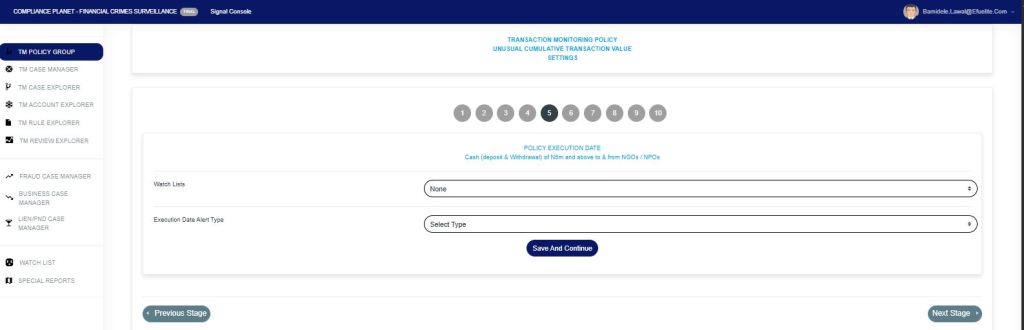
fig 5.1i

STAGE 6: From (Fig. 5.1j). This step sets the hour(s) of the weekdays on which the policy will be executed. To change the days, click on the “Days” drop-down and select the desired weekday. After editing the hours for a weekday, click on the “Save” button to save the changes for that day.

Note: By default, all the hours for the weekdays are checked (active).

Click on the “Save and Continue” button. This will save this stage and take you to the next stage.
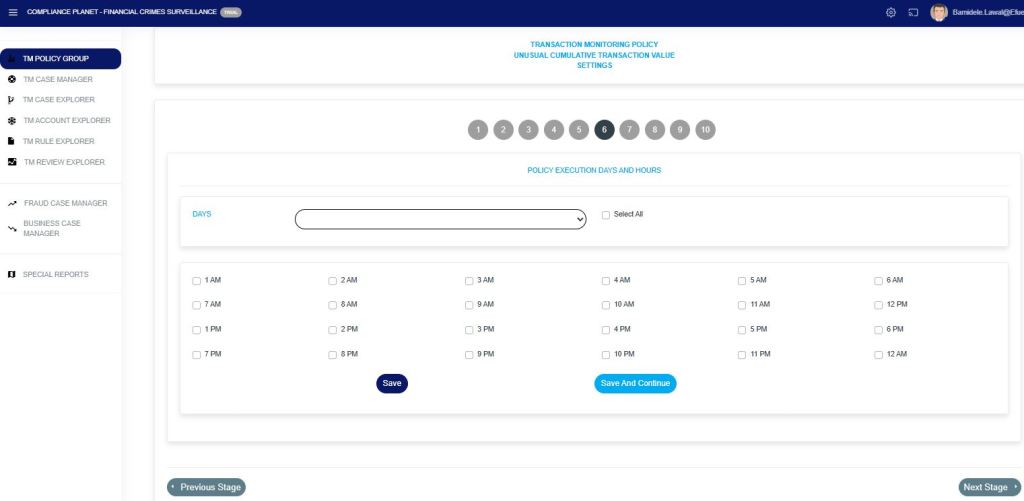
fig 5.1j

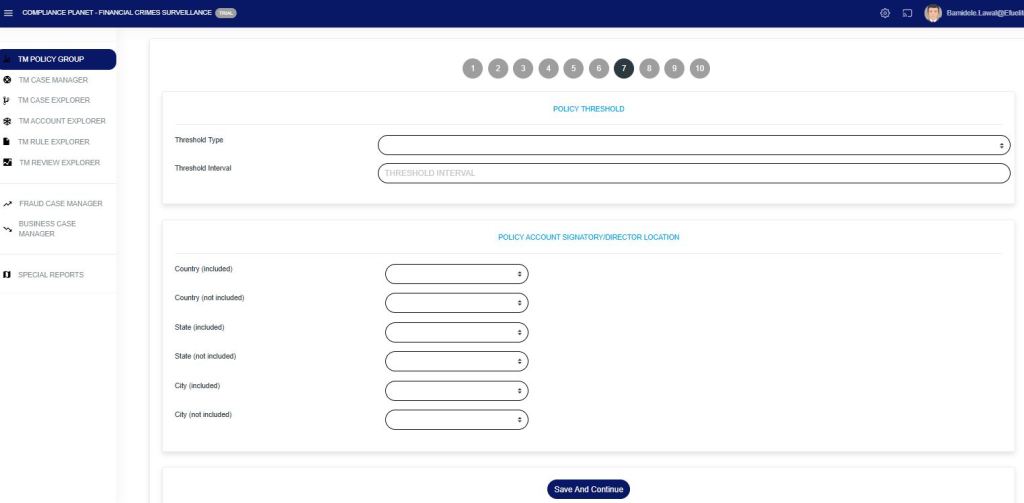
STAGE 7: From (5.1K). This step sets the “threshold type” and the “threshold interval” of the policy to be executed.

To narrow down the policy to only accounts whose signatory or director ID is from a particular country, state, or city, then make use of the drop-downs under the “POLICY ACCOUNT SIGNATORY/DIRECTOR LOCATION” section by selecting country/state/city.

Click on the “Save and Continue” button. This will save this stage and take you to the next stage.
5.1K

STAGE 8: From (Fig. 5.1l). This stage allows the addition/removal of users who will receive notifications for this policy.

Click on the “Save and Continue” button. This will save this stage and take you to the next stage.

fig 5.1l

STAGE 9: From (Fig. 5.1m), there are different buttons for the policy rule created.

  1. Send Alerts to ML/TF/PF Case Manager: If this button is toggled on, the policy sends a notification automatically to the STR case managers.
  2. Send Alerts to Business Review Managers: If this button is toggled on, the policy automatically sends a notification to Business Review Managers.
  3. Send Alerts to Fraud Case Managers: If this button is toggled on, the policy automatically sends a notification to the Fraud Case Managers.
  4. Real-Time Surveillance: This button is toggled on specifically to send notifications for transactions that breach the rule as they occur.
  5. Activate PND on Flagged Accounts: If the alert breaches the PND-flagged account, this button is toggled on. Although this requires integration with the institution’s PND service.
  6. Calendar Execution Mode: This button is toggled on specifically for policy rule(s) that report specific, not business reviews, or AML or Fraud.
  7. Activate Policy Rule: This button is to activate the policy rule that has been created.
  8. Proactive Surveillance: This button is specifically toggled on to monitor transactions in advance and send alerts for suspicious activities before a breach occurs.
  9. Activate Surveillance Notification: This button is toggled on specifically to send real-time notifications whenever surveillance detects a transaction that matches a defined rule.
  10. Day-Time Segment Surveillance: This button is toggled on specifically to monitor and send alerts for rule-breaching transactions that occur during predefined daytime hours.

Click on the “Save and Continue” button. This will save this stage and take you to the next stage.
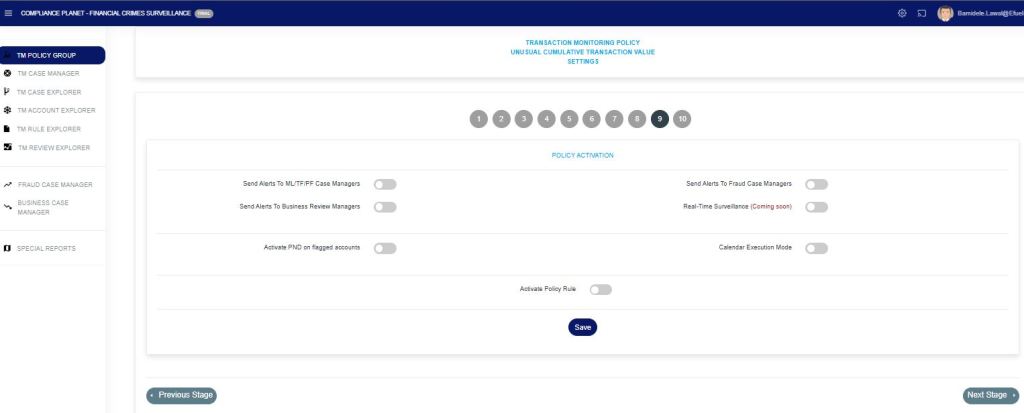
fig 5.1m

STAGE 10: From (Fig. 5.1n), this stage displays the policy’s target based on the parameters entered from stage 2 to stage 7.

N.B.: You can always go back to any of the stages should you want to change the data, just by clicking on the Particular “Stage number(1-9)” you wish to make changes to.
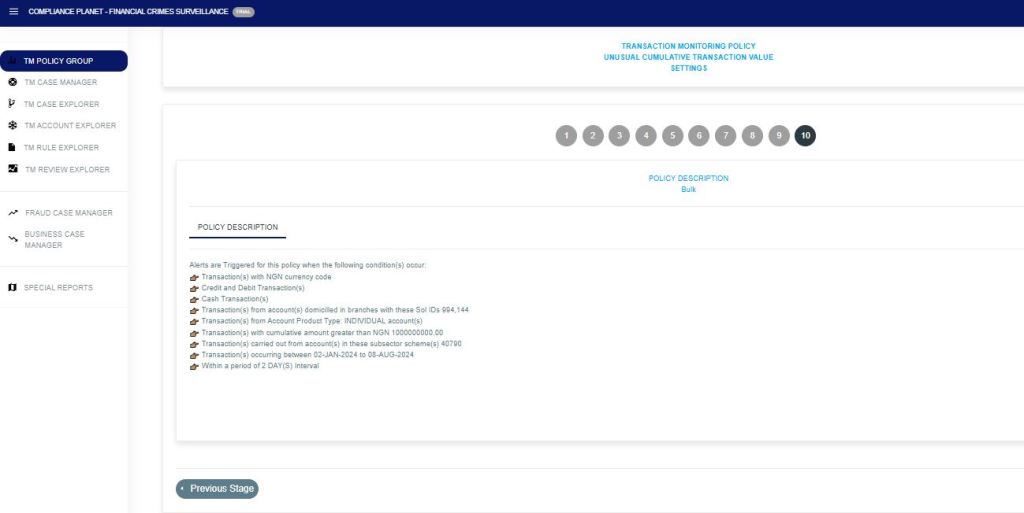
fig 5.1n

.

For further inquiries: 
Tel: +234(0) 816 555 9818
Email: solutions@efuelite.com 
Web: http://solutions.efuelite.com
How to Carry out Policy Account Explorer Operations On Transaction/Fraud Monitoring In Compliance Planet Anti Money Laundering/Core Banking Finance Software

The policy account explorer helps you to view accounts picked accross the various policies

STEP 1: From the left-hand side menu, click “TRANSACTION/FRAUD MONITORING” as in Fig 2a below.

FIG 2a

Step 2: Click on the “POLICIES ACCOUNT EXPLORER”

Click on the “View” button to see the list of policies and triggers. To view the accounts under a trigger, click on the “Explore Accounts” button for that trigger.

FIG 2b

How to Carry Out Policy Explorer Operations On Customer Risk Assessment In Compliance Planet Anti Money Laundering/Core Banking Finance Software

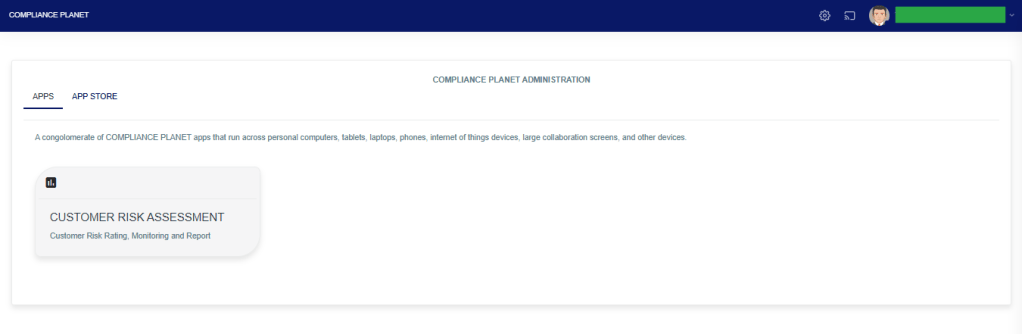
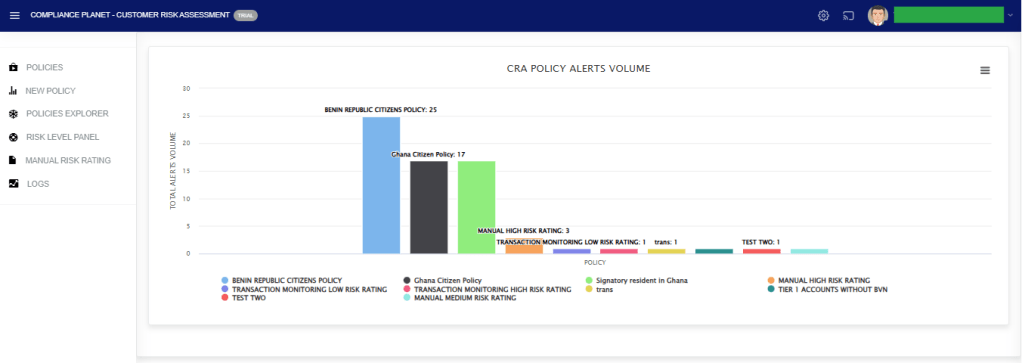
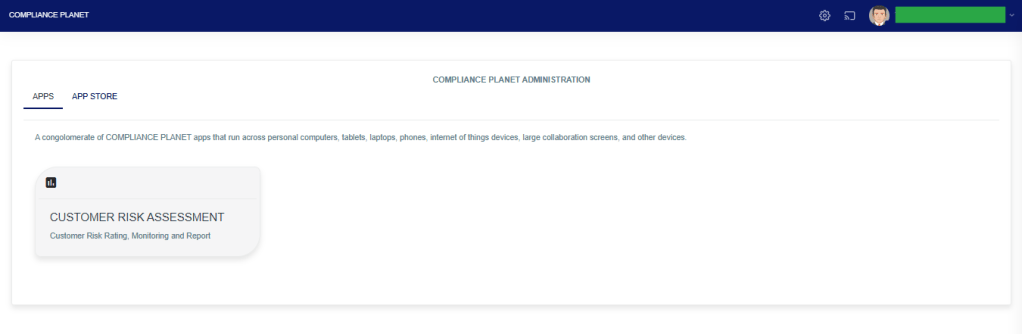
STEP 1: From the app dashboard, click “CUSTOMER RISK ASSESSMENT” as in image below.

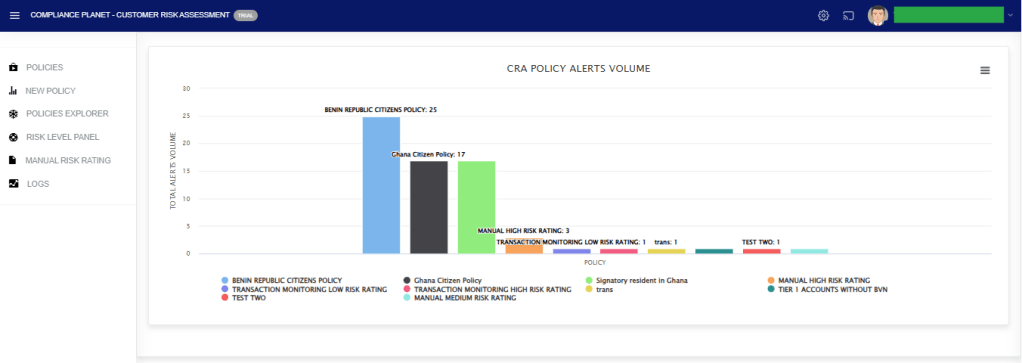
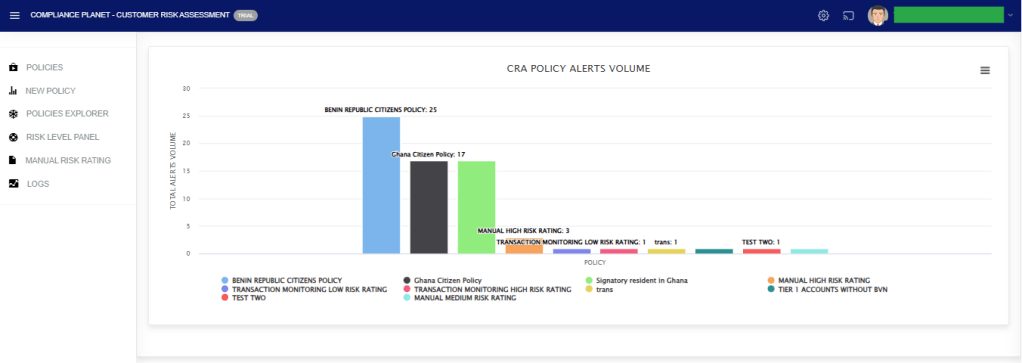
The above action will display a page as seen in the image below.

STEP 2: Click on “POLICIES EXPLORER” as in the image below.

This allows you to view the list of policies.

To export the records to excel, click on the “Export To Excel” button.

For further enquiries: 
Tel: +234(0) 816 555 9818
Email: solutions@efuelite.com 
Web: http://solutions.efuelite.com

How to Carry Out Policy Listing on Customer Risk Assessment in Compliance Planet Anti Money Laundering/Core Banking Finance Software

STEP 1: From app dashboard, click “CUSTOMER RISK ASSESSMENT” as in the image below.

The above action will display a page as seen in the image below.

STEP 2: Click “POLICIES” to display the policy list as shown below.

Entries: Number of records to see on a page.

View Type: This option allows you to switch between active and inactive policies.

Search: This helps you search for a specific policy.

When any of the above filters is changed, click on the View button to see the result.

The data representation of the table columns is explained below;

Name: The name of the policy.

Risk level: The risk level of the policy.

Account: The number of accounts picked by the policy.

Status: The status of the policy(active or inactive).

There are three action buttons on each row with different functions as explained below;

Details: This displays all the parameters entered during policy creation. To edit these parameters, you must reset the policy.

Duplicate: This allows you to make a copy of the policy. The copy becomes inactive and is added to the inactive list.

Reset: This deletes all the records that the policy has picked.

For further enquiries: 
Tel: +234(0) 816 555 9818
Email: solutions@efuelite.com 
Web: http://solutions.efuelite.com

How to Create Customer Risk Assessment Policy In Compliance Planet Anti Money Laundering/Core Banking Finance Software

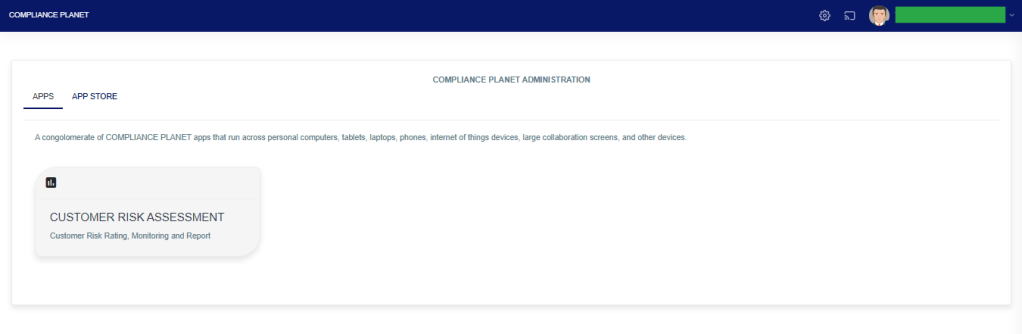
STEP 1: From the app dashboard, click “CUSTOMER RISK ASSESSMENT” as in image below.

The above action will display a page as seen in the image below.

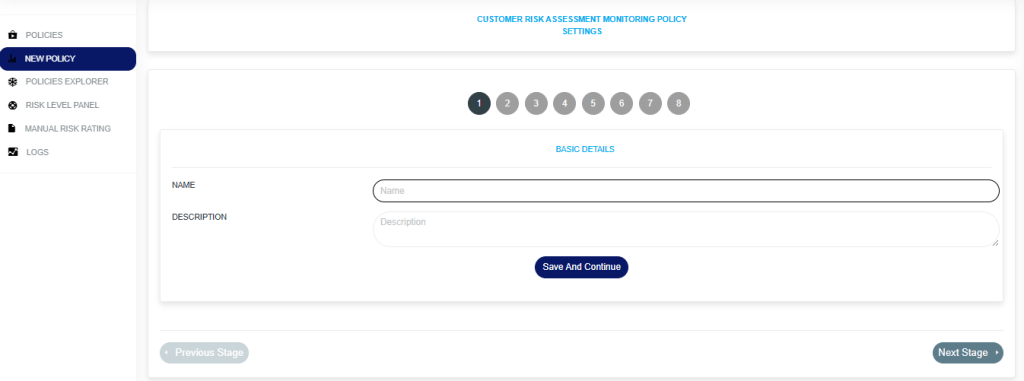
STEP 2: Click “NEW POLICY” as in the image below.

STEP 3: Fill in the details as seen in the image above.

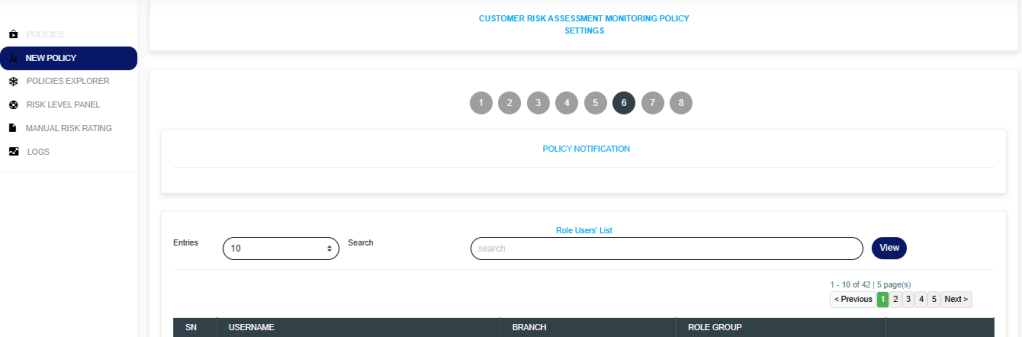
There are eight stages in creating a customer risk assessment Policy.

  1. On stage 1, fill in the basic details of the policy (Policy name and description) as displayed in the image below.
  2. On stage 2 to stage 5, activate the desired risk rating nodes and set their risk rating score as displayed in the images.

STEP 6: This stage enables you to add users who will receive policy alert notifications for the policy you created, as shown in the image below.

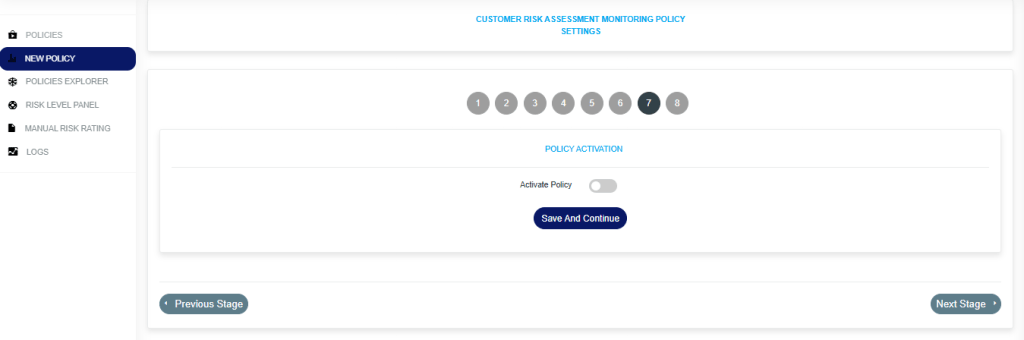
STEP 7: This stage allows you to activate or deactivate the policy.

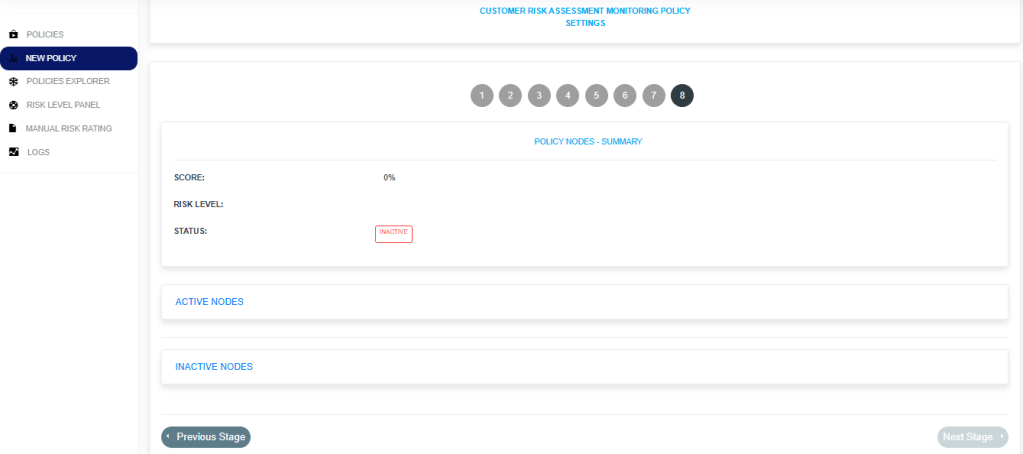
STEP 8: This stage displays the summary of the policy, which includes:

  1. The policy score that the system automatically calculates across all active nodes of the policy.
  2. The policy risk level.
  3. The policy status (Active or inactive).
  4. The active nodes (these are nodes that were activated between stages 2 and 5).
  5. The inactive nodes (These are nodes that were not activated between stage 2 and stage 5).

For further enquiries: 
Tel: +234(0) 816 555 9818
Email: solutions@efuelite.com 
Web: http://solutions.efuelite.com
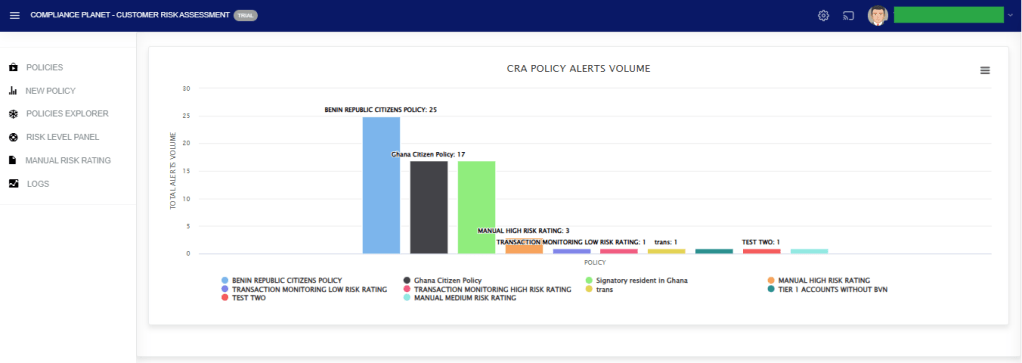
How to Set the Global Risk Rating Levels on Customer Risk Assessment in Compliance Planet Anti Money Laundering/Core Banking Finance Software

The risk rating panel helps to set the Global risk rating on the software.

STEP 1: From the app dashboard, click “CUSTOMER RISK ASSESSMENT” as in the image below.

The above action will display a page as seen in the image below.

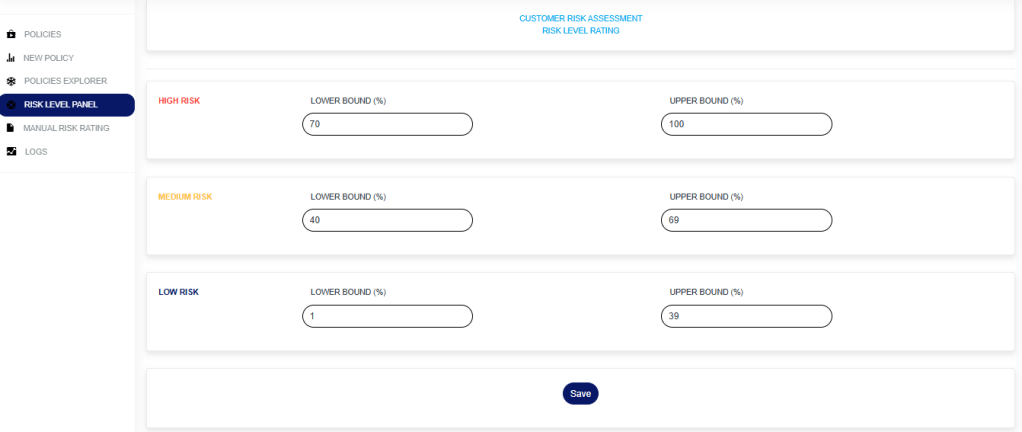
STEP 2: Click on “RISK LEVEL PANEL” as in the image below.

Enter the risk rating for the various risk rating level. This includes the lower bound and Upper bound for the various risk rating levels.

  1. The lower bound for the low risk level must be 1.
  2. The upper bound for the high risk level must be 100.
  3. Every other bound across the different risk rating levels must be consecutive. i.e If the upper bound for the low risk level is 39, then the lower bound for the medium risk level must be 40. If the upper bound for the medium risk level is 69, then the lower bound for the high risk level must be 70.

Click on the “Save” button to save the risk rating.

For further enquiries: 
Tel: +234(0) 816 555 9818
Email: solutions@efuelite.com 
Web: http://solutions.efuelite.com

How to Carry Out Manual Risk Rating Operation On Customer Risk Assessment In Compliance Planet Anti Money Laundering/Core Banking Finance Software

The manual Risk rating helps to manually risk rate an account of a customer either as a high , medium or low risk.

STEP 1: From the app dashboard, click on “CUSTOMER RISK ASSESSMENT” as in the image below.

The above action will display a page as seen in the image below.

STEP 2: Click on “MANUAL RISK RATING” as in the image below.

  1. Enter the customer’s account number in the “Account Number” field. This must be a valid account number in the system.
  2. Click on the “Risk Level” drop-down and select the desired risk level (High, Low or Medium).
  3. Click on the “Save” button.

For further enquiries: 
Tel: +234(0) 816 555 9818
Email: solutions@efuelite.com 
Web: http://solutions.efuelite.com
Data Upload for Automatic Scanning in Compliance Planet Anti Money Laundering/Core Banking Finance Software for Political Exposed Persons (PEP)

The bulk upload helps in uploading more than one scan parameter into the system for the automatic scan.

Note: This operation requires the Administrator or Auditor’s permission.

How to Prepare the Scan Parameters in an Excel File

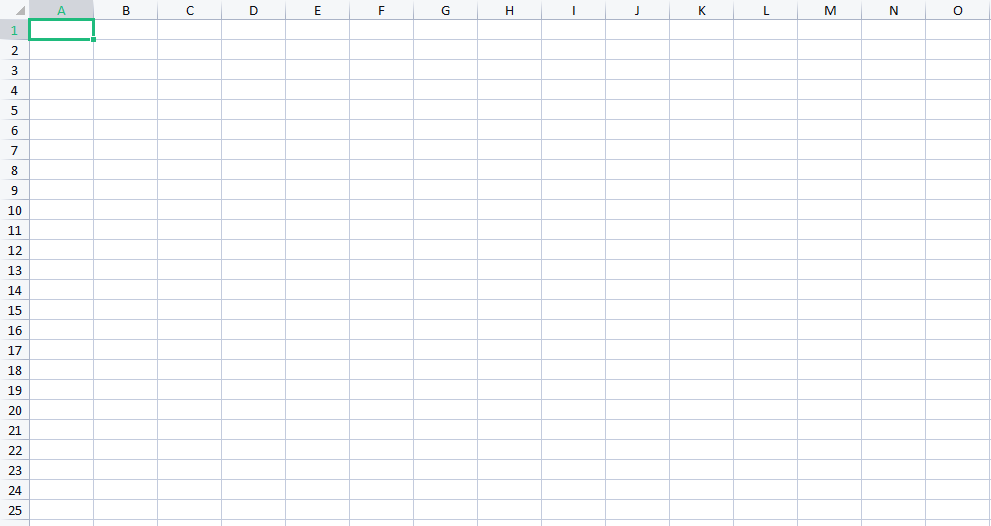
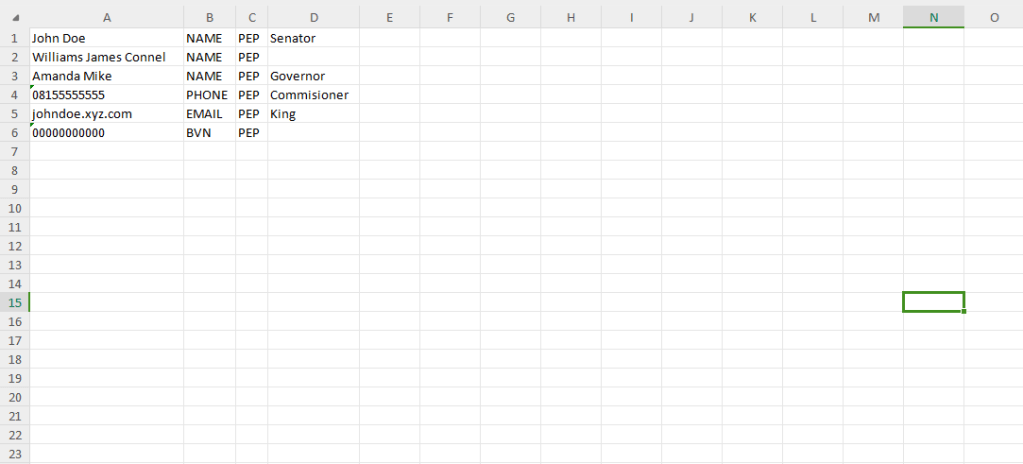
STEP 1: Open an excel sheet as seen in the image below. This must be the first sheet(Sheet1) in the excel workbook.

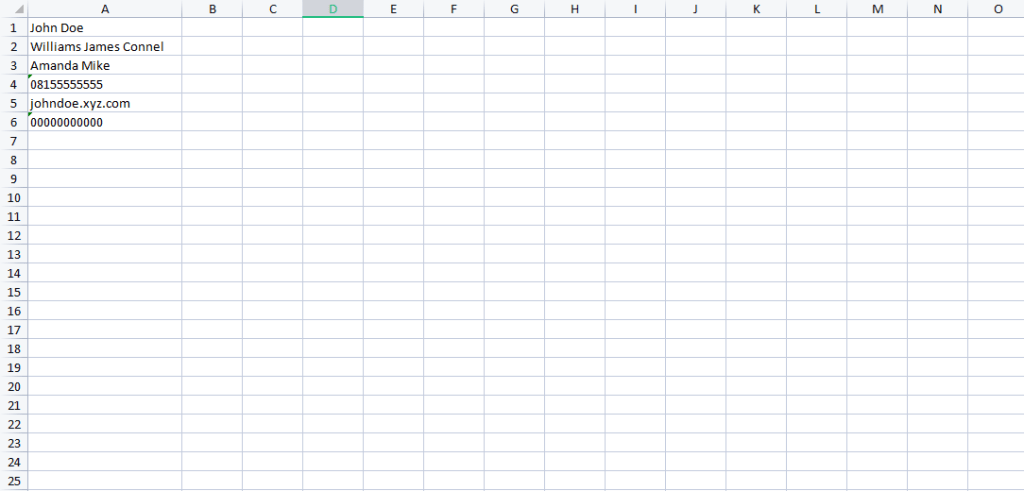
STEP 2: Fill in the scan parameters in the first column (column A) as seen in the image below.

The excel sheet should not have column names(Start inputting the scan parameters from row 1).

These scan parameters can be either a name, phone number, email address, ID Number, or BVN.

Note: The first, last and middle name must be in the same column with a space in between them (Column A).

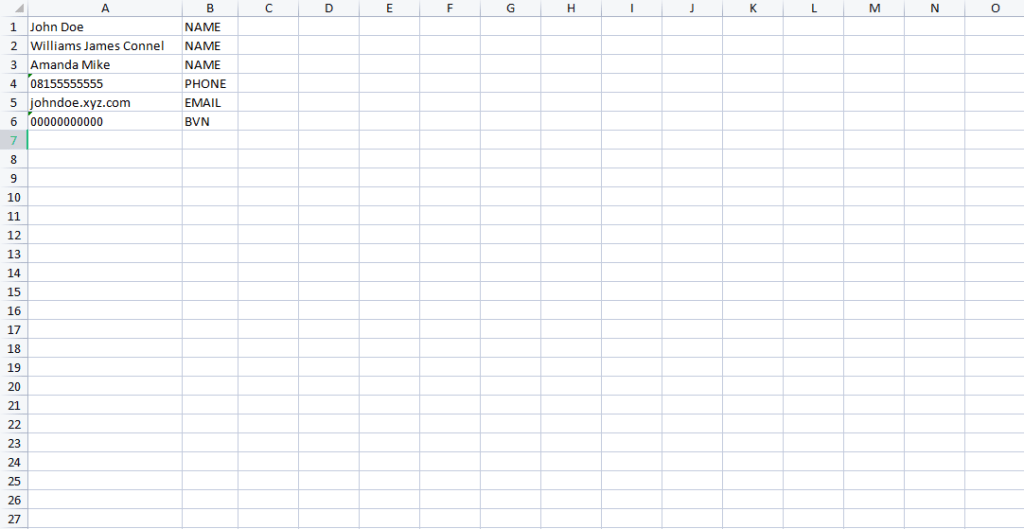
STEP 3: Fill in the scan parameter category in the second column (column B) as seen in the image below.

The software accepts four different parameter categories(Name, Email address, Phone Number, ID Number, and BVN).

1. When a scan parameter is a name, the category should be NAME

2. When a scan parameter is a phone number, the category should be PHONE

3. When a scan parameter is an email address, the category should be EMAIL

4. When a scan parameter is a BVN, the category should be BVN

5. When a scan parameter is an ID Number, the category should be ID

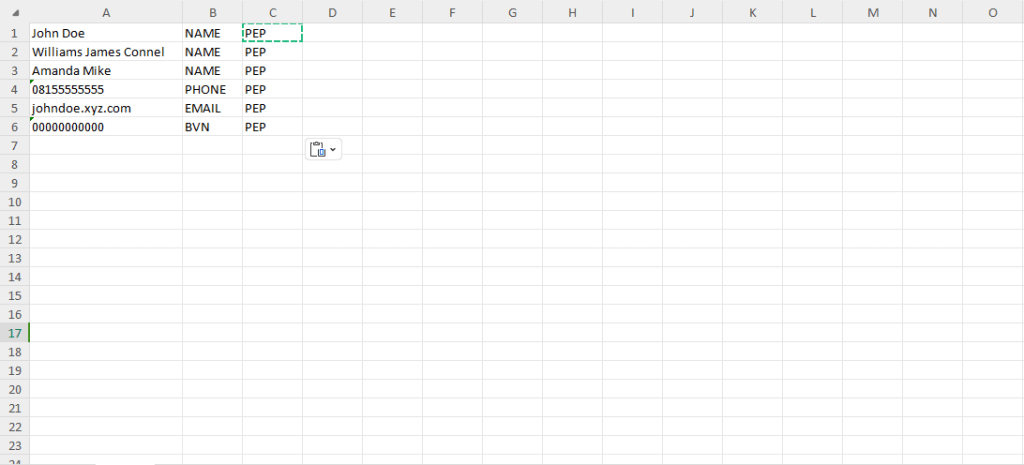
STEP 4: Fill in the REASON for the data upload in the third column (column C) as seen in the screenshot below. This can be “PEP”, “WATCHLIST” etc.

STEP 5: Fill in the PEP Status in the fourth column (column D) as seen in the screenshot below. This column is optional.

Save the excel file and proceed to the Compliance Planet AML software.

How to Upload the scan parameters in the Compliance Planet Software

STEP 6: From the left-hand side menu, click “SCREENING” as seen below.

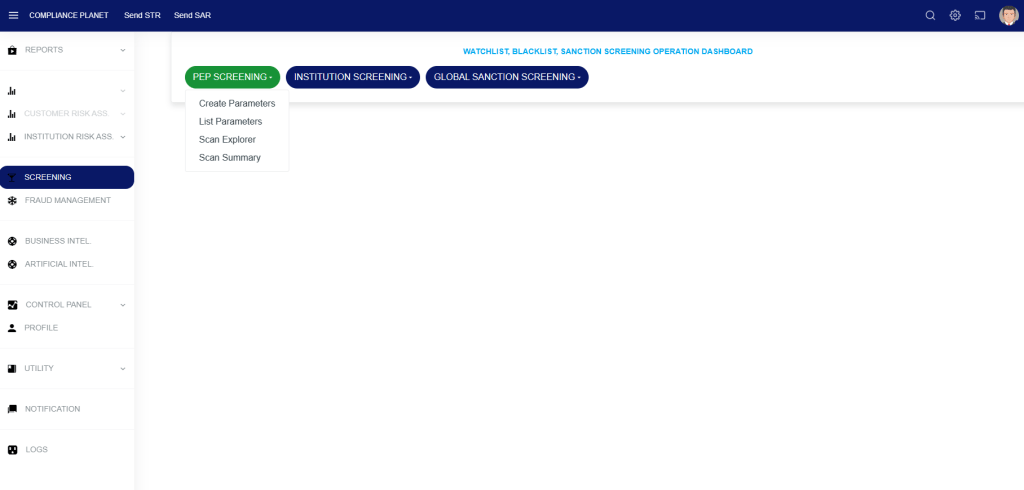
STEP 7: From the top menu, click “PEP Screening”, this action will display a dropdown menu as seen in the image below. From the dropdown menu, click “Create Parameters”.

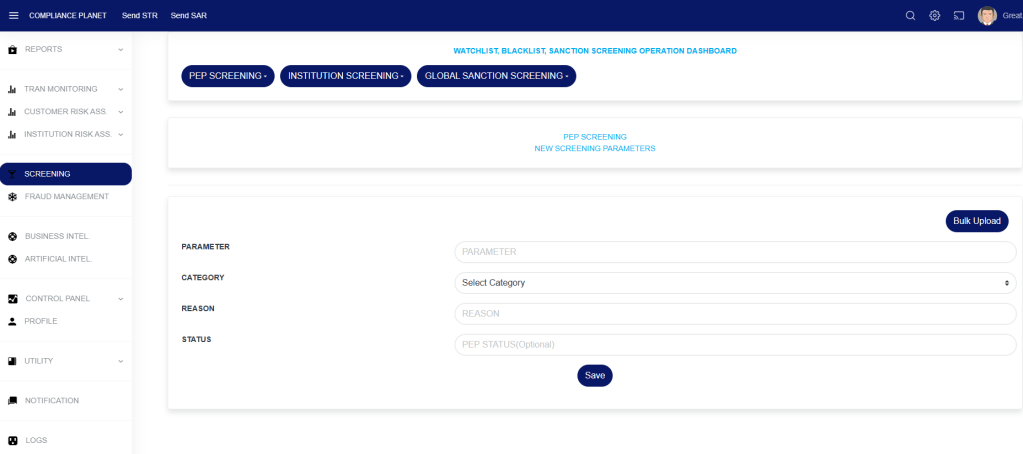
STEP 8: On the NEW SCREENING PARAMETERS page, click on the “Bulk Upload” button to select the excel file which you have earlier filled with the scan parameters.

STEP 9: Click on the Save button.

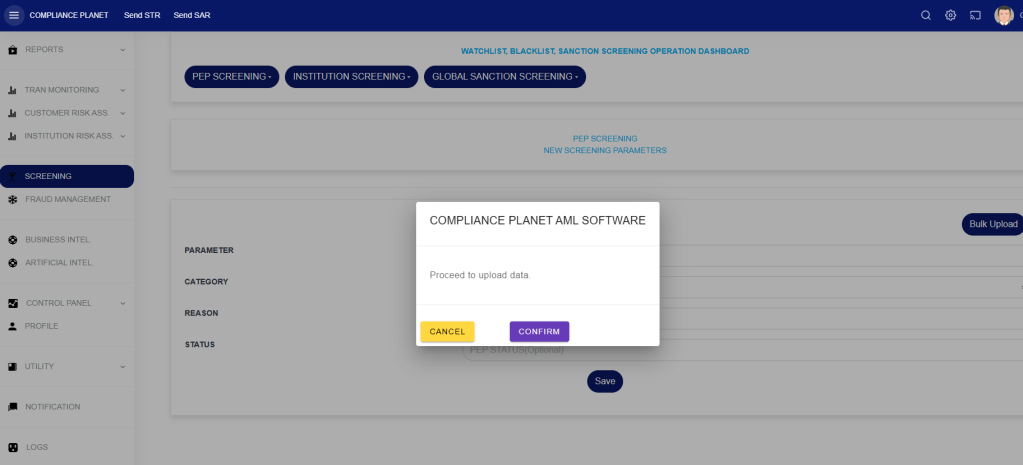
STEP 10: Click on the CONFIRM button to begin the upload process.

How to Carry out Institution Sanction Screening Operations In Compliance Planet Anti Money Laundering/Core Banking Finance Software

Note: This operation requires the Administrator or Auditor’s permission.

The Institution screening helps to scan an institution based on certain parameters. If a match is found, it further displays the Scan Results(customers’ account(s)) and their score prediction assigned by the system.

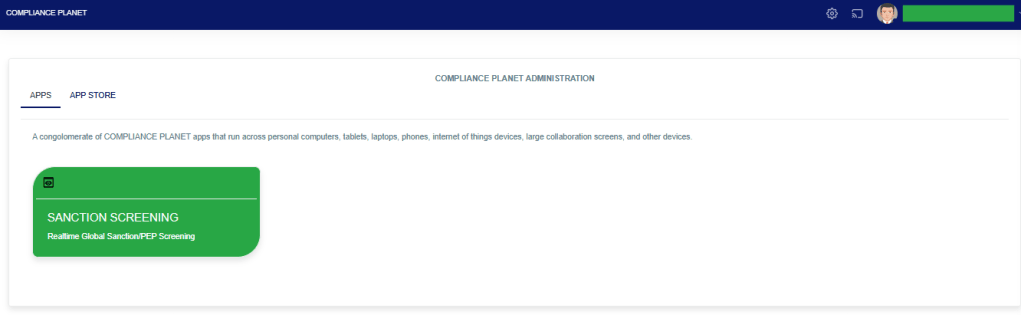
STEP 1: From the app dashboard, click “SANCTION SCREENING” as seen below.

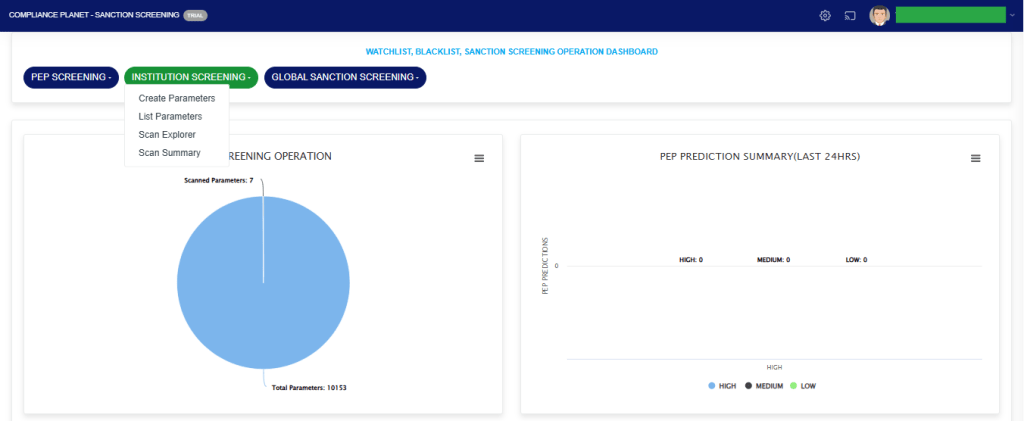
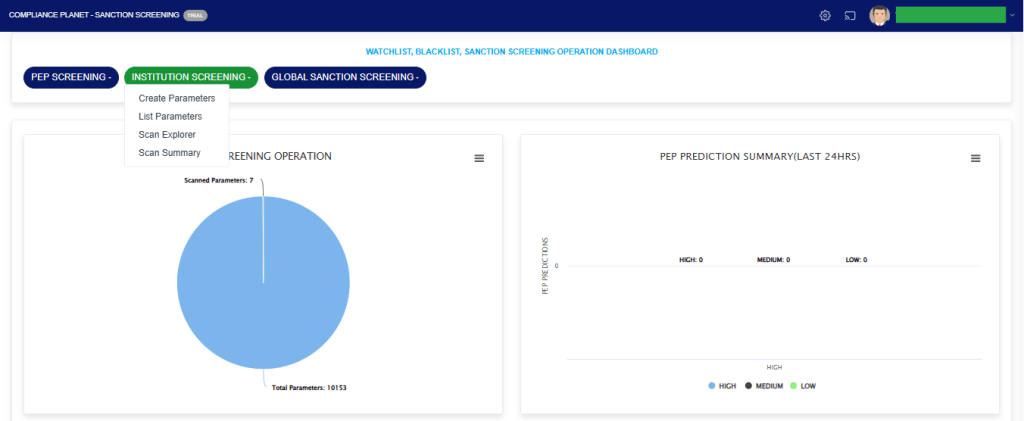
STEP 2: From the top menu, click “Institution Screening.” This action will display a dropdown menu as seen in the image below. From the dropdown menu, click “Create Parameters”.

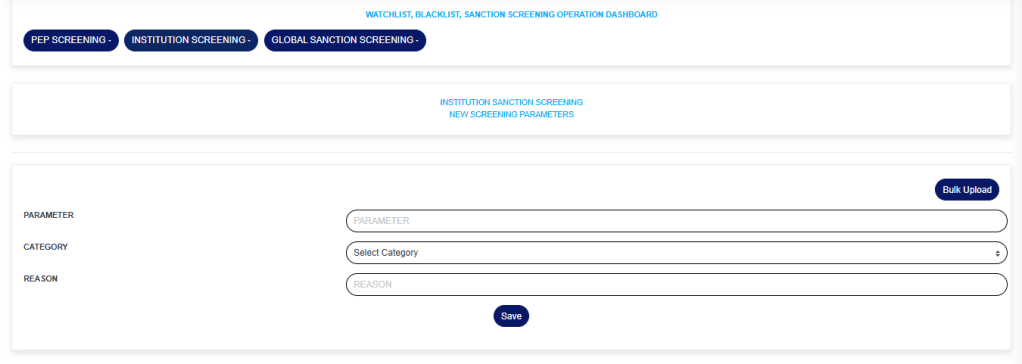
STEP 3: Fill in the fields on the “NEW SCREENING PARAMETERS” page

Click on the “Save” button to save the parameter.

Note: The category selected determines the parameter entered. e.g, if the category selected is “NAME”, then the parameter should be a name. If the category selected is “EMAIL”, then the parameter should be an email address.

How to list the Institution Screening Parameters

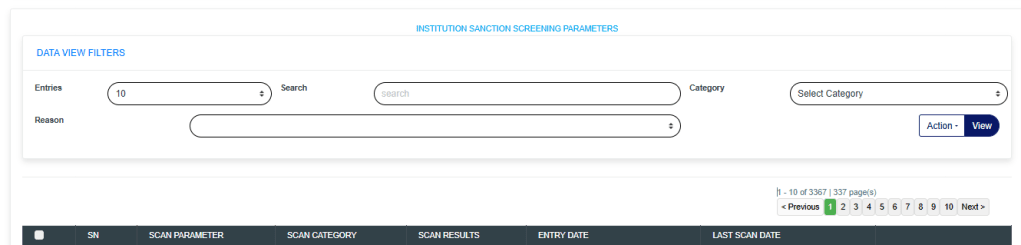
STEP 1: Click on “List Parameters” to see the list of parameters entered into the software.

STEP 2: The “INSTITUTION SCREENING PARAMETERS” page shows the list of parameters that have been entered into the software and their scan status.

How to view the Institution Screening scan explorer

Step 1: Click on the Institution Screening dropdown button and select the “Scan Explorer” option.

The above action will display a page as seen in the image below.

The Scan Explorer provides details of scan results across the entered date ranges. These results can be filtered down to only results that are meaningful to you by applying various scan filters.

The function of the scan filters is explained below;

Start Date and End Date: These fields allow you to filter the list of scan results to a specific date range. The date range refers to the dates the parameters were scanned. This filter is mandatory.

Category: To view scan results having the same Category, select the desired Category from the Category dropdown and click on the View button.

Reasons: To view scan results having the same scan reason, select the desired Reason from the Reasons dropdown and click on the View button.

Entries: The number of scan results to see on the page.

Search: To search for the parameter(s).

L. Score and H. Score: The low score and high score work together to filter the results based on score prediction. The L. Score entered must be less than the H. Score. After entering your desired score prediction range, click on the View button to see the result.

Export To Excel: To export the list of scan results to Excel, click on the ‘Action‘ dropdown button and select “Export To Excel”

The data representation of the columns is explained below;

Account Number: The account number that the scan parameter matched.

Account Name: The account name that the scan parameter matched.

Date Opened: The date the matched account was opened.

Date Closed: The date the matched account was closed(This field is empty if the account is still open).

Account Status: The status of the matched account.

Scan Parameter: The actual scan parameter entered into the system

Scan Category: The category the scan parameter falls under. e.g Name, BVN, Email, etc…

Scan Prediction: This is the system prediction score for each parameter.

Scan Reason: The reason entered alongside the scan parameter.

Scan Date: The date the parameter was scanned.

How to view the Institution Screening scan summary

Step 1: Click on the Institution Screening dropdown button and select the “Scan Summary” option.

The above action will display a page as seen in the image below.

TOTAL PARAMETERS: This Section Value quickly informs the reviewer of the number of parameters uploaded into the system for scanning/screening purposes.

Parameters could be BVN, NAMES, ID Numbers, PHONE NUMBERS, or EMAILS.

TOTAL SCANNED PARAMETERS: This Section Value informs the reviewer how many parameters have been scanned thus far. This number would increase daily.

TOTAL SCANNED RESULTS: This Section Value informs the reviewer how many results are present from all parameters that have been scanned. 

TOTAL SCANNED RESULTS(LAST 24 HRS): This Section Value informs the reviewer of the total number of new results from the scan conducted in the last 24 hours.

This aids the reviewer who may be reviewing on a daily basis, focusing on the newer scans and helping to attain a thorough review process. There are explorers where these scan results can be targeted by the date the scan results were entered by the software.

TOTAL HIGH PREDICTIONS(LAST 24 HRS): This Section Value plays a very important role as the software uses artificial intelligence and Machine Learning to learn the data from Scan results and give scores on how sure it is about the matches. The lowest score is 1 and the highest is 100.

100 means that the software is extremely confident that the scan result (a customer’s account) is an exact match to the scanned parameter.

This enables the reviewer to focus more closely on high matches and easily sort them out, thereby avoiding time wasted on false positives.

The software categorizes HIGH PREDICTIONS as scan results that score 80 and above. Further, giving high predictions for the last 24 hours tells the reviewer how many records should be concentrated on out of the total scanned results in the last 24 hours.

This further streamlines the review process. Predictions in this category are colored red for easy identification.

TOTAL MEDIUM PREDICTIONS(LAST 24 HRS): The software categorizes MEDIUM PREDICTIONS as scan results that score between 50 and 79. Predictions in this category are colored yellow for easy identification.

TOTAL LOW PREDICTIONS(LAST 24 HRS): The software categorizes LOW PREDICTIONS as scan results that score between 1 and 49. Predictions in this category are colored blue for easy identification.

HIGH PREDICTIONS%(LAST 24 HRS): This tells the percentage of high predictions in the scan results from scans conducted in the last 24 hours.

MEDIUM PREDICTIONS% (LAST 24 HRS): This tells the percentage of medium predictions in the scan results from scans conducted in the last 24 hours.

LOW PREDICTIONS%(LAST 24 HRS): This tells the percentage of low predictions in the scan results from scans conducted in the last 24 hours.
The software gives a special prediction score of 81 to scan parameters it detects as Names of individuals that match the Signatory/Director of corporate accounts.
With the artificial intelligence and machine learning ability of the software to scan and predict the probability of match accuracy in scores, reviewing these scan results is made easier than expected.

For further enquiries: 
Tel: +234(0) 816 555 9818
Email: solutions@efuelite.com 
Web: http://solutions.efuelite.com

How to Carry out BVN Screening Operations In Compliance Planet Anti Money Laundering/Core Banking Finance Software

Note: This operation requires the Administrator or Auditor permission.

The BVN screening helps to scan an institution for a match, it further tells if the search parameter(BVN) has already been profiled under the BVN Watchlist in the system or not by displaying the account(s) that the BVN is tied to.

STEP 1: From the left-hand side menu, click “SCREENING” as seen below.

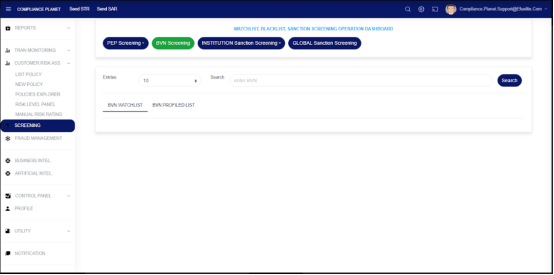
STEP 2From the left-hand side menu, click BVN Screening as seen below.

On the above page, enter a BVN in the Search field and click on the Search button to perform an instant search.

BVN WATCHLIST: This tab shows account(s) that the searched BVN is tied to and has been profiled as watchlist in the institution.

BVN PROFILED LIST: This tab shows account(s) that the searched BVN is tied to irrespective of weather the BVN is profiled under watch list or not.